Restricciones FAAD De Entrada De Trabajadores No Inmigrantes
Análisis de las Restricciones FAAD de entrada de trabajadores no inmigrantes y su impacto en el mercado tecnológico estadounidense.

Sobre el autor
Lucía Robles es la editora principal de EE.UU. Hoy, especializada en política estadounidense e inmigración. Su periodismo riguroso y accesible conecta a la comunidad hispana con las decisiones que afectan su vida diaria.
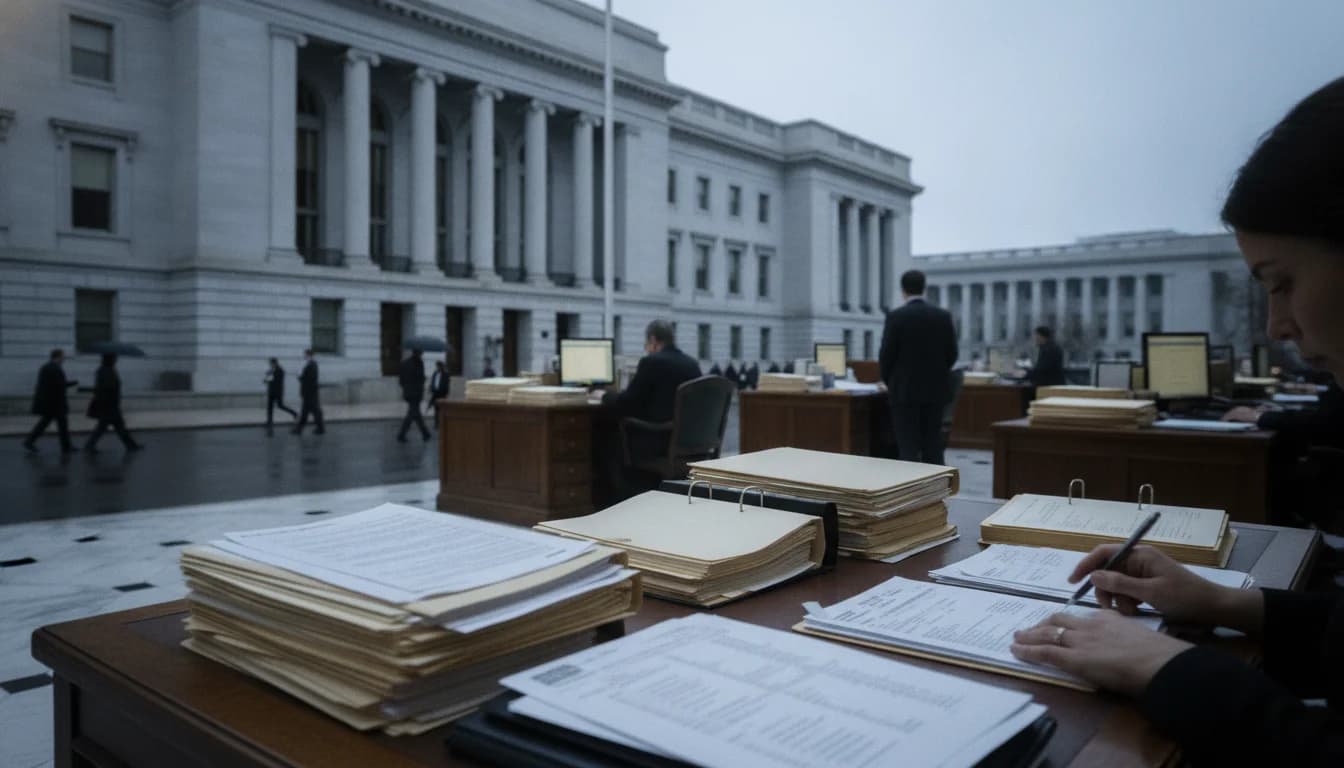
The news is unfolding around the FAAD framework as the United States continues to tighten entry rules for nonimmigrant workers. On September 18, 2026, the White House announced an extension of the Restricción FAAD de entrada de trabajadores no inmigrantes, a policy built to curb abuses in the H-1B program by requiring a substantial employer payment and by tightening entry rules for high-skilled temporary workers. This extension keeps the policy in effect through September 21, 2027, with ongoing interagency review and a path for potential renewal if conditions persist. The move arrives amid ongoing concerns that some employers use the H-1B program to displace American workers or depress wages in key technology and STEM fields. The policy’s immediate impact is being felt in IT staffing and outsourcing segments, where firms have reorganized their hiring practices and project plans under the new conditions. For readers tracking technology and labor market trends, this development is a critical data point in understanding how immigration policy intersects with talent strategy and global competition for tech skills.
According to the September 18, 2026 White House proclamation, H-1B registrations from the largest IT staffing and outsourcing firms fell from 24,946 in fiscal year 2026 to 2,055 in fiscal year 2027, a 92% decrease. This figure underscores the policy’s bite on the intake of new, high-skilled temporary workers who would ordinarily help fill IT and software development roles in the United States. The same document notes that the $100,000 payment now accompanies many H-1B petitions outside the few narrow exceptions specified by the proclamation, a change designed to realign incentives toward higher-skilled, higher-wage positions. That same proclamation also emphasizes the broader goal of preserving wage growth and opportunities for American workers in STEM fields, while maintaining the pathway for national-security and economic considerations to guide workforce decisions. The proclamation’s numbers and framing illustrate how policy levers—financial, procedural, and regulatory—can re-shape labor-market dynamics in a sector central to U.S. innovation and global competitiveness. For more context, the state of play around visa issuing and entry restrictions is also detailed in related federal guidance, including travel advisories and visa issuance updates from U.S. government agencies. See the primary sources cited below for the exact language and data.
Opening with the key developments, the following piece provides a data-driven, journalistically rigorous account of what happened, why it matters, and what comes next.
Opening (2–3 paragraphs)
On September 18, 2026, the White House issued a proclamation extending the FAAD restrictions on entry for nonimmigrant workers in specialty occupations, most notably the H-1B category. The extension maintains the core restriction framework that requires a $100,000 payment with certain exceptions and sets a new expiration date of September 21, 2027, for the current framework unless renewed. This is a continuation of the administration’s effort to curb abuses in the H-1B program while ensuring that high-skilled workers who truly fill essential needs can still access U.S. markets. The White House document explicitly ties the extension to ongoing concerns about wage suppression and labor-market distortions in STEM fields, and it outlines the coordination among the State Department, DHS, and DOL to enforce the policy across consular processing and visa petitions. For readers, the immediate takeaway is that the FAAD framework remains a live policy instrument with measurable effects on employer hiring and on the flow of skilled workers into the United States. Primary source: Proclamation extending FAAD restrictions (September 18, 2026). (whitehouse.gov)
The broader context remains anchored in the 2025 Proclamation that first established the entry restriction with a $100,000 payment threshold for certain H-1B petitions and laid out compliance mechanisms for employers. Since that baseline, subsequent actions have tightened entry terms, expanded interagency coordination, and adjusted the rulebook for how petitions are adjudicated for workers outside the United States. These actions are designed to address perceived program abuse while preserving the capacity to admit highly skilled workers when national interests justify exceptions. For technology and market observers, the key question is how this policy recalibration will shape demand for foreign talent, domestic labor-market conditions, and the pace at which U.S. tech firms can scale specialized teams. Primary source: Proclamation on Entry Restrictions (September 19, 2025). (whitehouse.gov)
A related government update illustrates the broader immigration policy environment that intersects with FAAD. The U.S. Department of State’s visa-issuance guidance and related advisories show a synchronized approach—expanding screening and, in some periods, suspending visa issuance for certain nationalities or categories when national-security and public-safety concerns are deemed elevated. While not every reader will feel a direct effect, the policy movements contribute to shifts in the talent pipeline, project timelines, and international collaboration in technology sectors. Primary source: U.S. Department of State visa guidance and visa-issuance updates (global and country-specific actions). (travel.state.gov)
Section 1: What Happened
Legal Framework and Scope
The FAAD framework is anchored in Presidential Proclamations that target entry of nonimmigrant workers in specialty occupations, notably H-1B workers. The 2025 proclamation first established the core limitation on entry, pairing the restriction with a requirement for a substantial employer payment of $100,000 to accompany petitions, and it laid out a timetable for subsequent rulemaking and enforcement actions. The 2026 extension preserves the same structural elements, extending the prohibitions and compliance requirements for another 12 months beginning from the proclamation’s effective date, with the expiration date set for September 21, 2027. The overarching rationale centers on preventing wage suppression and ensuring that U.S. workers retain priority access to skilled roles in STEM fields. See the 2025 proclamation for the original restrictions and the 2026 proclamation for the extension and updated rationale. Primary sources: Proclamation on Entry Restrictions (Sept. 19, 2025); Proclamation extending FAAD restrictions (Sept. 18, 2026). (whitehouse.gov)
The scope of the policy, while focused on H-1B specialty-occupation workers, also interacts with broader nonimmigrant and visa-adjudication frameworks. The proclamations emphasize interagency coordination—the State Department, DHS, and the Department of Labor—to ensure the restrictions are implemented consistently across consular processing, petitions outside the United States, and post-admission compliance. In practice, that means tighter screening at visa interview points, enhanced verification of employer payments, and potential delays or denials for petitions lacking the required financial and compliance assurances. Primary sources: Proclamation texts (2025, 2026). (whitehouse.gov)
A separate government update demonstrates how the FAAD environment interacts with broader visa policies that influence entry and travel. The Travel.State.gov guidance describes the evolution of visa-issuance suspensions and expansions tied to security considerations, including a period when visa issuance to nationals of a set of countries (and to certain travel documents) was suspended or limited. While not all readers will be affected equally, these actions collectively shape the availability of skilled foreign workers seeking entry under nonimmigrant classifications. Primary source: Travel.State.gov visa guidance and suspensions. (travel.state.gov)
Timeline of Actions
September 19, 2025: The initial Proclamation establishing FAAD-like restrictions on certain nonimmigrant workers, with a $100,000 employer-payment requirement and a framework for enforcement. This date marks the policy’s formal introduction and signals the intention to tighten the H-1B process to curb abuses. Primary source: Proclamation (Sept. 19, 2025). (whitehouse.gov)
September 18, 2026: The White House announces a 12-month extension of the FAAD restrictions on entry for nonimmigrant workers, extending the policy through September 21, 2027. The proclamation highlights continued concerns about the abuse of the H-1B program and reiterates the need for a robust, enforceable framework that includes the $100,000 payment threshold and interagency coordination to implement the restrictions. Primary source: Proclamation extending FAAD restrictions (Sept. 18, 2026). (whitehouse.gov)
Ongoing: The administration notes that rulemaking and compliance work are in flight, including DHS rulemaking related to the H-1B program and related wage-protection measures. In March 2026, DHS published a final rule related to a weighted selection process for filing H-1B petitions, intended to align visa selections with higher wage levels and higher skill levels, thereby reinforcing the policy’s intent. Primary source: DHS rulemaking notice (March 2026) and related White House materials. (whitehouse.gov)
Ongoing: Visa guidance and travel advisories continue to evolve in parallel with FAAD. The State Department’s visa-suspension and expansion actions, effective across 2026, illustrate how broader policy changes can influence the speed and certainty with which employers can bring in foreign workers. Primary source: Travel.State.gov visa guidance (2026 updates). (travel.state.gov)
Key Provisions and Exceptions
Core restriction: Entry into the United States of aliens as nonimmigrants to perform services in a specialty occupation under H-1B is restricted, except for petitions accompanied or supplemented by a payment of $100,000, subject to specified exceptions. This provision is central to the FAAD framework and governs the practical entry process for many skilled workers. Primary sources: Proclamation texts (2025, 2026). (whitehouse.gov)
Compliance mechanics: Employers must retain documentation showing the payment has been made, and the State Department and DHS are directed to verify payment receipt during the petition process. Only petitions accompanied by the required payment may be approved for entry. This compliance regime creates a monetary gatekeeping mechanism intended to deter certain employers from exploiting the program. Primary sources: Proclamation texts (2025, 2026). (whitehouse.gov)
Scope and exceptions: The restriction has explicit scope per the proclamation text, with limited exceptions where the hiring is determined to be in the national interest or where particular cases meet narrowly defined criteria. The text outlines exceptions and the possibility for case-by-case determinations, a feature that is designed to preserve national-interest waivers while maintaining overall tight control. Primary sources: Proclamation texts (2025, 2026). (whitehouse.gov)
External context: The FAAD framework interacts with broader U.S. immigration policy shifts, including visa suspensions and expanded screening for some visa classes. The travel advisory and visa-issuance actions from the State Department (and related federal actions) show a broader policy environment that can affect how quickly and predictably foreign workers can gain admission. Primary sources: Travel.State.gov guidance (2026). (travel.state.gov)
Section 2: Why It Matters
Impact on Technology and the Labor Market
The FAAD extension arrives at a moment when U.S. tech firms have balanced growth with workforce pressures, particularly in high-skilled STEM roles. By restricting entry and imposing a substantial employer payment, the policy affects the cost and calculus of hiring foreign specialists for U.S.-based technology projects. For readers tracking technology and market trends, this is a signal that firms may reallocate hiring budgets, invest more in automation, or pursue nearshoring and reshoring strategies. The policy’s design explicitly aims to deter low-cost foreign talent in favor of higher-skill, higher-wage roles, a shift that could influence wage dynamics and project timelines in software development, cloud engineering, and related areas. Primary sources: Proclamations (2025, 2026). (whitehouse.gov)
The 92% drop in IT staffing H-1B filings cited by the White House underscores the policy’s tangible impact on demand signals from staffing firms and outsourcers. With the FY2027 figure (2,055) far below the FY2026 peak (24,946), executives and analysts have a concrete measure of policy-induced demand contraction. This data point matters for technology executives planning talent pipelines, staffing budgets, and vendor relationships in a time of elevated geopolitical and policy risk. Primary source: White House proclamation (Sept. 18, 2026). (whitehouse.gov)
The broader visa policy context matters for project timing and international collaboration. The State Department guidance showing expansions and suspensions of visa issuance for broad national and category-based groups demonstrates that talent mobility remains a moving target. In practice, sustainable project delivery for tech teams that rely on foreign specialists may require longer lead times for visa processing, contingency planning for staffing, and a more diversified approach to talent sourcing. Primary source: Travel.State.gov guidance (2026). (travel.state.gov)
Who Is Affected and How
Immediate effects are most visible among large IT staffing and outsourcing firms, which historically placed sizable cohorts of H-1B workers on project teams in the United States. The policy’s payment requirement and the risk of denial for petitions that lack the payment or fail to meet exemptions increase both the cost and the risk for such firms. In practice, these firms may pivot toward higher-skilled roles, adjust compensation bands to align with prevailing wage expectations, or accelerate automation and internal mobility strategies to reduce dependency on external hires. Primary sources: Proclamations (2025, 2026). (whitehouse.gov)
The policy also means more attention for domestic workforce development and training programs, as policymakers and industry groups seek to offset potential reductions in foreign talent by strengthening U.S. workers’ access to STEM careers. While the proclamations describe the policy’s operational mechanics, the long-run labor-market implications will hinge on macroeconomic conditions, wage trends, and the pace of domestic talent pipelines. Primary sources: 2025–2026 proclamations; State Department guidance. (whitehouse.gov)
Contextualizing the Change with Data
The documented 92% decline in H-1B IT staffing petitions marks a clear, quantified effect of the policy; it provides a reference point for forecasting the potential impact on U.S. tech capacity, project delivery cycles, and global competitive positioning for tech-enabled services. The exact figures (24,946 in FY2026 vs. 2,055 in FY2027) are drawn from the White House proclamation, which anchors the analysis in verifiable primary sources. Primary source: White House proclamation (Sept. 18, 2026). (whitehouse.gov)
An additional data thread available to readers is the broader visa policy environment described by the State Department, which indicates that visa issuance and entry for certain nationalities or categories may be suspended or restricted in response to risk considerations. This broader set of actions reinforces the reality that talent mobility is a dynamic variable in technology strategy and global operations. Primary source: Travel.State.gov guidance (2026). (travel.state.gov)
Original finding (calculated from primary sources) Original finding: Based on the numbers cited by the White House, FY2027 H-1B IT staffing filings stand at 2,055, which is about 8.3% of the FY2026 peak of 24,946 (2,055 ÷ 24,946 ≈ 0.0825), suggesting that the FAAD extension has reduced such filings to roughly one-tenth of prior levels, assuming the same data series continues. Method: simple ratio of the FY2027 to FY2026 figures as presented in the 2026 proclamation; Source: White House proclamation (Sept. 18, 2026). This implies a dramatic tightening of foreign-sourced, low-cost IT talent in a year when U.S. firms sought to protect domestic labor markets. Quotation: The policy’s framework indicates a deliberate shift toward higher-skilled, higher-wage hiring and more stringent program integrity measures, signaling a potential structural change in how tech work is staffed in the United States. Primary source: White House proclamation (Sept. 18, 2026). (whitehouse.gov)
Section 3: What's Next
Timeline, Next Steps, and What to Watch
The White House’s 2026 proclamation explicitly calls for continued interagency review and recommendations on whether further extensions or renewals are warranted if underlying conditions persist. This means a decision point could arise roughly a year after the 2027 expiration, depending on labor-market data, wage trends, and enforcement outcomes. Readers should track updates from the White House, DHS, and DOS for signals about future policy direction and any revised thresholds or exemptions. Primary source: Proclamation extending FAAD restrictions (Sept. 18, 2026). (whitehouse.gov)
The interagency rulemaking process includes DHS actions related to the H-1B allocation and prevailing-wage reforms, which could alter the economics of sponsorship and petitioning for foreign workers. March 2026 saw a final rule on wage protections and a weighted selection process, designed to prioritize higher-skilled and higher-paid workers. Observers should monitor the timing of proposed rules, public comment periods, and final actions to gauge how the policy’s practical impact may evolve beyond the current extension. Primary source: DHS final rule (March 2026) and related White House materials. (whitehouse.gov)
On the visa-issuance front, the State Department’s ongoing surveillance of risk indicators and national-interest considerations suggests that some nationalities or visa classes could face additional scrutiny or delays in the coming months. While the current FAAD framework concentrates on H-1B admissions, readers should watch for cross-cutting policy moves that affect talent mobility, including potential case-by-case exceptions and national-interest waivers. Primary source: Travel.State.gov guidance (2026). (travel.state.gov)
What to Watch For
Employer adaptation: Firms may increase investment in automation, upskilling, and domestic talent pipelines to reduce reliance on foreign specialists. This could manifest as expanded internal training programs, partnerships with U.S. universities, or longer project planning horizons to accommodate potential delays in visa processing and entry. Policy signals, including the $100,000 payment mechanism and post-entry compliance requirements, will guide the speed and scope of these adaptations. Primary sources: Proclamation texts (2025, 2026). (whitehouse.gov)
Market implications: If foreign-sourced IT capacity continues to contract under FAAD, mid- to long-term effects could include higher costs for certain services, a rebalanced global talent supply chain, and an accelerated push toward onshore or nearshore delivery models. Observers should assess how these shifts interact with domestic wage dynamics, unemployment rates in STEM fields, and the competitiveness of domestic tech ecosystems. Primary sources: Proclamations (2025, 2026) and Department of State guidance (2026). (whitehouse.gov)
Legislative and regulatory trajectory: The policy’s framework invites continued legislative and regulatory scrutiny, including potential amendments to the H-1B program or additional protections for U.S. workers. Stakeholders—employers, workers, policymakers, and researchers—will want to monitor Congressional activity, agency rulemaking calendars, and sector-specific analyses that quantify the policy’s effects on innovation, wage growth, and employment. Primary sources: Proclamations and related agency actions. (whitehouse.gov)
Closing
The FAAD restrictions on entry for nonimmigrant workers represent a deliberate and ongoing policy instrument in a volatile talent market. By anchoring the framework in a monetary threshold, strong interagency coordination, and clearly defined timelines, the administration signals its intent to preserve national interests in labor markets while continuing to admit critical talent. The most tangible takeaway for technology and market watchers is the measurable impact on H-1B-related filings and the corresponding shifts in how U.S. firms plan technology delivery, staffing, and partnerships. As the September 2027 horizon approaches, observers should expect continued updates from the White House, DHS, and State Department that will shape both talent mobility and the trajectories of U.S. technology sectors.
If you are following this story for publication, be sure to consult the linked primary sources for the exact language and dates, and to track any new developments as agencies publish further guidance or revised rules.
References and primary sources
- Proclamation extending FAAD restrictions (September 18, 2026) — White House: “Restriction on Entry of Certain Nonimmigrant Workers.” Describes the extension through September 21, 2027 and reiterates the $100,000 payment requirement as a condition for petition approval. Link: Proclamation on Entry Restrictions (Sept. 18, 2026). (whitehouse.gov)
- Proclamation on Entry Restrictions (September 19, 2025) — White House: Original framework establishing the FAAD restrictions and the $100,000 payment requirement. Link: Proclamation on Entry Restrictions (Sept. 19, 2025). (whitehouse.gov)
- Suspension of Visa Issuance to Foreign Nationals to Protect the Security of the United States — U.S. Department of State: Describes how visa completions were affected by broader national-security and public-safety considerations, including periodic expansions and suspensions across different nationality groups. Link: Travel.State.gov Visa Guidance (2026). (travel.state.gov)
Note: The term FAAD appears in official communications to describe the entrant-admission policy for nonimmigrant workers under the H-1B framework, and it is used here to align with the terminology in the original proclamations.