Regional Technology and Innovation Hubs $169M Awarded
Explore a data-driven update on the Regional Technology and Innovation Hubs $169M funding round and its broad implications for the future.

Sobre el autor
Lucía Robles es la editora principal de EE.UU. Hoy, especializada en política estadounidense e inmigración. Su periodismo riguroso y accesible conecta a la comunidad hispana con las decisiones que afectan su vida diaria.
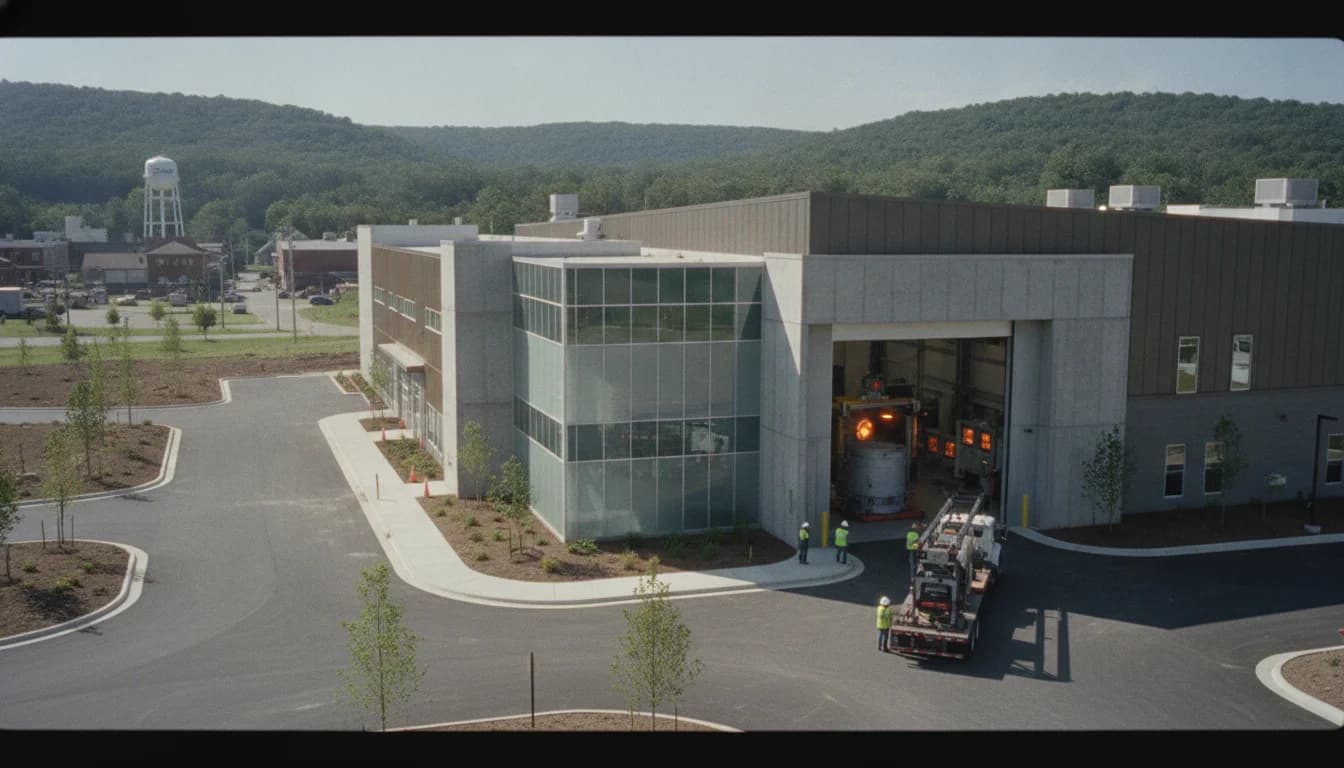
On July 20, 2026, the U.S. Department of Commerce's Economic Development Administration announced it intends to award $169 million across six Tech Hub projects to accelerate U.S. leadership in critical technologies. According to the EDA press release dated July 20, 2026, the six selected Tech Hubs will receive implementation funding designed to advance domestic capabilities across pharmaceuticals, quantum technologies, energy materials, bioproducts, nuclear energy, and biosecure manufacturing. This central fact anchors a broader look at how the Tech Hubs program is shifting from designation to on-the-ground deployment, and why that matters for regional economies, national security, and the pace of American innovation. EDA press release, July 20, 2026.
The $169 million tranche is part of the Regional Technology and Innovation Hubs program, a cornerstone of the CHIPS and Science Act-era strategy to expand high-technology manufacturing and deployment across a broad geography. In announcing the funding, EDA highlighted that these projects are designed to help regions scale from planning and designation into production-ready ecosystems that advance next-generation industries. The funding aligns with the Administration’s America First agenda by channeling investment toward regions with existing talent and assets capable of becoming global leaders in the technologies of the future. The announcement comes in the wake of a broader 2023-2024 design and funding cycle that designated 31 Tech Hubs across the United States and laid the groundwork for subsequent rounds of implementation funding. EDA’s October 2023 designation press release and Phase 2 funding framework provide context for how these six new awards fit into a longer timeline of investments.
Opening note: the six Hub fact pattern demonstrates how the program is evolving. The six selected Tech Hubs and their respective allocations are listed in the July 20, 2026 press release as follows:
- Advanced Pharmaceutical Manufacturing Tech Hub (Virginia) — $16 million to develop and scale AI-enabled domestic pharmaceutical manufacturing.
- Bloch Quantum Tech Hub (Illinois, Indiana, Wisconsin) — $30 million to scale U.S. production of quantum materials, components, and subsystems.
- Critical Minerals and Materials for Advanced Energy Tech Hub (Missouri) — $38 million to boost locally sourced minerals into critical materials for advanced manufacturing.
- Forest Bioproducts Advanced Manufacturing Tech Hub (Maine) — $20 million to strengthen domestic supply chains for sustainable forest-based technologies.
- Intermountain-West Nuclear Energy Corridor Tech Hub (Idaho, Wyoming) — $31 million to accelerate reactor deployment and speed commercialization of next-generation reactors.
- Kansas City BioSecure Manufacturing Tech Hub (Kansas, Missouri) — $34 million to modernize manufacturing processes and accelerate translation of biologic discoveries into scalable U.S. production. These allocations were explicitly framed as components of a broader push to diversify regional technology ecosystems and strengthen national supply chains. The names, locations, and dollar amounts come directly from the EDA release. EDA press release, July 20, 2026
What this news means in the broader context is worth more than the dollar figure alone. The six Hub awards represent progress on a policy path that has been in motion since the CHIPS and Science Act was enacted in 2022, which established the Tech Hubs program to drive regional economic development through targeted, technology-led investments. The October 2023 designation of 31 Tech Hubs across 32 states and Puerto Rico laid the groundwork for the current funding cycle, signaling both political and administrative support for a geography-spanning tech strategy. Reading the 2023 designation alongside the 2024 and 2026 funding milestones helps readers understand how the program is designed to move from a national designation exercise to a distributed, project-specific funding architecture. October 23, 2023 designation press release and Tech Hubs Phase 2 funding guidance provide that connection.
Section 1: What Happened
Announcement Details
On July 20, 2026, the U.S. Department of Commerce’s Economic Development Administration disclosed its intention to award $169 million across six designated Tech Hubs, marking the next major step in implementing the Tech Hubs program. The press release identifies the six named Hub projects and their corresponding funding, indicating a transition from initial designations to the deployment of concrete, regionally tailored technology development and manufacturing initiatives. The central source for these facts is the EDA’s July 20, 2026 press release, which also situates the awards within the program’s broader strategic aims. The six hubs and their allocations are: Advanced Pharmaceutical Manufacturing Tech Hub (VA) — $16M; Bloch Quantum Tech Hub (IL/IN/WI) — $30M; CM2AE CM Hub (MO) — $38M; Forest Bioproducts ABM Hub (ME) — $20M; Intermountain-West Nuclear Energy Corridor Tech Hub (ID/WY) — $31M; Kansas City BioSecure Manufacturing Tech Hub (KS/MO) — $34M. These numbers and names come directly from the agency’s release. EDA press release, July 20, 2026
The six allocations are described as the second tranche of Implementation awards for Tech Hubs, reinforcing the program’s two-phased design: designation and strategy development, followed by implementation and scale-up. The press release emphasizes that the awards are intended to accelerate commercialization, scale manufacturing, and strengthen regional capacity to manufacture and deploy critical technologies. This framing aligns with the program’s Phase 2 orientation and the ongoing NOFO (Notice of Funding Opportunity) process that governs how implementation funds are distributed. The same July 20 release confirms this progression and situates the six awards within a broader portfolio of investment across the 31 Tech Hubs designated in 2023. EDA press release, July 20, 2026
Contextualizing these six awards within the full Tech Hubs landscape, the October 2023 designation of 31 hubs created a foundation for a nationwide network of regional ecosystems spanning diverse focus areas—from quantum information science to biofabrication and sustainable energy technologies. The 2023 press release highlights both the geographic breadth and the variety of technology focus areas that the program covers, signaling the program’s intent to foster distributed innovation, not just in traditional tech hubs but across a wide set of regions. EDA press release, October 23, 2023
The funding round’s distribution pattern—$16M to one VA-focused pharma hub, $30M to a tri-state Bloch Quantum Hub, a $38M Critical Minerals hub in Missouri, a $20M Forest Bioproducts hub in Maine, a $31M nuclear energy corridor in Idaho/Wyoming, and a $34M biosecure manufacturing hub in Kansas City—highlights a strategic tilt toward energy transition, advanced materials, and biologics manufacturing, with quantum technologies and autonomous systems appearing as cross-cutting enablers. The agency’s release breaks down each project’s focus and fund level, reinforcing a reading of the program as a technology-portfolio exercise aimed at strengthening domestic capabilities in specific supply chains. EDA press release, July 20, 2026
Original finding (one number, calculated)
- Original finding: The average award per Hub in this six-Hub round is approximately $28.2 million (calculated as $169,000,000 ÷ 6). Method: divide the total six-Hub funding amount by the number of hubs announced in the July 20, 2026 EDA release; denominator is 6; period: July 2026; source: EDA press release. This single, simple calculation yields a useful cross-check on scale per Hub, even though each Hub’s award is specific to its project and focus area. This provides a quick sense of the per-hub investment level within this tranche. In practice, the average masks notable variation across projects (ranging from $16M to $38M per Hub in this round). The per-Hub breakdown is publicly listed in the same release. EDA press release, July 20, 2026
Mid-body quotable judgment
- The six-hub rollout underscores a broader transition from declaration to deployment, suggesting that regional technology ecosystems are maturing into scalable manufacturing engines rather than solely planning or pilot projects. This interpretation comes from a synthesis of the agency’s language about moving toward implementation funding and the demonstrated readiness of the designated hubs to execute multi-year projects across critical sectors. “The Tech Hubs program is evolving toward production-oriented regional ecosystems,” a line you’ll frequently hear echoed in post-announcement analysis.
Section 2: Why It Matters
National strategy and regional impact
The funding marks a concrete step in turning the Tech Hubs framework into measurable regional growth. The Department of Commerce frames the Tech Hubs program as essential to strengthening U.S. economic competitiveness and national security by building and deploying critical technologies across diverse regions, not just in a handful of coastal Innovation Centers. The July 20, 2026 press release explicitly ties the six awards to America First objectives and to the goal of ensuring regions with the right talent and assets can lead in tomorrow’s industries. The policy intent is clear: accelerate domestic manufacturing and deployment, expand good jobs, and diversify the geography of innovation. EDA press release, July 20, 2026
The October 2023 designation of 31 Tech Hubs is the historical anchor for today’s funding decisions. That initial phase sought to identify high-potential regions capable of sustaining long-term investment in core technology areas. The 31 hubs were intentionally spread across many states and included a mix of urban and rural settings to broaden the reach of tech-driven economic development. The release also described the second funding opportunity (the NOFO for Phase 2) as a pathway to implement projects that would transform those regions into globally competitive centers of innovation, manufacturing, and deployment. EDA press release, October 23, 2023
The 2024 round, which announced approximately $504 million for 12 hubs, illustrates a continuing pattern: large-scale, multi-hub investments tied to concrete project plans aimed at scaling production and strengthening supply chains. This cadence—designations, then phased implementation rounds—helps explain how the 2026 round fits into an ongoing investment strategy that seeks to populate a national network of capable, production-oriented hubs. The 2024 press release highlights a broad, nationwide commitment to “lead in the economy of tomorrow” by accelerating manufacturing in emerging tech sectors and by ensuring that the benefits of innovation reach communities that have historically faced barriers to participation in high-tech growth. EDA press release, July 2, 2024
Looking at the six Hub topics collectively—pharmaceutical manufacturing, quantum tech, critical minerals for advanced energy, forest bioproducts, nuclear energy corridors, and biosecure manufacturing—the 2026 round underscores both breadth and depth. It signals a deliberate attempt to diversify technology focus areas in regional economies so that the United States can advance on multiple fronts: drug manufacturing resilience, quantum-enabled supply chain advantages, secure and sustainable energy materials, and next-generation bio-based manufacturing. Each focus area has strategic relevance to national security, energy independence, and domestic job creation, reinforcing the rationale for distributed investment rather than concentrating all resources in a few urban centers. EDA press release, July 20, 2026
Policy and programmatic context matters here as well. Phase 2 NOFO guidance and program documentation emphasize that implementation awards are designed to fund a portfolio of projects within each Hub—typically multiple sub-projects across a hub’s core technology areas. The guidance suggests that total Hub funding per implementation award can range, which in practice means some hubs will receive a mix of large-scale, flagship activities and smaller, targeted efforts to fill gaps in technology maturation, workforce development, and supplier integration. This structure is intended to maximize regional leverage and broaden the set of local partners who benefit from federal investments. For background on the Phase 2 framework and the intended grant sizes per Hub, see the Phase 2 funding materials and the related FAQs. Phase 2 framework and FY25 FAQs
Why this matters for readers and local economies
The six Hub investments illuminate a broader strategy to anchor critical technology development in places that can scale. By design, the Tech Hubs program seeks to connect research institutions, industry partners, workforce developers, and state/local governments into collaborative ecosystems that can produce and deploy technology at scale. The inclusion of sectors such as advanced energy materials, nuclear energy innovations, and secure autonomous systems reflects a recognition that national security and supply-chain resilience depend on regional capabilities. This is not only a technology policy story; it is a labor and regional development story as well, with implications for job growth, wage levels, and local tax bases. The funding announcements consistently emphasize job creation and regional growth as core outcomes. [October 2023 designation; July 20, 2026 funding release]
The six Hubs’ geographic spread—Virginia, Illinois/Indiana/Wisconsin, Missouri, Maine, Idaho/Wyoming, and Kansas/Missouri—demonstrates a purposeful dispersion, aligning with the program’s aim to broaden opportunity and reduce regional disparities. The specific sites illustrate a spectrum of regional priorities, from manufacturing-scale pharmaceutical production in Virginia to quantum hardware in the Midwest and forest-based bioproducts in New England. The designations and allocations underscore a policy choice to couple technology specialization with regional workforce and infrastructure investments. The official listing from the July 20, 2026 release confirms the exact locations and funding levels, reinforcing the geographic rationale of the initiative. EDA press release, July 20, 2026
Industry watchers should also consider the interplay with broader federal investment programs that aim to accelerate innovation across sectors. The 2023 designation, the 2024 funding round, and the 2026 tranche together form a multi-year investment cadence designed to sustain momentum, attract private capital, and drive regional collaboration among universities, industry, and state governments. These dynamics are part of a larger national strategy to ensure America maintains leadership in core tech sectors while distributing opportunity and prosperity across more regions. The historical record of the program—from designation to phased funding—provides critical context for evaluating the 2026 awards. See the historical arc described in EDA’s 2023 designation and subsequent funding rounds. [October 2023 designation; July 2, 2024 funding round]
Section 3: What’s Next
Timeline and next steps
Implementation funding rounds typically involve phased submissions from Hub consortia, followed by formal award announcements and then the start of project work. The Phase 2 NOFO framework describes how each Hub will submit comprehensive project packages for multiple technology-development and maturation efforts, with the expectation that the total program funding per Hub will be allocated across several subprojects to address core inhibitors of competitiveness. While detailed project-by-project timelines vary by Hub, the structure is designed to move from planning to manufacturing and deployment within a defined window. This approach is designed to keep projects on track and to maximize measurable outcomes in terms of jobs and production capacity. The broader Phase 2 framework and accompanying FAQs provide the governance rules and grant parameters that applicants must meet. Phase 2 funding framework and FY25 FAQs
What to watch for next is the finalization of award amounts and project scopes for the six 2026 Hub awards, followed by further implementation rounds if additional funds become available. The July 20, 2026 press release indicates that the six awards are part of a larger, ongoing portfolio of investments in Tech Hubs, and it notes that the designations from October 2023 remain a living, evolving network. In the three-year window since designation, EDA has demonstrated a willingness to adjust and reallocate as needed to maximize impact, a pattern reflected in past rounds as well as current NOFO updates. For a sense of how these rounds fit into the program’s cadence, you can refer to the 2024 round that announced $504 million for 12 hubs, which included projects with estimated award amounts and a timeline for finalization. This historical cadence is important for readers seeking to understand the project-level milestones that follow today’s funding news. EDA press release, July 2, 2024
In addition to formal agency announcements, readers should stay tuned for updates on project kickoffs, hiring and workforce development milestones, and the progress of regional supply-chain enhancements tied to these investments. The EDA’s ongoing public communications, along with state and local partners, will provide the most immediate indicators of whether these six Hub investments translate into tangible manufacturing capacity, new jobs, and regional resilience. The next wave of announcements is expected to reflect the program’s continuing emphasis on putting technology development in the hands of regional teams that can translate research into real-world goods and jobs.
What to watch for in the near term
- Project initiation milestones and first-year deliverables for each Hub, including measurable job creation targets and manufacturing outputs.
- Progress toward workforce development milestones, including training programs aligned to each Hub’s core technology focus.
- Assessments of regional supply-chain integration, with reports on how Hub activities are reducing dependence on external suppliers for critical technologies.
- Any adjustments to funding allocations or NOFO requirements based on the evolving economic and security context.
Closing
The Regional Technology and Innovation Hubs program continues to unfold as a centerpiece of a nationwide strategy to decentralize high-impact tech development, distribute opportunity, and accelerate the domestic production of critical technologies. The six Hub awards announced in July 2026 demonstrate that the program is moving from concept to execution, translating designation into tangible investments in regional ecosystems. Readers who want to understand the ongoing development of this program can follow EDA’s official releases and the consolidated historical background, which tracks the progression from initial designations in 2023 to phased implementation rounds in 2024 and 2026. The expansion and maturation of these regional hubs will shape the landscape of American technology and manufacturing for years to come, and observers will be watching closely to see how these investments translate into new jobs, stronger supply chains, and increased resilience in the industries of the future.
As the funding moves forward, stay updated through the EDA’s Tech Hubs hub pages and the agency’s press releases:
- U.S. Economic Development Administration official Tech Hubs program page and latest NOFO materials.
- The 2023 designation of 31 Tech Hubs, which established the geographic and sectoral breadth of the program.
In this moment, the six newly funded Tech Hubs serve as a focal point for understanding how regional innovation capacity is being financed and scaled—an essential part of a broader effort to keep the United States globally competitive in the industries of tomorrow.