USDA Announces $17 Million for Rural Broadband Grants
USDA Rural Development has unveiled $17 million in funding for the Community Connect Grant Program in FY 2026, aimed at enhancing broadband access in…

Sobre el autor
Marisol Delgado es periodista de cultura y estilo de vida en EE.UU. Hoy, explorando la rica diversidad de la experiencia latina en Estados Unidos. Sus crónicas celebran las tradiciones, el arte y las voces que enriquecen la vida americana.
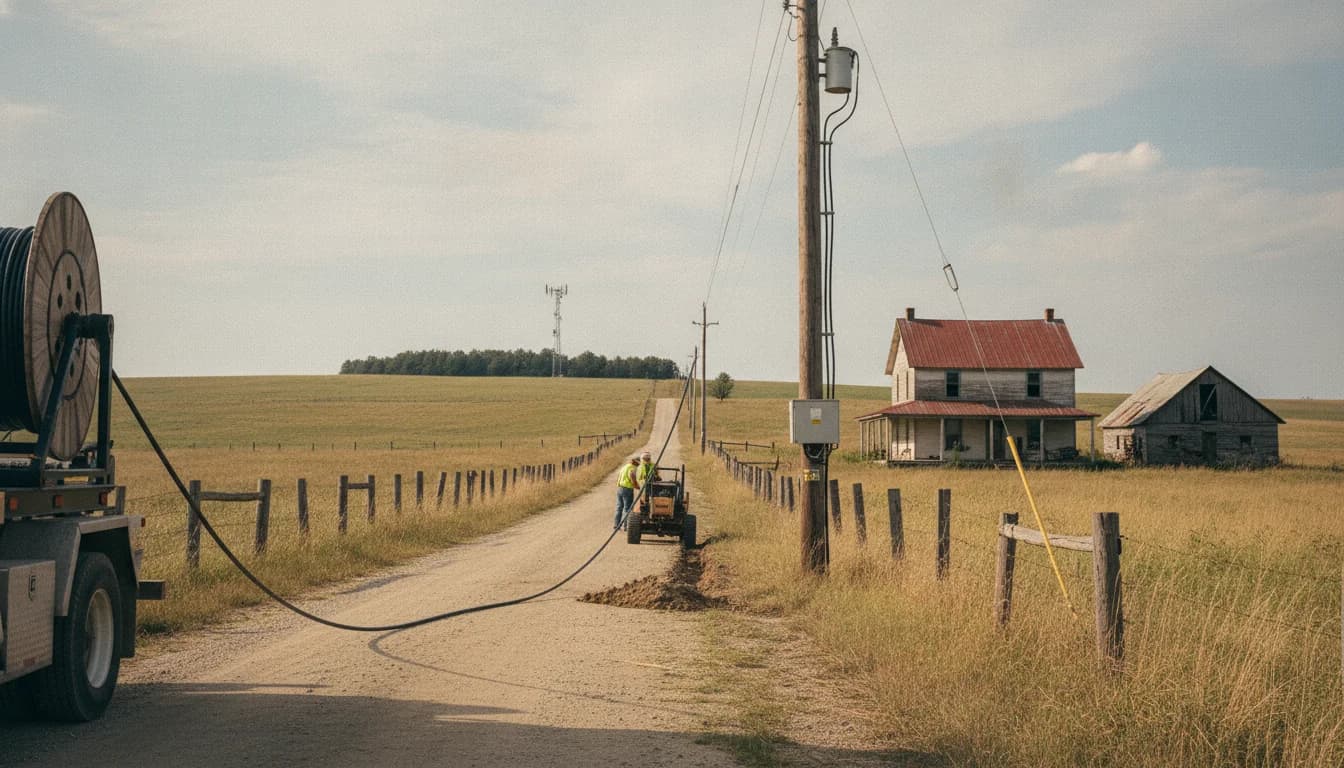
USDA Rural Development announced new funding to address the rural connectivity gap, marking a significant step in Conectividad rural Community Connect 2026. On May 13, 2026, the agency released a stakeholder notice detailing that approximately $17 million would be made available for the Community Connect Grant Program in FY 2026. The move is designed to spur the deployment of high-speed broadband in rural areas where service does not yet exist, with a focus on community-oriented connectivity that supports schools, libraries, health care facilities, and public safety sites. The funding announcement, and the accompanying application guidance, set the stage for a competitive grant process intended to accelerate rural digital inclusion across the United States. These initial steps are part of a broader federal effort to close a persistent digital divide between urban and rural communities, a gap that analysts note has implications for education, economic development, and access to essential services. (Source: USDA Rural Development press materials, May 13, 2026; NOFO May 13, 2026.) (rd.usda.gov)
According to USDA Rural Development's May 13, 2026 stakeholder announcement, approximately $17 million is being made available under the Community Connect Grant Program for FY 2026, and as of Sept. 18, 2026, 129 days have elapsed since that announcement. This timeline is anchored in the official release and the subsequent Notice of Funding Opportunity, which together outline when applications opened, the eligibility and funding parameters, and the anticipated award date. The 129-day figure reflects a straightforward calculation from May 13, 2026 to September 18, 2026, illustrating the ongoing progress toward grant awards while readers monitor the window for proposals and the pace of funding decisions. (Source: May 13, 2026 stakeholder announcement; Federal Register/NOFO documentation.) (rd.usda.gov)
The broader context for Conectividad rural Community Connect 2026 centers on expanding broadband access in underserved rural communities and ensuring that federal funds translate into tangible connectivity gains. The administration emphasizes that Community Connect funds can be used for constructing or upgrading network facilities, acquiring spectrum or related assets, and supporting public access points such as community centers that provide high-speed Internet to residents. The program’s emphasis on “community-oriented connectivity” underscores a strategy that ties infrastructure investment to local social, economic, and educational outcomes. This framing aligns with the agency’s stated goals to foster economic development, improve educational attainment, and enhance access to telehealth and public safety services in rural regions. (Source: NOFO FY 2026; USDA Community Connect program overview.) (files.simpler.grants.gov)
What Happened
Announcement Details
The core news is that USDA Rural Development is accepting applications for FY 2026 Community Connect Grants, with a defined funding envelope and a published grant window. The NOFO, published May 13, 2026, announces acceptance of applications and provides the official framework that governs the program for the year. The executive summary stresses that eligible applicants will deploy broadband networks on a “community-oriented connectivity” basis in rural areas, and that awards will be made on a competitive basis under 7 CFR 1739.16. (NOFO, May 13, 2026; Federal Register notice.) (files.simpler.grants.gov)
The May 13, 2026 stakeholder announcement from USDA Rural Development confirms the funding amount of approximately $17 million for FY 2026 and outlines the permissible uses of Community Connect funds, including construction, acquisition, or leasing of facilities and related costs necessary to deploy broadband, as well as provisions for providing free service to critical facilities for up to two years. The release also notes that up to 10% of an award (or $150,000) may be used to establish or expand a community access point (e.g., a community center). Applications are due by June 29, 2026, with electronic submission required. (Source: May 13, 2026 stakeholder announcement.) (rd.usda.gov)
The NOFO itself provides key operational details: the publication date, the application window (May 13, 2026 to June 29, 2026), the minimum and maximum grant awards (minimum $100,000; maximum $53,000,000), and the anticipated award date (September 2026). It also specifies that the program’s funds support the deployment of broadband in rural, underserved areas and that all applicants must comply with cost-sharing requirements and federal non-discrimination and environmental rules. (NOFO, May 13, 2026; 7 CFR 1739 reference; Federal Award Information in the NOFO.) (files.simpler.grants.gov)
In addition, the program’s framework is grounded in the 7 CFR 1739 regulatory structure and references the 7 CFR 1739.16 criteria used to review proposals. The NOFO emphasizes that awards will be competitive, and it highlights the agency’s monitoring and reporting obligations as part of the grant lifecycle. This aligns with USDA’s broader set of regulations for rural broadband investments and ensures a standardized approach to accountability. (NOFO details; General CFR references in the document.) (files.simpler.grants.gov)
The public-facing documentation includes a notice in the Federal Register, which confirms the same May 13, 2026 publication date and provides official context for the NOFO. The Federal Register entry highlights the DATES section with the May 13, 2026 publication and notes the grants’ purpose and the process for submitting applications. This corroborates the core timeline and the program’s aims as described in USDA’s own materials. (Federal Register entry; NOFO cross-reference.) (regulations.justia.com)
Funding Scope and Timeline
The Community Connect Grants program allocates approximately $17 million for FY 2026, with a stated minimum and maximum award range that supports a broad set of rural broadband projects. The NOFO lists “Available Funds: The Agency has $17 million available for FY 2026,” and indicates a wide range of award sizes, from $100,000 up to $53,000,000, enabling a spectrum of project scales. The anticipated award date is September 2026, signaling a multi-month evaluation and awarding period. (NOFO: L82-L89.) (files.simpler.grants.gov)
The NOFO also spells out the application window and submission deadline: the window opens May 13, 2026, and completed electronic applications must be filed by June 29, 2026 at 11:59 AM ET. This tight, roughly seven-week window emphasizes the need for well-prepared, timely proposals and often requires prospective applicants to coordinate with Rural Utilities Service (RUS) field representatives early in the process. (NOFO: L15-L19; L4-L6.) (files.simpler.grants.gov)
The funding can be used for a variety of broadband deployment activities, including construction or acquisition of facilities, spectrum, land, or buildings used to deploy service; support for offering service at grant speed to all premises within the defined PFSA (Proposed Funded Service Area) in rural areas; and coverage of essential community facilities to supply public access. Importantly, it allows for a limited amount of funding (up to 10% of the award or $150,000, whichever is greater) to be used for establishing or expanding a community center that provides online access. (NOFO: L10-L20; L61-L67; L83-L90.) (files.simpler.grants.gov)
Eligible applicants are broad and include state and local governments, federally recognized tribes, nonprofits, for-profit corporations, and LLCs. This inclusivity is designed to encourage a range of rural actors to participate in the program, while maintaining governance and eligibility standards under 7 CFR 1739.10. The application process emphasizes the need for legal authority and compliance with federal rules. (NOFO: L21-L25; L95-L105.) (files.simpler.grants.gov)
The NOFO also outlines the assessment framework, including review criteria and the possibility of considering proposals from existing awardees in subsequent rounds. The emphasis on competitive review criteria and robust project evaluation aligns with federal expectations for results-driven infrastructure investments. (NOFO: L75-L77; L90-L93.) (files.simpler.grants.gov)
Why It Matters
Rural Economic Impact
The Community Connect Grant Program is designed not only to close a broadband gap but also to spur broader rural economic development. By funding networks that can reach households, schools, libraries, and health facilities, the program aims to unlock opportunities in education, telehealth, workforce development, and small-business growth. The emphasis on “community-oriented connectivity” indicates a recognition that infrastructure alone is not enough; it must be integrated with local services and institutions to maximize social and economic returns. (NOFO description; program overview.) (files.simpler.grants.gov)
Analysts point to broadband access as a multiplier for rural resilience, particularly in areas where remote work, digital learning, and telemedicine are increasingly central to daily life. While the exact economic impact depends on local adoption and complementary investments (such as device access and digital literacy programs), the policy intent behind Conectividad rural Community Connect 2026 is to align federal funding with local development plans, thereby creating a pathway for communities to participate more fully in the digital economy. (Contextual analysis drawn from program documentation and broader broadband policy literature.) (files.simpler.grants.gov)
Access to Education, Health Care, and Public Safety
The funding explicitly supports critical public services by enabling high-speed Internet access at key community facilities and ensuring that these institutions can operate with affordable, reliable connectivity. The program’s allowance for free service at participating community facilities for up to two years reflects a public-interest approach designed to reduce initial barriers to adoption for essential institutions like schools, libraries, fire stations, and health clinics. This is a notable element of the program’s design, aligning infrastructure investment with tangible community benefits. (NOFO: L18-L21.) (rd.usda.gov)
The emphasis on remote education and health care access for rural residents—a recurring policy headline for rural broadband initiatives—positions Conectividad rural Community Connect 2026 within a broader strategy to support equitable access to services that traditionally lag in rural geographies. The combination of network deployment and service commitments to essential facilities is intended to help rural communities overcome barriers that impede educational attainment, telehealth adoption, and public safety responsiveness. (Press release and NOFO.) (rd.usda.gov)
Geographic and Demographic Considerations
The program is designed to target rural, economically challenged communities where broadband service is lacking. This allocation framework highlights a geographic focus that aligns with long-standing federal priorities to reduce urban-rural gaps in digital infrastructure. As with prior USDA broadband initiatives, the intention is to reach underserved populations that may not be attractive to private investment absent federal support. (NOFO; program overview.) (files.simpler.grants.gov)
While the NOFO provides a national lens, the actual impact will depend on state and local capacity to articulate PFSA boundaries, align grant proposals with local development plans, and coordinate with existing providers or public entities. The eligibility and application criteria emphasize the need for a cohesive service plan that demonstrates how the proposed network will reach all premises within a defined rural area. This local specificity is essential to realizing measurable connectivity gains on the ground. (NOFO; CFR references.) (files.simpler.grants.gov)
The program’s framework also requires compliance with environmental reviews, civil rights protections, and federal funding accountability requirements. These governance provisions are designed to ensure that funded projects proceed responsibly, with transparent reporting and oversight. (NOFO: 6.3 Reporting; CFR references 2 CFR Part 200, 7 CFR Part 1739; 8.0 Environmental/Civil Rights topics.) (files.simpler.grants.gov)
What’s Next
Next Steps for Applicants
The application window is open from May 13, 2026, to June 29, 2026. Applicants should assemble a complete package that includes a PFSA map, a detailed budget, a sustainability plan, and an implementation schedule aligned with the program’s scoring criteria. The NOFO explicitly notes that proposals must be submitted electronically, and it provides the delivery channel and required forms. Early preparation is strongly advised given the competitive nature of the program and the tight deadline. (NOFO: L15-L19; P7 content references in the NOFO.) (files.simpler.grants.gov)
The maximum and minimum grant sizes offer flexibility for both small and large rural broadband projects. A project seeking a modest grant can still be eligible if it presents a solid community impact and a feasible deployment plan, while larger-scale networks could tap into the upper award cap if they convincingly demonstrate depth of impact, financial viability, and long-term sustainability. (NOFO: L86-L89.) (files.simpler.grants.gov)
The anticipated award date in September 2026 means successful applicants should be prepared to move quickly from award to contracting and project deployment. Program guidance emphasizes the need for Level II eAuthentication and strong internal controls, given the federal grant context. Applicants should coordinate with their Rural Development Field Representative to ensure compliance and to facilitate a smooth award process. (NOFO: L83-L90; P7 submission references; contact information in the NOFO.) (files.simpler.grants.gov)
What to Watch For
The impact on rural broadband coverage will be monitored through annual project performance reporting and a final performance evaluation. Recipients must provide annual performance reports until project completion, and a final report is required to assess the project’s alignment with Community Connect objectives. This reporting framework supports accountability and provides a data trail for evaluating program effectiveness over time. (NOFO: L371-L375.) (files.simpler.grants.gov)
The program’s operations are embedded in a broader federal infrastructure funding ecosystem, including ReConnect and other USDA broadband programs. Observers will be watching how Community Connect interacts with other funding streams, the pace of award announcements, and the degree to which funded projects deliver on promised service timelines given the potential for supply chain and contractor capacity constraints. (USDA program pages; cross-program references in the NOFO and related materials.) (rd.usda.gov)
Updates and guidance are published through the USDA Rural Development newsroom, government bulletins, and grants.gov postings. Readers and applicants should subscribe to official channels to ensure they receive the latest information about deadlines, amendments, and program clarifications as the FY 2026 cycle progresses. (USDA newsroom and GovDelivery channels cited in the release and on the program pages.) (rd.usda.gov)
Closing
The Conectividad rural Community Connect 2026 initiative represents a deliberate federal effort to accelerate rural broadband deployment through a program designed to foster community-oriented connectivity. By providing a defined funding envelope, a clear application window, and strict governance standards, USDA Rural Development is signaling a data-driven, outcomes-focused approach to rural digital inclusion. The May 13, 2026 stakeholder announcement and the accompanying NOFO establish a framework that guides state and local governments, Tribes, nonprofits, and for-profit entities as they pursue projects that can reduce the long-standing connectivity gap in rural America. As communities prepare their proposals, observers will be watching how the program’s funding, execution, and accountability translate into real-world improvements in education, health care access, economic opportunity, and public safety in rural areas.
For readers seeking updates, the USDA Rural Development Community Connect page and the Grants.gov announcement are essential references. These primary sources provide the official language, deadlines, and program requirements that shape how Conectividad rural Community Connect 2026 will unfold this year. As the process advances, stakeholders will likely publish project outcomes, lessons learned, and data on connectivity gains that can inform future cycles and broader broadband policy.
In the end, the success of Conectividad rural Community Connect 2026 will hinge on more than dollars spent; it will depend on how effectively communities translate federal funding into lasting, locally relevant improvements in Internet access, digital literacy, and inclusive opportunity for all residents across rural America. The coming months will reveal which projects rise to the top under the program’s rigorous criteria and how those investments alter the digital landscape in small towns and rural regions nationwide. Stay tuned to official USDA channels for the latest rounds of announcements, grant awards, and deployment milestones as communities work to connect every corner of the country to the promises of a connected future. (rd.usda.gov)