LEDC Food Impact Fund Launches with $1 Million
Explore a data-driven analysis of the LEDC Food Impact Fund launch, its funding structure, and the implications for DC-area food entrepreneurs.

Sobre el autor
Lucía Robles es la editora principal de EE.UU. Hoy, especializada en política estadounidense e inmigración. Su periodismo riguroso y accesible conecta a la comunidad hispana con las decisiones que afectan su vida diaria.
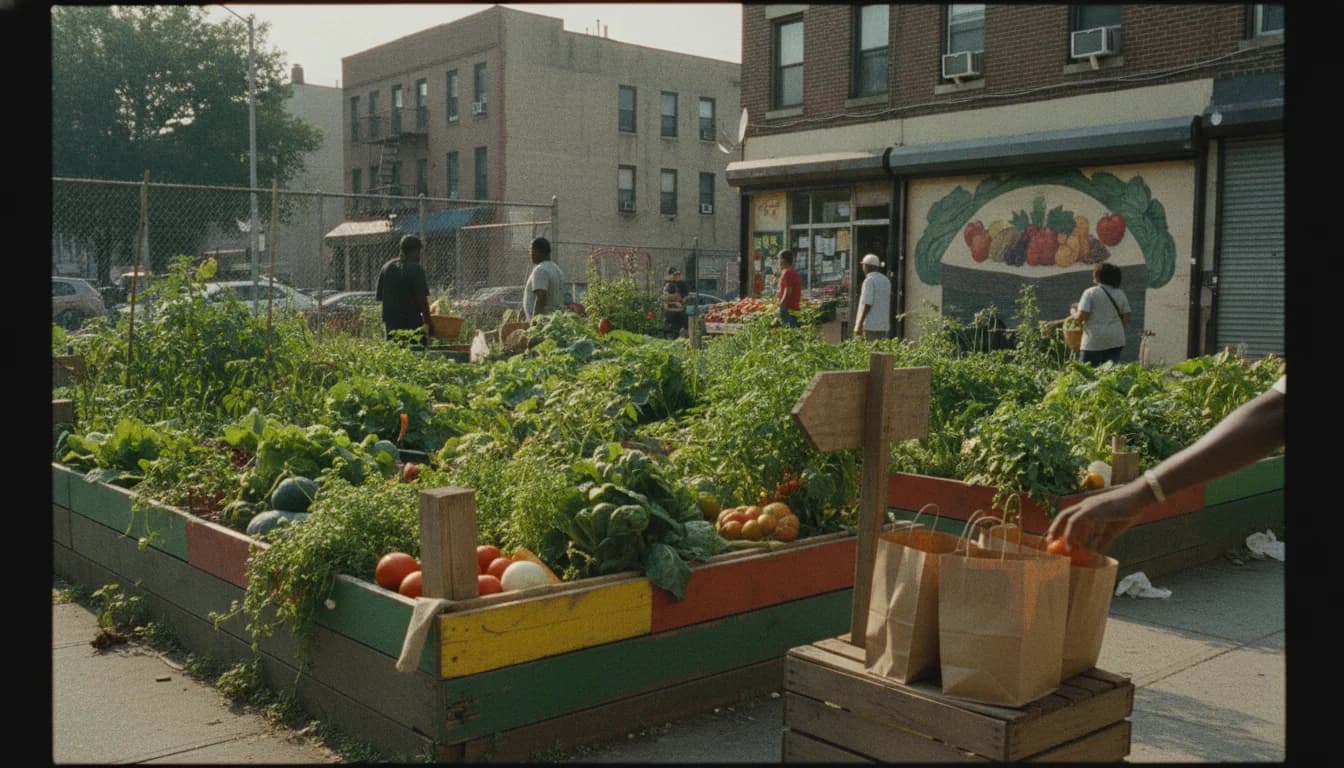
The LEDC Food Impact Fund is officially launching in the Washington, D.C. metro area, a development that could reshape access to capital for food entrepreneurs across DC, Maryland, and Virginia. On July 30, 2026, the Latino Economic Development Center (LEDC) announced the fund's debut, timing its disclosure to LEDC’s 35th anniversary celebration and signaling a broader push to blend flexible capital with hands-on technical assistance for small food businesses. The Food Impact Fund enters the market with $1 million in initial capital, a combination of LEDC support and backing from philanthropic partners, marking a step change in how early-stage food ventures can access capital and advisory services. According to LEDC's July 30, 2026 press release, the Food Impact Fund launched with $1 million in initial capital, including a $500,000 commitment from the Longer Tables Fund, founded by Chef José Andrés, and $500,000 in LEDC capital. This collaboration ties the fund to a broader network of organizers and funders dedicated to advancing food entrepreneurship and community wealth. (ledcmetro.org)
LEDC’s announcement comes at a moment when regional food ecosystems are increasingly looking to mission-driven capital to support diverse, locally owned businesses. The fund’s explicit focus on flexible capital and technical assistance aligns with LEDC’s broader Food Ventures Initiative and its work to build wealth and opportunity through food entrepreneurship. The announcement was paired with details about program design, eligibility, and how the fund intends to intersect with LEDC’s existing services in the DMV area. The event took place as part of LEDC’s 35th Anniversary Celebration, held on July 15 at La Cosecha in Washington, D.C., with more than 300 entrepreneurs and partners in attendance. The public release of the plan followed that celebration, formalizing the fund’s structure and immediate goals. (ledcmetro.org)
What Happened
Announcement Details LEDC’s July 30, 2026 press release confirms the formal launch of the Food Impact Fund, a new initiative designed to expand access to flexible, mission-driven capital and technical assistance for food entrepreneurs across the Washington metropolitan area and Baltimore. The fund’s launch marks the culmination of LEDC’s 35-year history of supporting food entrepreneurship and community wealth-building, translating a long-standing commitment into a dedicated capital vehicle. The release also highlights that the fund’s inception is anchored by an initial capital pool of $1 million and describes the fund’s dual emphasis on financing and advisory services as a core mechanism to accelerate business formation, growth, and job creation in the local food economy. For context, LEDC’s press materials place the fund within the organization’s broader portfolio of programs aimed at helping entrepreneurs access capital, develop business acumen, and connect with a regional ecosystem of partners. The date of the announcement and the message of immediate impact anchor the piece in a concrete, dated event. (ledcmetro.org)
Funding and Partners The funding structure for the Food Impact Fund is explicitly outlined in LEDC’s materials. The fund launches with $1 million in initial capital, including a $500,000 commitment from the Longer Tables Fund (founded by Chef José Andrés) and $500,000 in LEDC capital. This split—noting both external philanthropic support and internal LEDC financing—illustrates a public-private approach to community finance that LEDs to align with LEDC’s mission: to expand access to capital and technical assistance for food entrepreneurs who might otherwise face barriers to traditional lending. The source notes that the Longer Tables Fund’s involvement ties the fund to a broader network of individuals and organizations seeking to advance inclusive food systems. The press release situates the fund not only as a lending vehicle but as a partner network designed to help entrepreneurs launch, grow, and sustain their businesses. (ledcmetro.org)
Program Structure: Two Loan Products LEDC’s Food Impact Fund page provides a descriptive breakdown of its two loan products, designed to accommodate both early-stage ventures and growth-stage operations. The Seed Loan, branded as “Flourish,” carries a range of $10,000 to $50,000 and is aimed at early-stage entrepreneurs and graduates of LEDC’s Food Ventures Initiative (FVI). It emphasizes lower upfront costs and alignment with turnkey restaurant spaces as a path to reduce barriers to market entry. The Expansion Loan, branded as “Harvest,” ranges from $50,000 to $250,000 and targets growth-stage food businesses with demonstrated demand and potential for job creation. Uses include equipment purchases, working capital, inventory, and expansion. Eligibility criteria note that Harvest is available to businesses already operating a food location, with a minimum two years in business, and all three DC-MD-VA jurisdictions as eligible locations. The fund thus structures capital access to fit both new entrants and established operators seeking scale. (ledcmetro.org)
Event Timeline and Context The timing of LEDC’s announcement ties to a specific calendar sequence. The press release notes that the Food Impact Fund was announced during LEDC’s 35th Anniversary Celebration on July 15 at La Cosecha in Washington, D.C., where more than 300 participants gathered to celebrate LEDC’s impact and to hear about the fund’s future. The formal announcement on July 30, 2026 makes the fund’s existence a matter of public record and positions LEDC’s market activity for the 2026-2027 cycle. The linkage to LEDC’s anniversary speaks to a strategic signaling moment for the organization: leveraging a milestone to introduce a new instrument intended to accelerate local food entrepreneurship and wealth-building. In addition to the announcement date, the engagement with the Longer Tables Fund underscores a cross-organization collaboration that broadens the fund’s potential reach and impact. (ledcmetro.org)
Quotes and Perspectives The LEDC release features statements from LEDC leadership and José Andrés around the mission and potential impact. Emi Reyes, LEDC’s Chief Executive Officer, describes the Food Impact Fund as “the next chapter of that work, combining capital, technical assistance, and trusted relationships to help food entrepreneurs launch, grow, create jobs, and build lasting wealth.” José Andrés adds that “Food is hope. Food is opportunity. And food businesses are often the heartbeat of their communities,” and he voices pride in supporting LEDC’s work investing in the people behind these businesses. These quotes frame the fund as both a financial instrument and a community development initiative designed to address systemic barriers faced by food entrepreneurs in the region. The quotes underscore a collaborative approach that leverages LEDC’s local ties and broader philanthropic networks to support sustainable growth in the food economy. (ledcmetro.org)
Event Context: The DMV Food Economy and Baltimore Tie-in LEDC’s plan explicitly notes the fund’s geographic focus and its potential to extend beyond the District of Columbia to Maryland, Virginia, and the Baltimore area. The inclusion of Baltimore signals an expanded regional footprint that reflects LEDC’s mission to scale impact through capital and technical assistance across the DMV food economy. This context matters for market watchers and community groups following regional food entrepreneurship ecosystems, as it indicates an intent to channel capital toward urban and peri-urban food ventures that can strengthen local supply chains and employment. The fund’s stated objective—supporting restaurants, catering firms, packaged food producers, and other food-based businesses—addresses a wide segment of the sector, suggesting potential synergies with LEDC’s existing programs and with partners who have a stake in local food access and economic mobility. (ledcmetro.org)
Why It Matters
Impact on the Local Food Economy The LEDC Food Impact Fund is designed to accelerate access to capital for a broad set of food businesses in the DMV region, a sector that often struggles to secure financing due to factors such as cash flow volatility, seasonality, and lack of collateral. The fund’s pairing of debt financing with technical assistance positions it to address both financing constraints and operational capability gaps. The Seed Loan’s relatively small upfront requirement and the Expansion Loan’s higher cap provide a ladder of support that can nurture a pipeline of new and scaling ventures. As LEDC’s own program materials describe, this structure helps participants “launch, grow, create jobs, and build lasting wealth,” aligning with local economic development goals and with broader efforts to diversify and strengthen the regional economy. (ledcmetro.org)
Who Benefits and Why Equity Matters LEDC’s approach centers on first-time entrepreneurs and those who are graduates of the organization’s Food Ventures Initiative, creating pathways to ownership and wealth accumulation in communities that have historically faced barriers to capital access. By focusing on ex ante programs that address both the financial and advisory needs of new and growing food businesses, the fund aims to reduce the gap between concept and scale. While the exact distribution of loans will depend on demand and credit decisions, the fund’s design signals a commitment to equity by prioritizing minority-owned and woman-owned food enterprises that traditionally experience access barriers in mainstream lending markets. In the broader ecosystem, the Food Impact Fund could complement other regional initiatives seeking to de-risk food entrepreneurship for lenders and investors, potentially helping to stabilize local food supply chains and create job opportunities in urban and suburban corridors. (ledcmetro.org)
Broader Market and Policy Context The LEDC Food Impact Fund enters a landscape where philanthropy, impact investing, and public-private partnerships increasingly target food-system resilience. While LEDC’s fund is regionally focused, the model—combining debt capital with technical assistance and community networks—has parallels in other local and regional funds. Industry watchers might compare the LEDC approach with other place-based food funds and community development financial institutions that blend capital with hands-on support to bolster small businesses and job creation. The fund’s alignment with local economic development goals and with José Andrés’ Longer Tables Fund frames it within a broader movement to leverage philanthropy for sustainable local food economies. This alignment may affect how local stakeholders perceive risk, appetite for debt, and expectations for job generation in the near term. (ledcmetro.org)
What’s Next
Timelines for Disbursement and Applicant Pathways LEDC’s materials outline a straightforward pathway for aspiring borrowers: participate in LEDC’s Food Ventures Initiative for seed loans, or approach the fund with an existing operating food business for expansion loans. Applicants will likely need to present a business plan, financial projections, and the usual documentation (e.g., tax returns, bank statements) as part of the LEDC application process. The exact timing for loan approvals and disbursements will depend on deal flow, underwriting criteria, and the fund’s deployment pace, which LEDC observers will watch closely as the fund begins operating. Given the fund’s stated aim of accelerating ownership and growth, expectations for the first cohort of disbursements may be tied to the readiness of applicants who have completed LEDC’s affiliate programs and who meet the eligibility criteria. The LEDC pages specify the eligible geographies and program prerequisites, which will guide applicants toward the correct process. (ledcmetro.org)
Measurement, Accountability, and Reporting A key element for any new fund is how impact will be measured and reported. LEDC’s announcement positions the Food Impact Fund as part of a broader strategy to build wealth and support community-oriented businesses; however, as a newly launched instrument, it will be important to watch how LEDC defines success metrics (e.g., number of loans funded, job creation figures, business survival rates, and revenue growth) and how those metrics are communicated to funders and the community. While the public materials provide scope and structure for the fund, long-term evaluation will likely require annual impact reporting and third-party verification to enable stakeholders to gauge progress relative to targets. The fund’s connection to the Longer Tables Fund also invites interest from donors who expect measurable outcomes in terms of market expansion and workforce development in the DMV region. (ledcmetro.org)
What’s Next: Potential Growth and Regional Reach The Food Impact Fund’s design and geographic scope suggest a possible expansion path that could extend to Baltimore and beyond, as indicated by the fund’s stated focus on the Washington metropolitan area and Baltimore. If demand and performance justify expansion, LEDC may explore new partnerships, additional capital commitments, and potential expansion of loan products to accommodate a broader set of food businesses or different financing needs (e.g., working capital facilities beyond the two primary loan products). Stakeholders will be watching for formal announcements about expansion timelines, new funders, and success stories that demonstrate the fund’s ability to unlock growth in the local food economy. The evolving narrative will depend on early disbursement activity and the quality of the advisory network that accompanies financing. (ledcmetro.org)
Closing
In the near term, the LEDC Food Impact Fund appears positioned to serve as a catalytic connector between capital and technical assistance for food entrepreneurs in the DMV region. The fund’s structure—an initial $1 million, a philanthropic partnership with the Longer Tables Fund, and a dual-loan product approach—signals a deliberate strategy to reduce barriers to entry and to support growth-driven, locally owned food ventures. If the fund can convert commitments into accessible capital and practical guidance, LEDC’s model could become a reference point for other regional food funds aiming to blend finance with hands-on support to build local wealth. Readers watching the DMV food economy should expect to see early loan activity, borrower profiles, and outcomes begin to emerge in the coming months as LEDC begins to deploy capital and provide targeted advisory services to participating ventures. For ongoing updates, interested readers can monitor LEDC’s official communications, including the Food Impact Fund overview and the organization’s press releases, which provide the most direct and authoritative accounts of progress and milestones. The fund’s progress will likely become a bellwether for how mission-driven capital can scale in mid-sized urban markets, and observers will be looking for a transparent demonstration of how the fund translates capital into job creation, increased business resilience, and broader community wealth. For more information, consult the LEDC primary sources linked below. (ledcmetro.org)