Voto latino 2026 EE. UU. Data Outlook
Explore a data-driven analysis of voto latino 2026 EE. UU. trends, voter turnout, and their significant impact on key battleground states.

Sobre el autor
**Marisol Delgado** es periodista de cultura y estilo de vida en *EE.UU. Hoy*, explorando la rica diversidad de la experiencia latina en Estados Unidos. Sus crónicas celebran las tradiciones, el arte y las voces que enriquecen la vida americana.
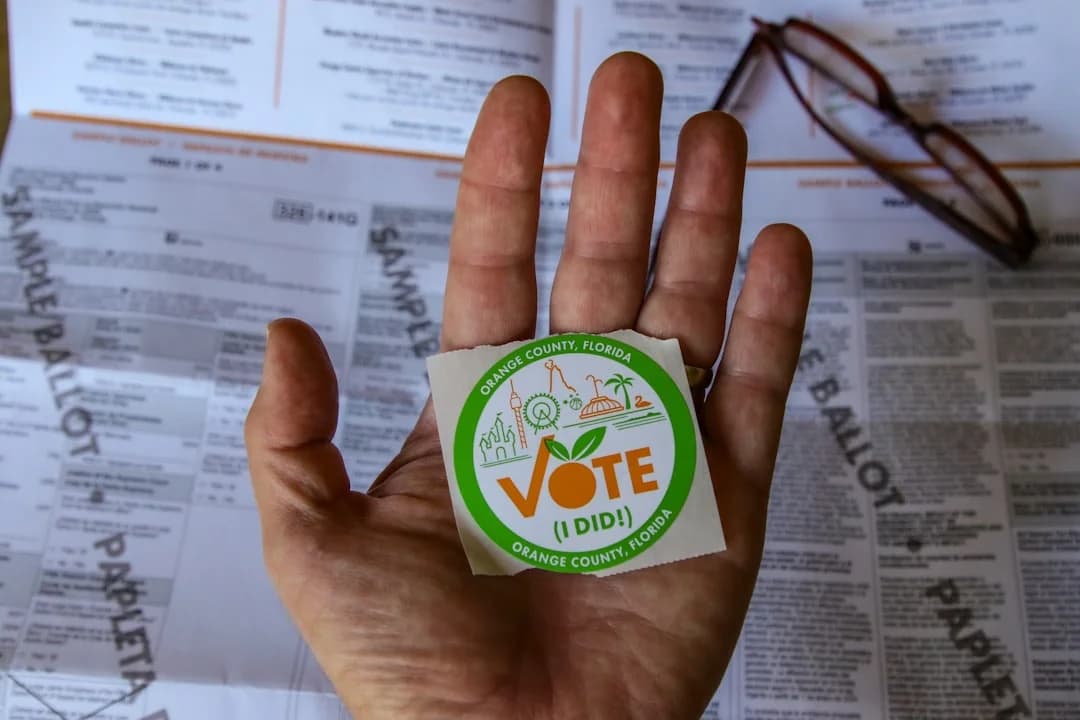
The political landscape as the United States heads into the 2026 midterm elections underscores a rising, highly influential demographic: the Latino electorate. The phrase voto latino 2026 EE. UU. has moved from background chatter to front-page policy and campaign strategy as analysts increasingly treat Latinos as a pivotal swing bloc in many states. In 2024, Latinos emerged as a decisive factor in several contests, and the data-driven view for 2026 suggests that their turnout decisions, issue priorities, and party alignment will shape who wins congressional seats, who controls statehouses, and how national campaigns frame immigration, economic policy, and social justice. At a moment when economic pressures—especially in housing, groceries, and inflation—continue to dominate household concerns, understanding how Latino voters respond to messages, candidates, and organizing efforts becomes essential for any campaign aiming to compete in the nation’s most competitive markets. The latest polling and demographic research show that voto latino 2026 EE. UU. could tilt outcomes in multiple battleground states, reinforcing the need for data-driven, culturally informed outreach. (pewresearch.org)
Across the country, observers are watching a confluence of forces: a rapidly growing eligible Latino population, persistent economic anxieties at the kitchen table, and increasingly sophisticated outreach tactics that leverage digital media and local networks. Pew Research Center’s 2024 analysis places Latinos at 36.2 million eligible voters, up from 32.2 million in 2020 and more than double the 14.3 million Latino eligible voters recorded in 2000. That surge makes Latinos the nation’s second-largest group of eligible voters, trailing only White voters and ahead of Black and Asian American voters in many states. With such scale, the Latino vote is not a niche segment; it is a coin with several influential faces—the older, established voters in traditional communities and a growing cohort of younger, bilingual, and urban Latinos who consume news, culture, and politics through social media, podcasts, and community spaces. The 2024 landscape showed a split rooted in economics and policy, but Latinos demonstrated clear devotion to concrete issues—most notably the economy—while remaining receptive to candidates who demonstrate empathy, competence, and capability to address their lived realities. (pewresearch.org)
A parallel thread shaping voto latino 2026 EE. UU. is a shift in how political campaigns engage Latino voters. In 2026, the Congressional Hispanic Caucus’ political arm has rolled out a network of online content creators in Houston and beyond, aiming to close messaging gaps with Latino audiences through trusted voices who speak Spanish and understand local communities. The effort, branded under the RUIDO program, seeks to connect influencers with campaigns and broaden turnout as early voting begins in key states. Campaign insiders describe it as a tactical evolution from traditional door-knocking and town-hall events to a multi-channel, culturally resonant approach designed to reach voters who historically engage at lower rates with national party-outreach. While the effectiveness remains to be proven at scale, the initiative acknowledges a structural reality: Latino voters are diverse, geographically dispersed, and deeply influenced by family, faith, and local networks. The rollout in Texas—where early voting and a March 3 primary are on the calendar—signals a proof-of-concept for broader campaigns to adapt to Latino media ecosystems. (apnews.com)
Section 1: What Happened
Demographic shifts and the size of the Latino electorate
Latino voters have grown from a demographic afterthought to a central focus in political strategy, driven in part by a larger, younger population and expanding voter eligibility. Pew’s September 2024 analysis highlighted a pivotal milestone: 36.2 million Latinos were eligible to vote in 2024, up from 32.6 million in 2020 and more than double the 14.3 million Latino eligible voters in 2000. This demographic-scale shift transforms Latinos into a decisive variable in multiple battlegrounds, particularly in states where Latino voters represent a meaningful share of registered voters. The Pew data also showed that Latinos’ engagement is shaped by a mix of concerns—economic conditions, healthcare, and immigration policy—across different subgroups and regions. The practical takeaway is straightforward: policymakers and campaigns cannot treat Latinos as a monolith; they must tailor messages to diverse communities across states such as Arizona, California, Florida, Texas, New Mexico, and Colorado. (pewresearch.org)
Geographic footprints of influence
The Latinos’ geographic footprint matters more than ever. A UCLA brief released in October 2024 underscored how Latinas—an increasingly influential subset—constitute a meaningful share of registered voters in battleground states. In five states—Arizona, California, Nevada, New Mexico, and Texas—Latinas account for more than 20% of registered voters in many precincts. The report emphasized their youthfulness and resilience in turnout, with Latinas voting at strong rates in 2020 and poised to shape outcomes in subsequent cycles. This regional concentration means campaigns cannot rely on a one-size-fits-all approach; they must build state- and community-specific outreach plans that address policy concerns such as reproductive rights, healthcare access, and local economic priorities. (newsroom.ucla.edu)
Political preferences in 2024 and momentum into 2026
Polls from 2024 showed a nuanced electoral landscape among Latino voters. Pew’s analysis found a strong preference for Democratic candidates in the late 2024 cycle in terms of statewide and national contests, while also revealing that Latino voters are highly attuned to the economy. Specifically, in a late-2024 Pew analysis, 57% of Latino registered voters backed Vice President Kamala Harris and 39% backed former President Donald Trump in a two-candidate matchup; in a July 2024 cross-pressured scenario, Biden and Trump were closer in some measures, underscoring how Latino voters can swing with context and candidate quality. The broader takeaway is that Latino voters are a pivotal but diverse bloc whose preferences can shift with economic conditions and the perceived competence of leadership on core issues. (pewresearch.org)

Photo by Glen Carrie on Unsplash
In the aftermath of 2024, multiple polls in 2025-2026 have highlighted ongoing economic concerns as primary drivers of Latino political sentiment. A major UnidosUS poll released in April 2025—tanned with BSP Research and Shaw & Company Research—found that about two-thirds of Latino voters believed the country was headed in the wrong direction, with 60% holding President Trump responsible for economic policies and outcomes. Pocketbook issues dominated, including cost of living, inflation, and housing. The survey’s findings illustrate how economic context remains central for the Latino electorate as it contemplates 2026 choices. Campaigns have taken note, incorporating economic literacy, wage growth, child-care affordability, and housing assistance into messaging that previously focused more on immigration or social issues. (unidosus.org)
The 2026 midterm polling landscape for Latino voters has also evolved with a more granular emphasis on economic incentives and trust in institutions. CBS News reported in November 2025 on the Unidos Bipartisan Poll of Hispanic Voters: The Road to 2026. The poll found that 53% of Latino voters cited cost of living and inflation as their leading concern, with 36% citing jobs and the economy, 32% housing, 30% healthcare, and 20% immigration reform as other top issues. The same survey highlighted a strong sense among Latino voters that Congress and the broader political system were not delivering on economic promises, with a notable share disapproving of the handling of the economy by the administration and Congress. The data underscore the practical, kitchen-table concerns shaping voto latino 2026 EE. UU. and illustrate why economic framing—alongside policy specifics—will be central to campaign messaging. (cbsnews.com)
The evolving political dynamics of voto latino 2026 EE. UU. are not just about presidential politics; they matter for House and Senate outcomes, state-level races, and the redrawing of districts. A 2026 political environment with multiple polls showing a close race and a large, diverse electorate has led to cross-party strategies, including the infusion of digital media, influencer partnerships, and locally resonant outreach. A practical example is the Democratic-led RUIDO program in Texas, which aims to connect with Latino voters through trusted local voices, and to spread messaging that resonates with daily experiences—from cost of living to local healthcare access. The AP News coverage documented the Houston rollout, including early events around March primary planning and the broader aim of scaling the model to other competitive races. The approach reflects a broader shift in how campaigns seek to engage Latino voters who frequently interact with digital content more than with traditional campaign channels. (apnews.com)
Why this matters to markets, technology, and policy
The Latino electorate’s growing size intersects with several domains—economic policy, technology adoption in campaigns, and the broader market implications of political stability. In terms of policy, the focus on cost of living, inflation, housing, and healthcare touches sectors such as housing finance, consumer goods pricing, health services, and labor markets. For markets, this translates into potential shifts in consumer confidence, wage growth, and sector-specific regulation that can influence investment decisions and corporate strategy. The Latino voting bloc’s preferences suggest that economic policy coherence, workforce development, and a balanced immigration and trade approach will be critical touchpoints in 2026 and beyond.
Latino voters are increasingly a data-driven audience: bilingual, digitally engaged, and often connected to local media ecosystems and social networks. This combination creates both opportunities and challenges for technology platforms, political advertisers, and civic organizations. The 2024 Pew analysis indicates a high level of interest in policy details among Latino voters, including the economy, health care, and immigration, with varying levels of engagement by demographic subgroup. The 2025-2026 polling environment reinforces the idea that Latino voters respond to concrete policy proposals and measurable outcomes, not just slogans. Campaigns that can demonstrate tangible progress on cost-of-living relief, job opportunities, and affordable housing are more likely to translate concerns into turnout and votes. At the same time, the rise of influencer-based outreach signals a broader permission for campaign messaging to operate within digital-native spaces, which has implications for platform policies, data privacy, and transparency in political advertising. (pewresearch.org)
Section 2: Why It Matters
The contemporary impact of voto latino 2026 EE. UU.
Latino voters have steadily grown into a central pillar of American electoral politics. Pew’s 2024 findings emphasize not only the size of the eligible Latino electorate but also the varying priorities that drive Latino voters’ choices. The same data set shows that while the economy is a top concern across Latino subgroups, issue salience and voting intentions differ by region, age, gender, and citizenship status. For 2026, that means campaigns cannot rely on a single script; instead, they must craft region-specific, issue-focused messages that connect with real-world concerns—ranging from mortgage affordability to access to high-quality health care in rural and urban communities alike. As Latino turnout continues to rise in some states, it also because of the heterogeneity within Latino communities, including generations born in the United States versus newer immigrant groups, and the diversity of languages and cultures across the Latino population. This complexity translates into a political landscape where Latinos are capable of tipping outcomes in multiple contests if mobilized effectively. (pewresearch.org)

Photo by María Fuentes on Unsplash
Subgroup dynamics and the politics of identity
The UCLA Latinas brief adds a critical layer to this analysis: Latinas are a substantial and increasingly influential subset of the Latino electorate, with a median age around 45 and growing representation across battleground states. Their role is amplified in states where Latinas’ participation has historically driven turnout, and their concerns—reproductive rights, healthcare access, and economic opportunity—are central to campaign messaging. The data points suggest that Latinas can serve as a bridge between family-oriented concerns and broader policy debates, potentially catalyzing multi-generational engagement within households. The practical implication for campaigns is to design outreach that respects cultural nuance and addresses the specific policy concerns of Latinas, rather than assuming universal appeal across all Latino voters. (newsroom.ucla.edu)
Economic concerns as a common thread
Economic anxiety remains a unifying thread across Latino voters, even as political preferences show diversity. The UnidosUS poll in 2025, along with the 2025 CBS survey, underscores that the cost of living, inflation, and housing are the leading concerns, with a sizable share of respondents believing the economy has worsened under current policies. This trend aligns with broader national sentiment but is particularly potent within Latino communities where household budgets can be tight, debt loads may be higher, and access to affordable housing varies by region. For policymakers and business leaders, this signals continued demand for pro-growth policies, targeted workforce development, and regulatory stability that can help Latino families plan for the future. (unidosus.org)
Broader context: political fragmentation and strategic coalitions
A notable feature of voto latino 2026 EE. UU. is the apparent fragmentation within the Latino electorate itself. The Pew data show that while many Latinos lean toward Democratic candidates in statewide and national contests, the reasons behind support or opposition can diverge—economics, immigration policy, and long-standing party alignment all play roles. The AP’s 2026 coverage of the RUIDO program illustrates how campaigns adapt to this fragmentation by diversifying outreach channels—identifying local influencers who can convey policy messages in culturally resonant terms. The risk for campaigns is that influencer-driven outreach can be seen as opportunistic if it lacks policy substance or fails to deliver tangible benefits for Latino communities. The best path forward, as suggested by the data, is a combination of authentic, locally grounded engagement with clear policy commitments that address everyday concerns. (pewresearch.org)
Implications for tech, media, and civic participation
Technology and media play increasingly central roles in how voto latino 2026 EE. UU. is mobilized. The shift toward digital-native outreach aligns with broader trends in political communication, where data-driven microtargeting, bilingual content, and influencer partnerships co-exist with traditional get-out-the-vote efforts. Campaigns that emphasize transparency, local relevance, and credible messengers are more likely to earn trust in Latino communities. However, this also raises questions about the ethics and transparency of online political content, as well as the need for accurate information to counter disinformation in online spaces. The 2026 rollout of RUIDO reflects a pragmatic response to these realities: if messages are authentic and embedded in everyday experiences—like affordable housing, job security, and healthcare access—they are more likely to resonate with voters who may not engage with national platform rhetoric but do respond to practical policy outcomes. (apnews.com)

Photo by Element5 Digital on Unsplash
Section 3: What’s Next
Timeline and key dates to watch
Several concrete dates in 2026 will shape voto latino 2026 EE. UU. and the electoral environment:
The Texas primary and early voting window will set a tone for Latino-focused campaigns in one of the nation’s most Latino-rich states. The AP coverage identifies Houston as a focal point of the early outreach push, with early voting for Texas’ statewide primary scheduled in early March 2026; the March 3 date is a key milestone for Latino outreach efforts and for measuring the momentum of the RUIDO initiative as it expands beyond Houston. This is not only a political event but also a signal for campaign logistics, funding, and media strategy in the state. (apnews.com)
The nationwide midterm context remains anchored to November, with general elections typically held on the Tuesday after the first Monday in November. The 2026 United States elections landscape indicates the broader general election will occur on November 3, 2026, with congressional, state-level, and local races on the ballot. For campaigns and markets, this is a calendar anchor for budgeting, advertising rotations, and issue campaigns that target Latino voters in multiple states. (en.wikipedia.org)
Ongoing polling windows through 2025 and into 2026 will continue to refine the picture of Latino priorities and political alignments. The UnidosUS 2025 poll’s results, along with CBS News coverage in late 2025, provide a benchmark for how concerns about cost of living, inflation, and housing influence Latino voters as the election season intensifies. Observers will watch for shifts in attitudes toward immigration policy and economic proposals as candidates refine their platforms. (unidosus.org)
What to watch for in campaign strategy
Voto latino 2026 EE. UU. will likely be influenced by several evolving campaign strategies:
Localized influencer outreach and digital content: The RUIDO program marks a shift toward local voices who can translate national policy into local impact stories. The aspiration is to connect with voters through trusted messengers who can discuss cost of living, healthcare access, and neighborhood-level economic opportunities in relatable terms. The early Texas rollout provides a real-world test of whether this approach can translate into higher turnout and more favorable candidate support. (apnews.com)
Data-driven segmentation and targeted messaging: Polls consistently emphasize that Latino voters are not a monolith. Campaigns will likely segment the electorate by age, nativity, region, language preference, and occupational status, to craft messages that resonate—ranging from housing affordability in Florida to wage growth in Texas to healthcare access in California. The Pew study’s nuanced breakdown of top issues supports this approach, underscoring the need for diverse policy portfolios and credible policy execution plans. (pewresearch.org)
Policy clarity on economics and social policy: Economic concerns have dominated Latino political discourse in recent cycles, and 2026 will continue to stress the need for concrete policy steps rather than aspirational promises. The UnidosUS poll findings and CBS polling point to cost of living and inflation as central concerns, with a heavy emphasis on practical policy tools—fiscal relief, job creation, affordable housing, and access to affordable healthcare. Politicians who can articulate actionable plans with measurable outcomes in these domains will likely gain more traction among Latino voters. (cbsnews.com)
What campaigns are watching in battleground states
Battleground states with significant Latino populations—Arizona, California, Nevada, New Mexico, Texas, and Florida—will be the focal points for voto latino 2026 EE. UU. Latinas’ rising turnout in states like Arizona and Texas suggests a continuous opportunity for campaigns to mobilize Latinas as a potent voting bloc. The UCLA brief underscores the importance of Latinas in these states, both for their numerical strength and for their potential to drive broader household and community engagement. As campaigns tailor their field programs, they will analyze precinct-level data to identify where Latinos are—by age group, language preference, and community ties—and to deploy tailored messaging that emphasizes the issues of the moment. (newsroom.ucla.edu)
Closing: Staying Informed and Ready As the voto latino 2026 EE. UU. story unfolds, readers of EE.UU. Hoy can expect a steady stream of data-driven updates that connect demographic trends, economic realities, and campaign strategies. The essential takeaway for the public is clear: Latino voters continue to grow in size and influence, and their engagement hinges on tangible, locally relevant policy outcomes. For those watching markets and technology trends, the electoral dynamics will have tangible implications for regulatory stances, economic policy, and digital civic participation. Readers are encouraged to track polling updates from reputable outlets, keep an eye on regional shifts in battleground states, and follow the progression of outreach programs like RUIDO to understand how campaigns adapt to a more diverse and digitally connected electorate. The coming months will reveal how voto latino 2026 EE. UU. translates into votes, coalitions, and policy outcomes that shape the national agenda.
To stay updated, follow credible outlets that publish bilingual or carefully translated data analyses, and monitor local election offices for official dates, registration deadlines, and voting options in your state. The Latino electorate’s voice remains a powerful indicator of where the United States is headed on economic policy, social priorities, and the future of democracy in a rapidly changing, highly connected nation. (pewresearch.org)