política migratoria 2026 EE.UU. and Tech Trends
Explore a data-driven analysis of the política migratoria 2026 in EE.UU. and its significant impact on evolving tech markets and trends.

Sobre el autor
**Marisol Delgado** es periodista de cultura y estilo de vida en *EE.UU. Hoy*, explorando la rica diversidad de la experiencia latina en Estados Unidos. Sus crónicas celebran las tradiciones, el arte y las voces que enriquecen la vida americana.
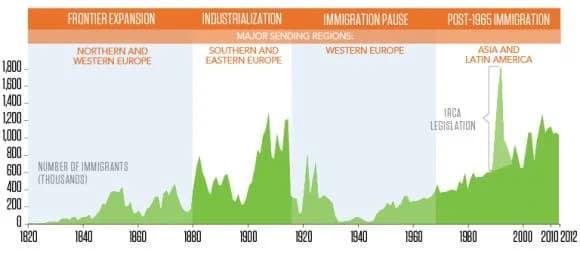
Immigration policy in the United States continues to shape the talent pipelines that power American technology and market growth. As policymakers pursue a tighter, more enforcement-oriented stance, the 2026 landscape blends border security measures, visa reforms, and humanitarian program adjustments with real-world consequences for startups, large tech firms, and the broader economy. This trend analysis maps the data-driven evolution of política migratoria 2026 EE.UU. and traces how the interplay of enforcement, talent mobility, and humanitarian policy is influencing investment, hiring strategies, and long-term competitiveness in the American tech ecosystem. The numbers coming out of 2025 into 2026—border encounters, visa allocations, and refugee admissions ceilings—offer a first-order read on where the market is headed and where opportunities may emerge for those who prepare now. As Pew Research notes, migrant encounters at the U.S.-Mexico border dropped to some of their lowest levels in decades in 2025, signaling a distinctive shift in border dynamics that ripples through labor markets and corporate planning. (pewresearch.org)
For technology companies and market players, the most salient question is how much room remains for talent mobility under tighter rules, and what kinds of investment in automation, reskilling, or local hiring will fill any anticipated gaps. The following sections synthesize data from federal agencies, think tanks, and industry analyses to provide a clear, evidence-based view of the 12–18 month outlook and the strategic moves that readers should consider. A key early signal is the H-1B program’s evolving mechanics: the U.S. government reports that the FY2026 cap — 65,000 regular plus 20,000 for U.S. advanced degree holders — reached its allocations, setting the stage for a wage-weighted approach in future years. This shift is likely to redefine how employers plan STEM staffing and how foreign-born workers navigate U.S. opportunities. (uscis.gov)
The Current Landscape
Border dynamics and migration flows
The past year has featured a complex mix of enforcement intensity and shifting migration patterns. In fiscal year 2025, Border Patrol encounters at the U.S.-Mexico border totaled 237,538, the lowest in more than five decades and a clear departure from multi-million counts seen earlier in the 2020s. This data underscores a pronounced slowdown in unauthorized border encounters, even as policy rhetoric remains firmly national-security oriented. The drift toward lower encounter levels has been corroborated by multiple analysts and official summaries, reinforcing the sense that the enforcement posture is achieving deterrence effects in some corridors. (pewresearch.org)
In the same vein, federal agencies have highlighted record-low nationwide border encounters in mid-2025, signaling a peak-in-policy effect rather than merely a seasonal fluctuation. The Department of Homeland Security reported June 2025 as a milestone month for lower encounter counts, illustrating a continuing downward trend in border activity. For policymakers and market participants, these data points matter because they influence investor and employer confidence, as well as annual planning cycles for compliance and hiring. (dhs.gov)
“Migrant encounters at the U.S.-Mexico border are at their lowest level in more than 50 years,” according to Pew Research, which analyzed federal government data for fiscal year 2025. The finding helps contextualize how enforcement and migration flows interact with the labor market and business planning. (pewresearch.org)
Talent mobility and H-1B activity
The H-1B visa program remains a central lever for tech talent inflows, and 2025–2026 has featured pivotal shifts in how allocations are handled. USCIS announced that the FY2026 cap—65,000 regular plus 20,000 for advanced degrees—was reached, signaling robust demand for skilled foreign workers in the U.S. market even as policy adjustments loom in the background. This milestone is important because it frames how employers will approach subsequent cap seasons, including potential changes to selection processes and filing windows for FY2027. (uscis.gov)
USCIS also indicated that the initial H-1B registration for FY2026 had already completed, with enough unique beneficiaries registered to meet the cap. This event informs employer planning, including whether to ramp up early recruitment and how to align SOC codes and wage levels with anticipated selection criteria. In the near term, industry observers should monitor newly announced regulatory changes and the timeline for any wage-weighted allocation system, which representatives say could alter the odds of selection across wage tiers. (uscis.gov)
The policy environment around H-1B is evolving in ways that extend beyond the cap counts. The DHS and USCIS have signaled shifts toward more stringent integrity measures, with final rules introduced in late 2025 that weight applications by offered wage levels and OEWS wage tiers, moving away from a pure lottery in some future cycles. The policy intent is to prioritize higher-skilled and higher-paid roles, while increasing compliance burdens for employers. For readers tracking investment and talent strategies, this development is a reminder to invest in robust recruitment analytics and to consider complementary pathways such as local retraining and graduate recruitment programs. (gtlaw.com)
Refugee admissions policy and humanitarian programs
The refugee admissions landscape has shifted dramatically for Fiscal Year 2026. The White House established a refugee admissions ceiling of 7,500 for FY2026, representing the lowest cap in the program’s history and a sharp departure from recent years in which annual ceilings approached or exceeded 100,000. This cap has been widely reported as a significant policy pivot with implications for humanitarian leadership, global displacement responses, and corporate social responsibility programs that partner with resettlement efforts. (politico.com)
Beyond the ceiling itself, the U.S. refugee program has experienced disruption in processing mechanisms, with updates from the Refugee Admissions Program (USRAP) and related initiatives affecting how approvals are handled and how private partners participate. For readers evaluating risk and opportunity in global talent pipelines, it’s critical to track admissions reports, which are published monthly and show ongoing refugee processing and arrivals data. The U.S. Refugee Admissions Processing Center maintains monthly admissions dashboards, including a 2026 snapshot, which readers can consult for the latest figures. (rpc.state.gov)
Real-world examples and case studies
Case Study 1: Tech industry responses to visa policy changes. The broader tech sector is watching H-1B policy changes closely, with executives and HR teams weighing how wage-weighted selection, higher filing fees, and other reforms could affect talent pipelines. Media reports indicate a cautious stance among major employers, who are balancing the need for global talent with the friction of a tighter immigration regime. The Washington Post has highlighted concerns within Silicon Valley about visa denials, increased scrutiny, and the potential impact on talent mobility, illustrating how policy uncertainty translates into hiring and retention challenges for global firms. This dynamic matters for EE.UU. Hoy’s readers as they assess competitive positioning in AI, cloud, and software ecosystems. (washingtonpost.com)
Case Study 2: Refugee program adjustments and corporate partnerships. News outlets and advocacy organizations have tracked how the FY2026 refugee cap and processing changes influence corporate-sponsored resettlement programs, Welcome Corps adjustments, and private sector engagement with humanitarian pathways. Political reporting from Politico and AP covers the cap decision and its reception, while the RPC and USCRI provide ongoing data on arrivals and processing, informing companies that rely on international mobility for global teams. These case studies illustrate how macro policy shifts ripple into talent mobility strategies and corporate responsibility initiatives. (politico.com)
Why It’s Happening
Economic and labor market dynamics

Immigration policy in 2026 sits at the intersection of labor demand, wage dynamics, and national competitiveness. The tech sector remains a significant engine of growth, and the H-1B program continues to be a primary mechanism for filling specialty occupations in software, cybersecurity, data analytics, and engineering. Yet, policy reforms—such as the transition to wage-weighted H-1B selection in future cycles and higher filing fees—are designed to realign talent inflows with wage levels and job requirements, potentially reducing the number of entrants for lower-wage roles while preserving pathways for high-demand specialties. This policy architecture is being tested against a backdrop of broader migration trends, including shifts in net migration and the resilience of international student pipelines.
Politically and economically, the U.S. is navigating a delicate balance between securing labor supply for high-skill industries and maintaining a competitive immigration regime that can attract global talent. Washington Post reporting on 2025–2026 data indicates that the United States experienced negative net migration in 2025, a dynamic with potentially meaningful macroeconomic consequences, including effects on consumer demand, entrepreneurship, and workforce composition. These broader demographic shifts interact with immigration policy to shape how firms plan capital investments, R&D, and global expansion. (washingtonpost.com)
Regulatory shifts and enforcement posture
The policy trajectory around H-1B and other work-authorized pathways reflects a durable intent to tighten oversight and recalibrate the balance between safeguarding wages and preserving access to global talent. The final rule introducing wage-weighted selection marks a watershed in how the H-1B program allocates slots, effectively prioritizing higher-paying roles and more specialized occupations. Industry observers anticipate a transition period as employers adapt to new data requirements, wage tier disclosures, and process-integrity obligations. The regulatory changes are not just about the cap count; they’re about evolving the entire applicant pool and how employers design recruitment, training, and retention programs. (apnews.com)
Simultaneously, humanitarian pathways—especially refugee admissions—are undergoing reform. The dramatic cap reduction to 7,500 for FY2026 signals a broader shift in how the United States positions itself within global displacement dynamics, with potential implications for global talent mobility and international collaboration with U.S.-based tech firms and research institutions. Industry observers are watching not only the numbers but also the pace and structure of processing and resettlement programs, which influence private-public partnerships around mobility and inclusion. (apnews.com)
Sectoral and global competition factors
The global competition for talent remains fierce, particularly in AI, semiconductors, cybersecurity, and cloud computing. While the U.S. seeks to protect wage floors and reduce friction for high-skill roles, other countries are expanding their own talent pipelines, sometimes with more predictable visa regimes or more streamlined immigration processes. This geopolitical backdrop underscores the strategic importance of attracting and retaining world-class talent, especially in industries where U.S. leadership is a competitive advantage. Studies and industry commentary highlight the ongoing tension between protectionist impulses and the need to sustain innovation ecosystems that rely on international collaboration. (forbes.com)
What It Means
Business impact
Talent sourcing and hiring strategies are in flux. With the H-1B cap set for FY2026 and a move toward wage-weighted selection in future cycles, U.S.-based tech firms may redouble investments in local upskilling, reskilling, and domestic pipelines (e.g., graduates from U.S. universities and established apprenticeship tracks). The cap’s magnitude and the likelihood of higher-priority wage tiers push employers to optimize compensation strategies and recruitment processes to align with anticipated rules. These shifts are already prompting firms to reevaluate the cost-benefit calculus of global recruitment versus U.S.-based development programs. (uscis.gov)
Companies that previously relied heavily on international mobility may diversify by expanding onshore roles, forming stronger partnerships with U.S. research institutions, and leveraging wage-appropriate recruitment to meet critical skill needs. Industry observers anticipate that the next 12–18 months will witness a acceleration in local hiring and investments in automation, AI acceleration, and scalable training programs to mitigate potential talent bottlenecks. (gtlaw.com)
Refugee and humanitarian policy changes could influence corporate social responsibility initiatives, global mobility programs, and talent diversification strategies. While the FY2026 cap is the headline, ongoing processing, resettlement partnerships, and private sector engagement with refugee programs will shape workforce composition and community integration in the near term. Readers should monitor RPC monthly admissions reports and private-sector partnerships for real-time signal. (rpc.state.gov)
Consumer and industry effects
Net migration trends—particularly the 2025 negative net migration—carry macroeconomic implications that ripple through consumer demand, housing markets, and startup ecosystems. If fewer foreign-born workers contribute to middle-class growth and entrepreneurial activity, downstream effects could include slower consumer spend growth and slower startup scaling in high-tech hubs. Analysts emphasize the importance of maintaining a balanced immigration policy that sustains both supply of skilled labor and consumer demand in a dynamic economy. (washingtonpost.com)
The wage-weighted H-1B rule and higher filing costs may affect cost structures for startups and mid-market tech firms, potentially accelerating offshoring or nearshoring discussions among global teams. While the long-run impact remains uncertain, early signals point to a more selective and higher-cost hiring landscape for certain roles, particularly in software engineering, data science, and specialized R&D functions. Observers caution that policy design must preserve incentives for innovation while guarding wages and labor standards. (apnews.com)
Industry changes
Talent supply chain resilience will become a competitive differentiator. Companies that invest in domestic STEM education partnerships, university co-op programs, and internal upskilling will likely weather policy shifts more effectively than those relying primarily on foreign-born talent. Analysts emphasize the value of strategic workforce planning, data-driven recruitment, and employer-driven training programs to bridge potential gaps created by stricter immigration policies. (immigrationforum.org)
The tech sector’s geographic footprint could shift as firms reevaluate where critical roles are located. While traditional hubs remain important, policy-induced talent constraints may encourage distribution strategies that leverage regional campuses, remote-first models, and cross-border collaboration with international offices in friendlier regulatory environments. This trend aligns with broader industry discussions about resilience and distributed innovation. (csmonitor.com)
Looking Ahead
6–12 month predictions

H-1B policy trajectory will continue to evolve toward wage-weighted selection for future cycles, with February 27, 2026, as a key implementation date for the new rule and March 2026 (or later) for related cap-season processes. Employers should prepare for more complex registration requirements, enhanced documentation, and stricter process integrity rules. Expect continued scrutiny of wage levels, SOC codes, and worksite locations during the cap season, with potential adjustments to LCA and petition processes to align with the new framework. (gtlaw.com)
Refugee admissions and humanitarian pathways will remain a focal point of policy debate and corporate engagement. While 7,500 will be the formal cap, private-sector partnerships and humanitarian programs may seek alternative channels for talent mobility, including private sponsorship or Welcome Corps-like mechanisms, depending on regulatory developments and legal challenges. Stay tuned to RPC updates and leading NGOs for real-time data and guidance. (apnews.com)
Border dynamics will continue to influence workforce planning. If the 2025–2026 trend of historically low border encounters persists, firms may find more predictable planning environments for international assignments and cross-border collaborations. Conversely, any policy shocks or regulatory shifts could reintroduce volatility into the talent pipeline, making scenario planning essential for technology roadmaps. (dhs.gov)
Opportunities and strategies
Build robust local talent pipelines. Invest in U.S.-based STEM education partnerships, apprenticeships, and reskilling programs to reduce sensitivity to international mobility fluctuations. Collaborate with universities to create graduate pipelines aligned with fast-growing segments such as AI, cybersecurity, and cloud architecture. This approach aligns with long-term productivity gains from domestic talent development. (immigrationforum.org)
Leverage automation and productivity tools. As talent inflows become more selective, automation, AI, and workflow optimization will help organizations maintain velocity. Thoughtful integration of automation can mitigate skill gaps and maintain competitive delivery timelines for product development and customer support. Industry analyses suggest a growing role for augmentation AI in sustaining innovation even as immigration policy tightens. (arxiv.org)
Strengthen global mobility programs with a hybrid model. Where feasible, firms can combine onshore development with carefully designed international assignments and global teams, supported by internal mobility policies that minimize risk in the face of changing visa regimes. Experts emphasize the need for transparent, data-driven mobility planning and clear criteria for cross-border assignments. (immigrationforum.org)
How to prepare for readers and businesses
Implement wage-and-visa scenario planning. Develop models that simulate hiring outcomes under different cap scenarios, wage-weighted rules, and processing timelines. This will help leadership assess risk, budget for potential wage differentials, and identify where domestic upskilling can close gaps. Legal and compliance teams should stay abreast of final rule details and ensure that recruitment processes, LCA documentation, and SOC classifications align with evolving requirements. (gtlaw.com)
Diversify talent sources. In addition to traditional U.S.-based pipelines, explore partnerships with international campuses, research institutions, and private sector programs that maintain mobility channels within regulatory frameworks. Keep a close watch on refugee admissions and humanitarian pathways for any new partnerships or funding opportunities that can complement internal hiring. (rpc.state.gov)
Invest in transparency and salary benchmarking. With wage-based selection rules, it becomes essential to provide clear wage data during registrations and to ensure wage offers reflect actual market conditions. Employers should prepare robust documentation to defend wage levels and SOC choices in the event of compliance reviews. Industry advisories from law firms and immigration experts can guide these preparations. (gtlaw.com)
A Quick Reference: How Major Pathways Compare
| Program | Typical Pathway | Cap / Quota (2026 context) | Key 2026 Trend | Sources |
|---|---|---|---|---|
| H-1B (regular) + master’s cap | Work visa for specialty occupations; wage data and employer sponsorship required | Regular cap 65,000; Master’s cap 20,000; cap reached for FY2026 (allocation confirmed) | Move toward wage-weighted selection in future cycles; higher compliance goals | USCIS announcements; Final Rule coverage; AP report on weighted rules (uscis.gov) |
| Refugee Admissions (USRAP) | Resettlement pathway for refugees processed through government programs; partnerships with NGOs | FY2026 cap set at 7,500 (historic low) | Private-sector and NGO partnerships to sustain humanitarian mobility; ongoing processing data | Politico turn2news13; AP turn2news12; RPC monthly reports turn2search7 (politico.com) |
| Asylum (affirmative/defensive) | Protection-based pathways; USCIS and immigration courts adjudicate claims | Not a capped program; linked to adjudication volume; 2023 data show ~54,350 total asylum grants | Continued policy tightening and process reforms affecting grant rates; legal pathways evolve | American Immigration Council turn6search1; MigrationPolicy turn6search5 (americanimmigrationcouncil.org) |
Notes: The table highlights the current regime and near-term policy signals. Data points reflect 2025–2026 developments and authoritative sources cited above.
Closing thoughts
The intersection of política migratoria 2026 EE.UU. and technology market trends is a dynamic space where policy, economics, and innovation co-evolve. The data show a U.S. policy environment that is tightening in some dimensions (weight-based H-1B selection, higher fees, lower refugee ceilings) while still under pressure to maintain a robust, globally competitive tech ecosystem. For EE.UU. Hoy readers—professionals focused on technology and market insights—the practical takeaway is clear: build resilient, data-driven talent strategies that combine strong onshore capabilities with carefully managed international mobility, and maintain readiness to adapt as the regulatory landscape evolves. The 6–12 month horizon will test these approaches, but the most successful organizations will couple policy awareness with aggressive investment in internal skills, automation, and diversified talent pipelines.
By staying closely aligned with current data—from border and visa metrics to refugee processing dashboards and asylum trends—businesses and policymakers can find the balance between national priorities and global competitiveness. The coming months will reveal how the policy architecture translates into real-world outcomes for innovation, job creation, and American leadership in technology.
In short, the politics of migration in 2026 are not just a governance story; they are a technology and market story with broad implications for investment, competition, and the pace of American innovation.