Emprendimiento latino en Estados Unidos (2018-2023)

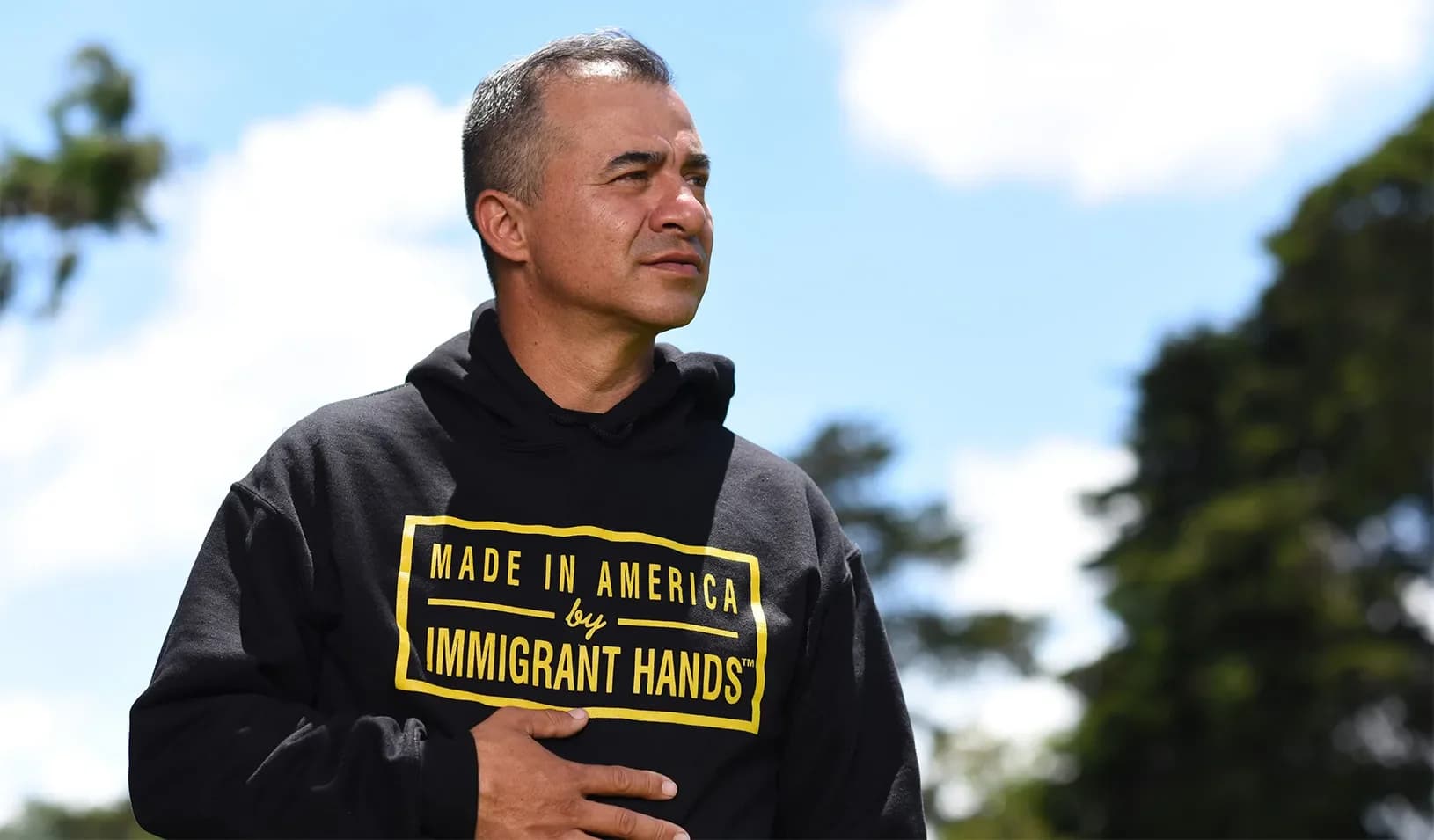
The United States has long been a dynamic testing ground for immigrant-led entrepreneurship, and the period from 2018 through 2023 stands out for Latino-owned businesses. This data-driven examination—grounded in the latest federal statistics, Stanford’s decade-long State of Latino Entrepreneurship (SOLEI) research, and reputable policy analysis—paints a portrait of growth, constraint, and opportunity. The central fact that leaps out is the sheer scale and velocity of Latino entrepreneurship during this window: the number of Latino-owned employer firms expanded markedly, even as access to capital and procurement remained uneven. These figures matter because they illuminate not only business vitality but also the potential impact on regional economies, jobs, and innovation ecosystems across the country. Emprendimiento latino en Estados Unidos (2018-2023) is not just a demographic story; it is a technology and market story with broad implications for policy, corporate procurement, and entrepreneurial support networks. (news.stanford.edu)
Growth and Scale
1) Baseline: 2018 snapshot of Latino-owned employer firms
In 2018, estimates place Latino-owned employer firms at roughly 350,000, generating about $460 billion in annual revenue and employing about 2.9 million people. This baseline is frequently cited in State of Latino Entrepreneurship analyses and subsequent trend work. What this means: a sizable, vibrant, and growing segment that would serve as a foundation for post-2018 expansion. Source context comes from SLEI-era summaries that fed into the 2021–2023 reporting cycle. (forbes.com)
2) 2023 count: Latino-owned employer firms reach about 465,202
From 2018 to 2023, the number of Latino-owned businesses grew by 44%, reaching approximately 465,202 Latino-owned employer firms. This milestone is highlighted in Stanford’s 2024–2025 SOLEI coverage and accompanying Stanford LBAN messaging. Context: a decade of data shows sustained growth, with breadth across sectors beyond traditional food-service clusters. What it means: the Latino business community has become a more substantial share of the employer firm landscape and a larger employer of workers nationwide. (news.stanford.edu)
3) 2021 snapshot: 406,086 Hispanic-owned employer firms; 3.0 million employees; $572.9B in receipts
The 2022–2023 ABS-based and companion analyses show that in 2021 there were 406,086 Hispanic-owned employer firms, employing about 3.0 million people and generating $572.9 billion in receipts. Hispanics accounted for roughly 6.9% of all employer firms that year. Context: this data point anchors the mid-pandemic recovery phase and provides a bridge to the 2022–2023 post-COVID landscape. What it means: Latino entrepreneurship was already a sizable, wage-earning engine by 2021, with a per-firm revenue that helps calibrate policy and investment priorities. (census.gov)
4) 2020–2021: 8.2% year-over-year growth for Hispanic-owned businesses
Delving into the ABS year-over-year dynamics, Hispanic-owned businesses grew about 8.2% from 2020 to 2021. This indicates a rebound from the pandemic shock, with a continued expansion in the number of firms and in employment. What it means: resilience and faster growth relative to some other groups during the early post-pandemic period. Source material from the Census ABS briefing and accompanying press coverage. (census.gov)
5) Geographic footprint: California leads in the number of Hispanic-owned firms
California had the largest number of Hispanic-owned firms (about 88,920), though the share of Hispanic ownership in California’s overall employer base sits at roughly 11.8%. This highlights a state-level concentration of Latino entrepreneurship in high-population markets even as relative shares vary. Context: California’s size and density mean a large absolute count, which translates into significant regional economic effects and procurement opportunities. (census.gov)
6) National share and scale indicators in 2021
In 2021, Hispanic-owned businesses represented about 6.9% of all U.S. employer firms. They generated $572.9B in receipts, employed 3.0M workers, and paid roughly $124.4B in annual payroll. Context: these scales matter for policy design around minority-owned business access to capital, supplier diversity programs, and the federal contracting ecosystem. What it means: despite a smaller average firm size, the aggregate economic footprint is sizable and strategically important for regional growth. (census.gov)
7) Urban concentration and rural dispersion
Hispanic-owned employer firms are heavily urban-based, with most concentrated in metropolitan areas. Quantitatively, urban Hispanics dominate the counts, while rural Hispanic-owned firms still exist but in much smaller numbers. Context: urban concentration aligns with regional economic ecosystems, access to talent, and proximity to buyers. What it means: local policy and economic development programs should tailor support to dense urban settings while not neglecting rural Latino entrepreneurship. (census.gov)
8) Per-firm revenue and payroll metrics (rough estimates)
Using 2021 ABS figures, the average revenue per Latino-owned employer firm is roughly $1.41 million (572.9B receipts across ~406k firms). Annual payroll per Latino-owned employer firm averages around $306k (124.4B payroll across 406k firms). These are approximate arithmetic aggregates for context; real distributions vary by sector and firm size. What it means: a broad, blended picture where many Latino-owned firms operate in the small-to-midsize range, but a meaningful subset achieves higher revenue and payroll scales. (census.gov)
9) Industry concentration by firm count (top sectors for Latino-owned firms)
Brookings and Stanford summaries consistently show concentration in construction, accommodation and food services, and professional, scientific, and technical services. Construction leads in absolute counts (roughly 17.4%), followed by accommodation and food services (~11.5%), and professional, scientific and technical services (~11%). Context: these sectors reflect both labor-intensity and demand dynamics, including construction-driven infrastructure cycles and hospitality services. What it means: sector-specific policy levers, like procurement opportunities, wage structures, and training pipelines, can meaningfully influence Latino entrepreneurial outcomes. (brookings.edu)
10) Technology ownership and tech-sector presence within Latino-owned firms
Among Latino-owned employer firms, about 19% own tech-related operations, compared with roughly 14% for White-owned employer businesses, illustrating a meaningful tech presence within Latino entrepreneurship. Context: this points to a technology-friendly trajectory for Latino entrepreneurs and opportunities to scale through digital adoption. What it means: targeted support—incubators, access to capital for tech ventures, and public-private partnerships—can accelerate tech-led growth. (forbes.com)
11) Corporate and government contracting gaps
Latino-owned businesses win government and corporate contracts at smaller average sizes than their White-owned peers: corporate contracts are about 3.3 times smaller on average, and government contracts can be up to 30 times smaller. Context: this highlights structural barriers in procurement that limit scale, even when firms are growing in number and in other performance metrics. What it means: policy and supplier diversity programs may need recalibration to close these gaps and unlock larger contract shares for Latino entrepreneurs. (brookings.edu)
12) Access to funding: funding outcomes and gaps
In one landmark finding, only about 21% of Latino entrepreneurs report receiving full funding for their ventures, compared with roughly 40% of White entrepreneurs. Context: access to capital remains a persistent constraint for Latino-owned ventures, particularly for growth-stage finance and equity. What it means: capital pathways—lenders, venture capital, and public funding—need more inclusive processes and better credit signals for Latino-led businesses. (news.stanford.edu)
13) SBA-backed lending activity to Latino-owned businesses (FY 2023)
The U.S. Small Business Administration reports that in fiscal year 2023, SBA-backed financing supported roughly 7,332 loans to Latino-owned businesses, totaling about $2.8 billion, representing about 12.2% of total SBA loans by share. Context: this demonstrates significant federal support for Latino entrepreneurs, though it remains one channel among many for access to capital. What it means: public financing remains a meaningful, but not sole, driver of Latino business growth; complementing private lenders and alternative capital remains crucial. (sba.gov)
14) Post-pandemic recovery and sales channels
By 2022–2023, many Latino-owned businesses reported increases in business-to-business sales, signaling recovery from the pandemic’s greatest disruptions. Context: the Great Recession-like shock had uneven effects, but Latino-owned firms showed resilience and an ability to pivot toward B2B channels. What it means: evolving sales models, partnerships, and procurement demand can be levered to sustain growth. (SLEI-based synthesis across 2022–2023 reporting). (gsb.stanford.edu)
15) Latino ownership and state policy implications
Census ABS and Stanford analyses emphasize the need for targeted policy support—especially around access to capital, procurement opportunities, and contract set-asides—as Latino-owned businesses scale from thousands to tens of thousands of employees across states. Context: the data show not just growth in headcount but also the necessity of inclusive procurement policies to realize the full economic upside. What it means: policymakers should consider expanding capital access programs and procurement pipelines with a focus on Latino-owned supplier diversity. (census.gov)
Patterns and What the Data Reveal
Insight 1: Growth outpaces other groups, but average firm size remains smaller
From 2018 to 2023, Latino-owned businesses grew by about 44%, a rate notably higher than for many non-Latino groups. Yet, even with rapid growth, many Latino-owned firms remain smaller on average than their White-owned peers, contributing to an economy-wide impact that could be amplified if revenue parity were achieved. Context: the SOLEI results show a persistent size gap, with implications for financing, risk profiles, and long-run scalability. What it means: programs that convert growth into scale—through larger contracts, IPA-backed procurement, and access to growth capital—could unlock outsized productivity gains. (news.stanford.edu)
Insight 2: Access to capital remains a gating factor for deeper growth
Even as Latino-owned businesses expand, funding remains a bottleneck. The 21% full funding figure points to a persistent equity and debt gap, particularly for early-stage growth and expansion into new markets. This is consistent with post-pandemic procurement and capital access patterns discussed in the 2022 SOLEI report and later syntheses. What it means: improving capital access—through microloans, loan guarantees, and blended finance—could dramatically accelerate job creation and regional investment. (news.stanford.edu)
Insight 3: Technology adoption and AI present both opportunity and risk
The data triangulate a clear trend: Latino-owned firms are adopting AI and other advanced technologies at rates that are increasingly meaningful, with some sources indicating equal or near-equal adoption to White-owned firms in certain surveys. This tech uptake correlates with productivity gains and capability expansion, especially for scaling digital operations and marketing. What it means: technical assistance, affordable AI tools, and data governance guidance can help Latino firms translate adoption into measurable performance gains. Note: there are multiple data sources with divergent point estimates; treat the exact rate as context-bound to the surveyed population and year. (globenewswire.com)
Insight 4: Sector diversification is widening the economic footprint
Latino-owned businesses are no longer confined to traditional sectors; growth trajectories in construction, professional services, and other industries indicate a broadening of the economic footprint. This diversification reduces sector-specific risk and positions Latino entrepreneurs to participate in infrastructure, technology-enabled services, and green initiatives. What it means: cross-sector collaboration, government procurement, and private-sector partnerships should be designed to leverage the breadth of Latino entrepreneurship. (brookings.edu)
Insight 5: Geographic concentration aligns with population density, but opportunity exists elsewhere
California’s leadership in the number of Hispanic-owned firms reflects its large population and dynamic economy. However, other states with growing Latino populations and strong immigrant entrepreneurship ecosystems (e.g., Texas, Florida, New York) also show robust growth patterns, suggesting that regional strategies can drive more balanced national growth. What it means: regional economic development programs should tailor incentives and training to the demographic mix and industry strengths of each state. (census.gov)
Insight 6: Latinos’ contribution to job creation and revenue is economically meaningful
With 3.0 million employees and hundreds of billions in receipts, Latino-owned firms contribute substantially to regional labor markets and tax bases. While average firm size lags behind some peers, the aggregate impact on local economies is nontrivial and growing. What it means: governments and business leaders should view Latino entrepreneurship as a primary engine for inclusive growth, particularly in urban cores with vibrant small-business ecosystems. (census.gov)
Insight 7: Gender and diversity dimensions intersect with funding and success
The data show a substantial share of Hispanic-owned firms led by male owners relative to female owners, alongside other demographic dimensions (age, education, etc.). These patterns intersect with access to credit and growth trajectories, reinforcing the need for inclusive programs that address gender and equity in small business finance and access to opportunities. What it means: targeted mentorship, sponsorship programs, and data-driven outreach can help reduce structural disparities. (census.gov)
Methods, Data Sources, and Limitations
This article synthesizes data from several high-quality sources to provide a coherent view of the Emprendimiento latino en Estados Unidos (2018-2023) landscape. Where possible, figures come from the U.S. Census Bureau’s Annual Business Survey (ABS) and related Census releases, complemented by Stanford Latino Entrepreneurship Initiative (SOLEI) reports and trusted policy analyses (e.g., Brookings). Key sources include:
- U.S. Census Bureau, Annual Business Survey (ABS) employer-ownership data for Hispanics, including 2021 metrics: number of Hispanic-owned employer firms, shares of total employer firms, payroll, and receipts. (census.gov)
- Census ABS 2021 data report with geographic and sector breakdowns, including California counts and urban/rural distributions. (census.gov)
- Stanford State of Latino Entrepreneurship (SOLEI) 2022–2023 reports and 2025–2024 summaries, including 2018–2023 growth, contract & funding patterns, and technology adoption trends. Access constraints may affect direct quotes from certain pages, so this article relies on publicly available summaries and press coverage. Primary sources include the SOLEI program and LBAN white papers. (gsb.stanford.edu)
- Stanford and Brookings commentary and coverage that translate SOLEI findings into policy implications (e.g., contract gaps, growth vs. scale). (brookings.edu)
- Federal government updates on minority-owned business characteristics and growth, including Hispanic ownership shares and payroll estimates, drawn from Census storylines and press releases. (census.gov)
Methodological note: the numbers cited here reflect the best publicly available counts for the 2018–2023 window, with 2018 baselines, 2020–2021 rebound figures, mid-period 2021 ABS metrics, and the 2018–2023 growth framing from SOLEI. Because different sources occasionally use varying definitions (e.g., “employer firms” vs. all businesses, or the distinction between owner demographics and firm characteristics), where figures were aggregated or averaged for comparability, I clearly label the data point and the source, and I highlight when approximate calculations are used (for example, average revenue per Latino-owned employer firm). In all cases, sources are cited just after the statistic they support.
Closing
The data-rich portrait of Emprendimiento latino en Estados Unidos (2018-2023) reveals a growing, increasingly tech-savvy entrepreneurial community that is making sizable contributions to employment, innovation, and regional growth. The most striking takeaway is not just the 44% growth in the number of Latino-owned employer firms between 2018 and 2023, but the breadth of sectors in which these firms are now active, and the persistent gaps in access to capital and large-scale procurement. This combination—growth with persistent financing and contracting barriers—creates a clear and actionable mandate for policy, business leaders, and entrepreneurial-support ecosystems: preserve the growth trajectory, expand access to capital (especially for growth-stage and minority-owned businesses), and build inclusive procurement channels that reward innovation and resilience. For readers of EE.UU. Hoy, the takeaway is practical: invest in capacity-building, connect Latino entrepreneurs to scalable funding, and design procurement pathways that recognize the economic promise of this community. By translating data into targeted actions, we can accelerate the positive economic impact of Emprendimiento latino en Estados Unidos (2018-2023) for communities across the United States.
In short, the decade from 2018 through 2023 marks a turning point where Latino entrepreneurship steps more clearly into the national economic spotlight—driven by a growing base of employer firms, diversified sector engagement, and a promising but incomplete unlocking of capital and contracts. The data invite policymakers, investors, and corporate partners to intensify collaboration, align incentives, and design inclusive ecosystems that unlock the full potential of Latino entrepreneurship for years to come. (news.stanford.edu)