Los presupuestos participativos ganan terreno en ciudades con fuerte población hispana
News briefing on Presupuestos participativos en comunidades hispanas urbanas, exploring tech platforms and impact on urban budgeting in the United States.
Sobre el autor
Andrés Fonseca es corresponsal de economía y negocios en EE.UU. Hoy, cubriendo el mercado laboral, emprendimiento latino y finanzas personales. Su escritura clara convierte temas complejos en información útil para la comunidad.
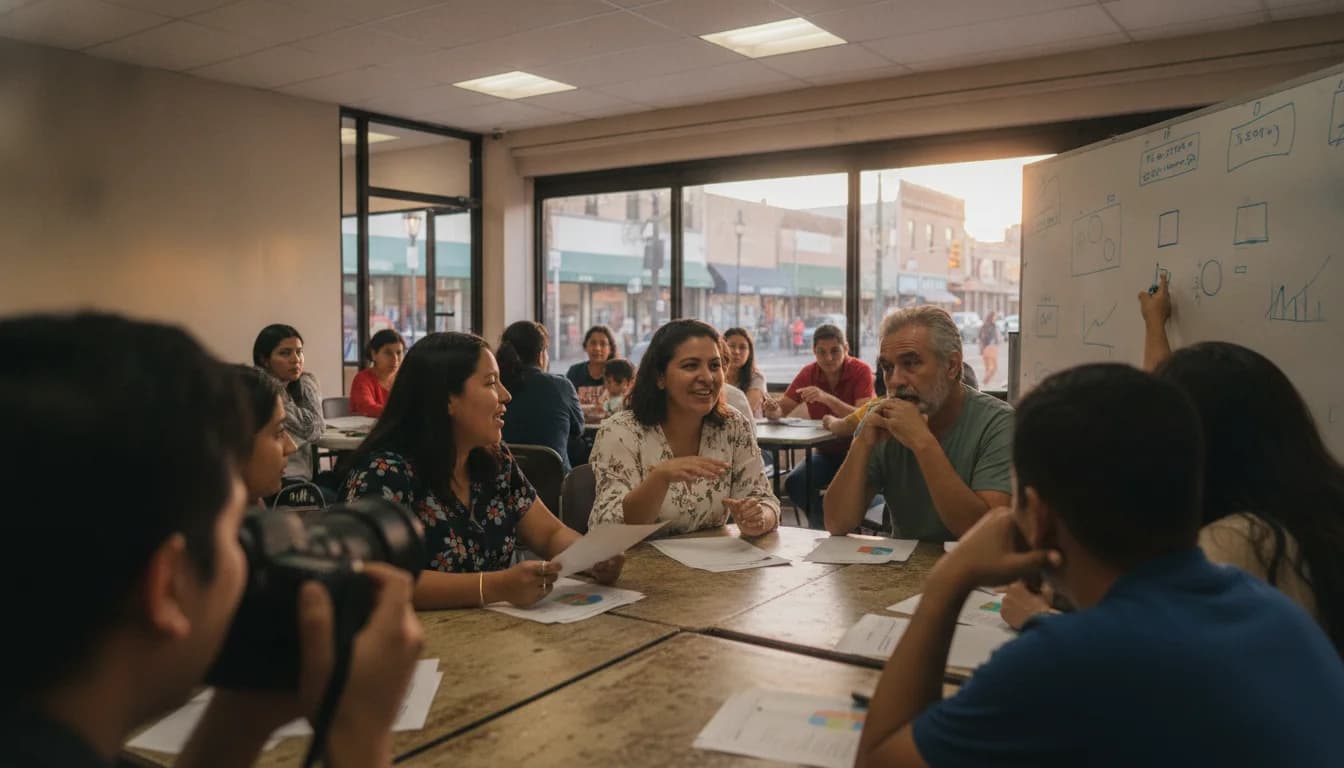
The newsroom today is reporting on a trend reshaping how urban governments engage Hispanic communities in budget decisions. Across several major US cities, participatory budgeting efforts are intensifying, with a growing emphasis on accessibility for Spanish-speaking residents and other immigrant communities. In Boston, for example, the city’s participatory budgeting cycle continues to deliver projects identified by residents, including a notable round that highlighted housing stability and immigrant support as top priorities. The momentum comes as cities lean on online platforms and multilingual outreach to broaden participation and improve transparency in how public funds are allocated. This trend matters not only for community outcomes but also for the technology markets that support these democratic processes, from multilingual portals to voting and proposal-tracking platforms. As stakeholders weigh the benefits, questions about scalability, equity, and long-term impact remain central to the conversation. (baystatebanner.com)
Beyond Boston, New York City’s participatory budgeting program entered FY 2026 with a robust turnout and clear demonstrations of digital engagement. City officials reported high digital participation and notable turnout in a district that has historically been active in PB, underscoring the role of online portals and community networks in extending reach to Hispanic residents and immigrant communities. The New York example illustrates how large cities can systematize citizen input into capital decisions while maintaining accountability and oversight. The experience in NYC also reflects broader national trends in PB, including the use of dedicated platforms to host proposals, solicit feedback, and facilitate votes. (council.nyc.gov)
In other urban settings, smaller but telling indicators point to a widening adoption of presupuestos participativos en comunidades hispanas urbanas. In Canarsie, Brooklyn, community workshops and a local People’s Money initiative demonstrate how immigrant communities participate in budgeting conversations, often through multilingual outreach and neighborhood-based organizing. These local efforts complement larger citywide PB programs and serve as laboratories for language-inclusive engagement strategies, resource mapping, and program evaluation. While Canarsie’s example is one neighborhood within a sprawling metropolis, it highlights how participatory budgeting can reach urban Hispanic communities through targeted outreach and trusted local partners. (documentedny.com)
More broadly, the movement toward participatory budgeting in the United States has been supported by research, practitioner networks, and open government initiatives that emphasize transparency, equity, and capacity-building inside communities. Internationally inspired PB processes have a documented history of expanding resident voice in municipal spending, and several cities have adopted technology platforms and translated materials to better serve diverse urban populations. The Open Government Partnership and other public-interest resources describe how PB can be financed and implemented, including online participation tools and multilingual engagement strategies that are essential for Hispanic urban communities. (opengovpartnership.org)
As the PB ecosystem evolves, technology platforms—such as Stanford’s Participatory Budgeting Platform—play a central role in enabling multilingual proposal submission, remote voting, and data-traceable decision-making. The platform library lists several US cities that have used PB technology, including Chicago, Boston, and New York City, with Spanish-language support among the languages offered. This tech dimension is a key driver of scalability and inclusivity, especially for Presupuestos participativos en comunidades hispanas urbanas where language access and digital literacy are important determinants of participation. (pbstanford.org)
Opening paragraphs wrap: The news centered on two outcomes shaping the upcoming cycle of participatory budgeting in Hispanic urban communities—the continuation of city-led PB rounds in Boston and NYC, and the growth of a multilingual, tech-enabled participation model that extends reach into immigrant neighborhoods. The immediate impact is a more inclusive planning process for capital investments that affect housing, immigrant services, and community safety, along with a clearer market signal for PB technology providers and service partners. In short, Presupuestos participativos en comunidades hispanas urbanas are moving from pilot experiments to mainstream instruments for urban governance, with technology acting as a facilitator rather than a barrier. The near-term question is how cities will sustain momentum, measure outcomes, and ensure that language access translates into real project funding and execution. (content.boston.gov)
What Happened
Boston’s 2026 Participatory Budgeting Cycle and Its Outcomes
Boston’s PB program in 2026 continued to emphasize resident-led project proposals, with official announcements highlighting a set of winning projects that reflect community priorities, including housing stability and immigrant support. The city’s Office of Participatory Budgeting (OPB) has described the process as increasingly accessible, with a focus on equity and translation services that help ensure more residents can participate in both the proposal and voting phases. In the most recent cycle, eight community-selected projects were named as winners, illustrating how PB translates resident proposals into funded actions across neighborhoods. The city’s practice of publishing a summary in Spanish further demonstrates a commitment to language inclusion. This cycle’s results underscore PB’s potential to address neighborhood needs directly through a structured, transparent process. (baystatebanner.com)
New York City: FY2026 Participatory Budgeting Results
New York City’s FY2026 participatory budgeting results reinforce the city’s ongoing commitment to direct resident control over a portion of capital funds. The City Council and relevant agencies published results showing the highest turnout in the district’s PB history, underscoring strong engagement from diverse communities, including Hispanic residents, through digital channels and in-person events. The NYC PB process continues to rely on digital portals and community partnerships to collect, refine, and vote on proposals, highlighting how technology enables broader participation while maintaining rigorous oversight. The NYC case illustrates how large urban centers are applying PB at scale, with measurable participation metrics and a clear pipeline from proposal to funding. (council.nyc.gov)
Other Cities and Platform-Driven Engagement
Beyond Boston and NYC, PB initiatives in cities like Albuquerque signal a growing nationwide pattern: districts are using participatory budgeting to channel resident input into local spending decisions, with a specific interest in outreach to immigrant communities and Spanish-speaking residents. A notable example is Albuquerque’s International District, where a community PB effort is launching a new market through a district-based initiative. This kind of project demonstrates how PB can intersect with local economic development and immigrant integration efforts, creating opportunities for small businesses and community services while giving residents a sense of ownership over their shared resources. The involvement of local officials, community-based organizations, and neighborhood leaders helps ensure language access and culturally relevant outreach, aligning PB with broader inclusive governance goals. (kunm.org)
The Role of Technology in Presupuestos Participativos
Technology platforms underpin the modern PB landscape, enabling proposals, multilingual participation, and transparent voting. The Stanford PB Platform, which is designed to handle online participatory budgeting elections, has been deployed in multiple US cities, including Boston, Chicago, and New York City. The platform’s multilingual capabilities, including Spanish, make it a natural fit for Presupuestos participativos en comunidades hispanas urbanas, as it helps lower barriers to participation and supports inclusive decision-making. This tech infrastructure matters not only for residents but also for vendors and public-sector partners who are evaluating cost, security, and accessibility when selecting PB tools. As PB programs expand, the market for PB technology and related services is likely to grow, with demand for multilingual interfaces, accessibility compliance, and data analytics that inform future budgeting decisions. (pbstanford.org)
Context: The Policy and Practice Backdrop
The Open Government Partnership’s commitments in the United States outline how participatory budgeting can be linked to broader policy goals, including transparency, fiscal accountability, and community capacity-building. These commitments emphasize education and tools that empower communities to participate meaningfully in budgeting decisions, aligning with the aims of Presupuestos participativos en comunidades hispanas urbanas. The policy background helps explain why PB has gained traction in many US municipalities and why Spanish-language outreach is increasingly considered essential for equitable participation. (opengovpartnership.org)
Market and Capacity-Building Implications
The PB movement is also shaping market opportunities in urban technology and civic engagement services. As PB programs grow, there is increased demand for platforms that support multilingual inputs, remote voting, and accessible dashboards for residents and officials. This creates a growing market for vendors that can deliver compliant, secure, and user-friendly PB solutions, with special attention to language accessibility and digital inclusion. Observers note that PB’s expansion in Hispanic urban communities is not just a governance experiment; it represents a potential driver of innovation in public-facing technology and in community-led service design. (pbstanford.org)
A Cautious View of Reach and Impact
While PB shows promise for empowering Hispanic urban communities and other immigrant groups, observers caution that success hinges on sustained funding, program evaluation, and the mitigation of digital divide issues. Even with online portals and multilingual materials, disparities in digital access can limit participation for some residents. Reports from multiple PB programs emphasize the importance of ongoing outreach, capacity-building, and transparent reporting to ensure that participation translates into measurable outcomes. Fact-checking sources emphasize how PB can broaden civic engagement, but they also remind readers that localized implementation details—language support, community partnerships, and practical execution—are critical to realizing those benefits. (factchequeado.com)
Why It Matters
Equity, Inclusion, and the Politics of Local Budgeting
Presupuestos participativos en comunidades hispanas urbanas sit at the intersection of democracy and resource allocation. The core idea—giving residents a direct say in how a portion of city funds is spent—has the potential to rewire power dynamics in urban neighborhoods with large Hispanic populations. When executed with strong outreach, clear feedback loops, and transparent reporting, PB can elevate community priorities that have historically been underfunded, including housing stability, immigrant services, language access, and economic opportunity. Yet the political dynamics of local budgeting mean that PB is not a guarantee of equitable outcomes; it requires deliberate design choices, oversight, and accountability mechanisms to ensure that proposals are evaluated on feasibility and impact rather than politics alone. This is why the integration of platform-based participation, multilingual outreach, and independent oversight boards is seen by many observers as essential to success. (council.nyc.gov)
Language Access, Digital Inclusion, and Participation Rates
The expansion of Presupuestos participativos en comunidades hispanas urbanas hinges on language access and digital inclusion. Multilingual portals, translation of materials, and culturally competent outreach are increasingly recognized as indispensable for achieving broad participation among Hispanic residents. Platforms like the Stanford PB Platform explicitly support multiple languages, including Spanish, helping reduce barriers to entry for non-English-speaking residents. The emphasis on accessible design aligns with a broader movement toward inclusive civic technology, which argues that the benefits of PB depend on how well the process is designed to reach diverse communities, not only on the popularity of the concept. (pbstanford.org)
Economic and Market Implications for PB Platforms
From a market perspective, the growth of PB in Hispanic urban communities expands opportunities for civic technology vendors, community organizers, and city procurement officers. As PB demonstrates measurable outcomes in city budgets and community development projects, municipal buyers are increasingly evaluating platforms on features such as multilingual support, accessibility, security, and integration with existing city data systems. Observers note that these dynamics create a demand signal for specialized PB tools, localized implementation services, and ongoing training programs that empower residents to participate effectively. The exchange between city governments and tech providers is evolving into a more sophisticated ecosystem, where data on participation, project feasibility, and impact assessment informs future budgeting cycles. (pbstanford.org)
Risks and Challenges for Hispanic Urban Communities
While the PB movement aims to empower Hispanic urban communities, it faces practical challenges. Digital literacy gaps, limited access to devices or reliable internet, and time constraints can hinder participation. Effective PB programs mitigate these risks through targeted outreach, partnerships with community organizations, and in-person mechanisms that complement online portals. Transparent evaluation criteria, public reporting, and clear timelines help build trust in PB processes, particularly in communities that have historically faced barriers to civic engagement. News reporting on PB across US cities consistently points to the need for ongoing language support and culturally relevant outreach to sustain participation and improve outcomes. (baystatebanner.com)
Real-World Impacts on Hispanic Urban Communities
The PB approach has real, on-the-ground implications for urban Hispanic communities, touching housing, immigrant services, education, and local commerce. When residents have input into budget decisions, communities can prioritize projects that address housing stability, language access, and workforce development. This aligns with city goals to foster inclusive growth and strengthen social infrastructure in neighborhoods with high immigrant populations. The Boston and NYC PB cases provide concrete illustrations of how community input translates into funded initiatives, with early signals suggesting positive reception from residents who see their proposals reflected in city actions. (baystatebanner.com)
Public Perception and Media Coverage
Media coverage of PB efforts in Hispanic urban communities reflects a growing acceptance of participatory budgeting as a legitimate governance tool. Journalists and researchers highlight both successes and ongoing challenges, emphasizing that PB is as much about process design and community trust as it is about financial outcomes. Outlets covering PB note that outcomes can be uneven across districts, underscoring the importance of consistent outreach and robust oversight to ensure that the process remains inclusive and accountable. This balanced reporting aligns with EE.UU. Hoy’s editorial stance of neutral, data-driven analysis. (smartcitiesdive.com)
Stakeholders and Beneficiaries
Stakeholders in Presupuestos participativos en comunidades hispanas urbanas include residents who propose and vote on projects, city departments that implement funded initiatives, community organizations that facilitate outreach, and technology providers that support the PB workflow. Beneficiaries span families affected by housing and immigrant services, small business owners seeking economic opportunity, and youth and community groups that gain visibility in the budgeting process. The collaboration among these groups—each with distinct perspectives and technical needs—shapes not only the projects funded but also the public perception of government responsiveness and transparency. (content.boston.gov)
What’s Next
Upcoming Rounds, Deadlines, and Milestones
As PB programs mature in major urban centers and extend into diverse neighborhoods, readers should watch for upcoming rounds and deadlines in cities like Boston and New York City. Key milestones typically include proposal submission windows, stakeholder outreach campaigns, candidate briefing sessions, and voting periods. In Boston, the ongoing emphasis on accessible, multilingual participation suggests that future cycles will continue to refine outreach strategies and enhance transparency in funding decisions. NYC similarly displays a pattern of annual PB cycles with concrete timelines and published results, enabling residents to track progress and hold officials accountable. Observers should follow official city PB portals and press releases for exact dates and processes, as these can shift from year to year. (boston.gov)
Platform Improvements and Accessibility Initiatives
Technology providers and city partners are likely to prioritize improvements in multilingual support, accessibility compliance, and data visualization in PB dashboards. As seen in existing PB platforms, including Stanford’s open-source solution, gains in usability can expand participation among Hispanic urban communities and other language groups. Expect ongoing enhancements such as improved mobile access, offline proposal submission options, and better alignment with assistive technologies to ensure that language and physical accessibility do not become barriers to participation. (pbstanford.org)
Measuring Impact and Accountability
With more PB cycles under their belts, cities will increasingly adopt standardized metrics to measure participation rates, the diversity of participants, the feasibility and impact of funded projects, and long-term outcomes such as housing stability or immigrant services improvements. Independent oversight boards, annual reporting, and third-party evaluations are likely to become more common as part of a mature PB ecosystem. This emphasis on measurement aligns with Open Government Partnership principles and public accountability expectations that readers expect from a neutral, data-driven news outlet. (opengovpartnership.org)
Market Trends for PB Technology and Community Engagement
The growing demand for multilingual PB platforms and community engagement services points to expanding markets in civic tech. Vendors and civic organizations are exploring partnerships to deliver end-to-end PB solutions, from outreach and education to proposal management, voting, and reporting. The Boston and NYC experiences illustrate a demand for scalable, secure, and user-friendly systems capable of handling large volumes of proposals and votes while maintaining a transparent audit trail. Market observers anticipate continued expansion of PB-related technology offerings, particularly those that prioritize language accessibility and inclusive design. (pbstanford.org)
What to Watch in 2026–2027
- The expansion of PB cycles into additional districts within Boston, New York, and other major urban centers, with a continued focus on Hispanic and immigrant communities.
- The adoption of multilingual outreach paradigms, including Spanish-language materials, bilingual community organizations, and culturally tailored outreach events.
- Enhanced impact reporting that links funded projects to measurable outcomes in housing, immigrant services, and local economic development.
- Ongoing research and analysis by universities and policy institutes on PB’s effects on civic engagement, including participation rates among Hispanic residents and other underrepresented groups.
- The emergence of new PB platforms or enhancements to existing platforms that improve accessibility, security, and data transparency.
What’s Next: Practical Guidance for Community Leaders and Local Officials
- Build robust multilingual outreach plans that reach not only Spanish-speaking residents but also other language communities present in urban Hispanic neighborhoods.
- Partner with trusted community organizations to host workshops, proposal clinics, and enrollment drives for PB participation.
- Invest in accessible PB platforms with features such as mobile-friendly interfaces, screen-reader compatibility, and offline proposal submission paths where connectivity is limited.
- Establish clear evaluation criteria and publish regular progress reports to maintain community trust and ensure accountability.
- Align PB outcomes with broader city strategies, such as housing policy, immigrant integration, workforce development, and climate resilience, to maximize social and economic impact.
Closing
As Presupuestos participativos en comunidades hispanas urbanas continue to gain traction in major US cities, the balance between inclusive design, transparent process, and tangible outcomes will define their legitimacy and long-term success. EE.UU. Hoy will continue monitoring PB cycles, language-access initiatives, and technology innovations that shape how urban residents—especially Hispanic communities—participate in budgeting decisions that affect their daily lives. For readers seeking to understand and engage with these developments, the central takeaway is that participatory budgeting is increasingly accessible, increasingly data-driven, and increasingly relevant to the everyday realities of urban America.
In the weeks ahead, expect more detailed breakdowns of proposal categories, funding levels, and project progress from Boston, New York, and partner organizations involved in these efforts. Stay informed through official city PB portals, community groups, and independent analyses that provide context, compare outcomes, and illuminate the pathways from citizen input to funded action. With ongoing coverage, EE.UU. Hoy will help readers grasp how Presupuestos participativos en comunidades hispanas urbanas are shaping the future of city budgeting in the United States.