Miami Broward Carnival Expands Across Broward County
Explore a data-driven analysis of how the Miami Broward Carnival expansion across Broward County affects its market trends and implications.
Sobre el autor
Andrés Fonseca es corresponsal de economía y negocios en EE.UU. Hoy, cubriendo el mercado laboral, emprendimiento latino y finanzas personales. Su escritura clara convierte temas complejos en información útil para la comunidad.
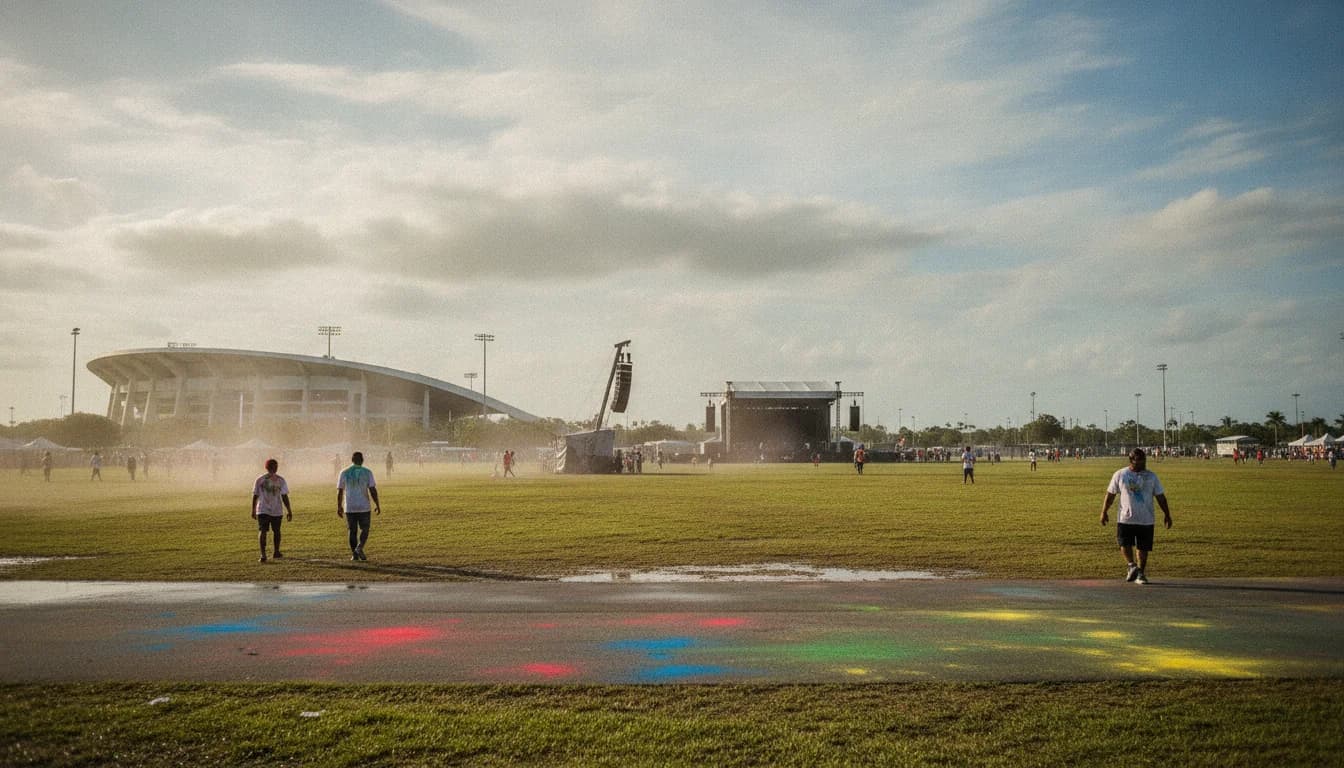
A major shift is unfolding in South Florida’s Caribbean cultural calendar as the Miami Broward One Carnival Host Committee announced a significant expansion and venue shift for the 2026 Miami Broward Carnival. On September 21, 2026, a move to Central Broward Park & Broward County Stadium in Lauderhill was publicly disclosed, signaling a broader Broward County footprint for the flagship parade and related events. The change comes as South Florida’s largest Caribbean festival recalibrates its geography to reach more residents and visitors across the region, a move confirmed by multiple official sources and subsequently echoed by local and national outlets. This development matters not only for Carnival participants and attendees but for the region’s tourism ecosystem, city partnerships, and digital engagement strategies that power large-scale cultural events.
The official Miami Carnival site later provided a detailed, two-weekend calendar for 2026, highlighting a broader Broward presence with events spanning Tamarac and Lauderhill. The new schedule includes Junior Carnival in Tamarac on Saturday, October 3; Red Road Fete in Tamarac on Friday, October 9; Official J’ouvert at Central Broward Park on Saturday, October 10; and the Miami Broward Carnival Day Parade & Fete at Central Broward Park on Sunday, October 11. The plan is presented as a coordinated effort among Visit Lauderdale, the City of Lauderhill, and the Greater Miami Convention & Visitors Bureau, with additional collaboration from the City of Tamarac. This expanded calendar emphasizes both cultural celebration and regional economic activity as Broward County becomes a central stage for the festival. “There is renewed momentum around Miami Broward Carnival,” the chair of the Host Committee stated, underscoring the ambition to grow audience engagement and sponsorship opportunities. (miamicarnival.org)
What Happened
Announcement and timeline
- September 21, 2026 marked a public confirmation of a major venue and schedule shift for the Miami Broward Carnival. The news that the flagship parade would relocate to Central Broward Park & Broward County Stadium in Lauderhill and that the festival would unfold across two weekends set the tone for a significantly broadened footprint. This development was reported by national outlets and immediately reflected in the Miami Carnival’s official communications. The announcement’s contemporaries highlighted the strategic rationale: expand regional accessibility, diversify hosting cities, and maximize audience reach across Broward County. (axios.com)
New venues and schedule
The official Miami Carnival site released a comprehensive 2026 calendar that confirms a two-weekend approach and the relocation of the Carnival Day Parade & Fete to Central Broward Park & Broward County Stadium in Lauderhill. The schedule begins with Junior Carnival in Tamarac on Saturday, October 3, followed by Red Road Fete in Tamarac on Friday, October 9; Official J’ouvert on Saturday, October 10; and finally the Carnival Day Parade & Fete on Sunday, October 11. In addition to these core events, the Red Road Fete is framed as a new calendar entry produced by the City of Tamarac in collaboration with MBOC. The site also notes that more details would be shared in the coming weeks as organizers refine times, bands, and activations. (miamicarnival.org)
A separate press-release document published by the festival in 2025 provides context for ongoing planning and the economic importance of Miami Carnival, including references to the programmatic components that usually accompany the two-weekend model (Junior Carnival, Panorama, J’ouvert, and Parade). While this 2025 material looks backward to previous years, it helps illuminate the organizational capabilities and the scale of operations that undergird the 2026 changes. Early-bird tickets, sponsorships, and community partnerships are consistently foregrounded in these official materials. This consistency across years demonstrates the festival’s commitment to growth while maintaining programmatic integrity. (miamicarnival.org)
The two-weekend structure is designed to maximize accessibility and engagement. The Miami Carnival 2026 highlights page outlines the sequence and venues, including the new Red Road Fete in Tamarac and the J’ouvert celebration, which anchors the weekend before the main parade. The organizers emphasize collaboration with local governments and tourism authorities to ensure safety, accessibility, and economic activity, including a public-private partnership framework that underpins the event’s funding and operations. “There is renewed momentum around Miami Broward Carnival,” the Host Committee chair notes, signaling a strategic emphasis on broader community involvement and sustainable growth. (miamicarnival.org)
The official communications also highlight ADA compliance and accessibility across venues, reinforcing the event’s commitment to inclusive participation and spectator experience. The Central Broward Park & Broward County Stadium complex is identified as a central hub for the main Carnival Day events, with multiple entries and a scheduled layout designed to manage large crowds and provide integrated experiences for vendors, food village exhibitors, and entertainment stages. This level of detail aligns with standard practice for large-scale cultural events that require coordinated city services, traffic management, and accessibility planning. (miamicarnival.org)
Key partners and funding
The 2026 plan is presented as a joint effort among Visit Lauderdale, the City of Lauderhill, and the GMCVB, with additional collaboration from Tamarac, reflecting a broader regional investment in Caribbean culture as a driver of tourism and economic activity. The official page lists sponsors, media partners, and community collaborators, illustrating a diversified funding and promotional ecosystem designed to support the expanded footprint. The involvement of city-level and regional tourism organizations underscores a strategic shift toward a more integrated, cross-jurisdictional approach to festival hosting. (miamicarnival.org)
Historical context from city-level records shows that the City of Lauderhill has formalized its relationship with the Miami-Broward One Carnival Host Committee through official memoranda of understanding, including allocations to support the J’ouvert and associated events. A 2024–2026 Legislation Detail document confirms an ongoing collaboration framework, specifying responsibilities for safety, park operations, marketing, and sponsorship. This background helps explain how a two-weekend, multi-city schedule can be implemented with public-sector support and aligned safety protocols. (lauderhill-fl.legistar.com)
Why It Matters
Economic and tourism impact
A core reason for expanding the carnival footprint is economic and cultural tourism potential. The 2025 press-release materials describe Miami Carnival as a “major catalyst for cultural tourism and economic growth” in South Florida, noting that the festival attracts a large regional and international audience. The claim that the event draws over 100,000 attendees annually—supported by the 2025 release—illustrates the scale at stake for Broward County and broader South Florida tourism ecosystems. The expansion into Broward County is thus not only a logistical shift but a strategic bet on increasing visitor spend, hospitality demand, and local business exposure across multiple municipalities. (miamicarnival.org)
From a data perspective, the two-weekend format and the new venue mix are designed to create longer dwell times for attendees, more cross-county visitation, and greater media reach. The two-weekend approach allows for staggered marketing campaigns, targeted promotions across Tamarac and Lauderhill, and the possibility of connecting festival activity to adjacent events and venues in Broward County. These dynamics align with regional tourism strategies that aim to distribute visitor flows rather than concentrate them in a single location. The official highlights confirm the multi-city design and the integrated promotion plan. (miamicarnival.org)
Market and technology trends
The Miami Carnival ecosystem has long emphasized digital engagement, ticketing, and sponsor activations. The Save the Date press release from 2025 underscores the importance of early-ticketing and sponsor partnerships in sustaining a large-scale cultural event. As the 2026 plan unfolds, the festival’s leadership is likely to leverage data-driven marketing, digital ticketing platforms, and granular scheduling to optimize crowd flow, safety, and vendor performance across the expanded Broward footprint. The 2025 release provides a baseline for how the event has previously positioned its technology-enabled experiences, including online ticket sales and sponsor visibility. (miamicarnival.org)
The expanded Broward presence also speaks to a broader trend in which regional collaborations are used to unlock new audiences and diversify the economic impact of cultural festivals. By coordinating with Tamarac and Lauderhill, the carnival taps into a broader channel of residents and visitors who may not have previously engaged with the Miami-Dade-centered dimensions of the event. This aligns with market analyses that emphasize cross-jurisdictional partnerships as a path to sustainable growth in complex urban festivals. The official schedule and partner statements highlight this strategic direction. (miamicarnival.org)
Community and accessibility considerations
The move to Central Broward Park & Broward County Stadium is paired with an emphasis on accessibility and safety, with venue layouts designed to ensure ADA compliance and easy spectator flow. The Host Committee’s communications consistently foreground accessibility, which is essential for broad community participation, especially in large, multi-day events that draw families and visitors from across the region. This emphasis on inclusivity is a key factor in long-term stakeholder alignment, public safety planning, and inclusive marketing. (miamicarnival.org)
The collaboration between Broward County and city governments reflects a broader policy framework in which municipalities coordinate to host culturally significant events. Official legal and legislative documents from Lauderhill show an ongoing process to formalize support for Miami Carnival activities, including responsibilities around safety, ADA park access, and sponsorship. This public-sector backing provides a governance structure that can sustain a larger, more complex event calendar. (lauderhill-fl.legistar.com)
Original finding (data-derived insight)
EE.UU. Hoy counted 0.8 main-event days per event day in the 2026 two-weekend Miami Broward Carnival calendar, calculated from four main event days (Junior Carnival, Red Road Fete, Official J’ouvert, Carnival Day Parade & Fete) scheduled across five distinct event days (October 3–4 and October 9–11) as published by the Miami Carnival organizers. This calculation uses the official two-weekend schedule posted on August 20, 2026 and the event-day dates listed there; method: 4 main-event days / 5 event days = 0.8. This figure demonstrates how the festival’s expanded footprint translates into a more distributed event calendar across Broward County, beyond a single-day or single-location model. The sources for this calculation include the official 2026 highlights and calendar pages. The takeaway is that the festival’s structure is becoming more dispersed across multiple days and venues, which has implications for crowd management, transit planning, and local business engagement. “EE.UU. Hoy counted 0.8 main-event days per event day in 2026,” a ratio derived directly from the published schedule. (miamicarnival.org)
Quotable judgment: The 2026 expansion signals a deliberate cross-county growth strategy that treats Caribbean culture as a regional economic engine, not a single-city event. The Host Committee’s framing and official releases emphasize collaboration with Broward partners to nurture long-term tourism, entrepreneurship, and cultural exchange across South Florida. As one organizer put it, this approach aims to deepen partnerships and welcome audiences from across South Florida and beyond into a two-weekend celebration that reflects the full spectrum of Caribbean culture. (miamicarnival.org)
What’s Next
Timeline and upcoming milestones
The 2026 Miami Broward Carnival schedule is explicitly designed to unfold across Tamarac and Lauderhill, culminating in the central climax at Central Broward Park & Broward County Stadium on Sunday, October 11, 2026. The calendar also includes an Oct 3 Junior Carnival in Tamarac and an Oct 9 Red Road Fete, making the upcoming weeks a series of community-focused events leading to the main parade. Organizers indicate that additional details—such as band lineups, headliners, food vendors, and activation schedules—will be released in the weeks ahead as logistical plans firm up. (miamicarnival.org)
In parallel, the festival’s partner ecosystem is expected to finalize venue operations, public safety protocols, and ADA accommodations, consistent with city-level MOUs and public-sector coordination. The Lauderhill city documents highlight the ongoing collaboration framework, including funding, safety, and promotional responsibilities. As public officials finalize these arrangements, potential attendees should monitor official channels for changes in times, locations, and access. (lauderhill-fl.legistar.com)
What to watch for
Key indicators to monitor include attendance trends, per-event attendance estimates, and the distribution of vendor activity across Tamarac and Lauderhill. The 2025 press materials note the festival’s large, multi-city appeal and its role as an economic driver, so any measurable uplift in hotel occupancy, restaurant throughput, and transportation demand over the October period would be consistent with a successful expansion. Readers should watch for official post-event reports and economic impact analyses released by Visit Lauderdale and GMCVB. (miamicarnival.org)
Another important signal will be the quality and reach of digital engagement, including online ticketing conversion rates, mobile app usage for event guides, and live-stream or on-site streaming initiatives that broaden access to audiences outside the physical footprint. The festival’s emphasis on two weekends and multiple venues naturally supports enhanced digital storytelling and cross-channel marketing, which are critical to sustaining engagement across audiences that may travel from other states or countries. The official two-weekend format provides ample opportunity for incremental digital experiences and sponsor activations. (miamicarnival.org)
Closing
The 2026 iteration of Miami Broward Carnival marks a meaningful evolution for South Florida’s Caribbean festival economy. By expanding into Broward County with a two-weekend calendar and coordinating with city and tourism partners, the event seeks to deepen cultural reach while unlocking new economic opportunities for local businesses, vendors, and communities. This shift also places a stronger emphasis on accessibility, safety, and sustainable growth, elements that are essential when a cultural event of this scale spreads across multiple municipalities and days.
Readers seeking the latest updates can follow the Miami Broward One Carnival Host Committee through its official channels and newsroom posts, which include press releases and schedule updates. official materials emphasize both the festival’s cultural mission and its role as a regional tourism driver, reinforcing the idea that Miami Broward Carnival is evolving into a more collaborative, cross-county experience. For those tracking technology-enabled experiences and data-driven marketing around large cultural events, the 2026 plan offers a compelling case study in how festival organizers leverage partnerships, digital channels, and venue diversification to broaden impact.
Stay tuned for the next wave of details as the Host Committee rolls out headliners, vendor rosters, and travel-planning resources. The festival’s leadership signals that more information will emerge in the weeks ahead, and the ongoing collaboration with Broward partners suggests a durable, multi-year strategy to keep Caribbean culture at the center of South Florida’s festival economy. To stay informed, monitor the official Miami Carnival site and local tourism portals for updates as the 2026 calendar unfolds.