Chapman Report on Latino Education Gaps in California
A new report from Chapman University reveals that Latinos make up 56% of California's public school students and nearly 40% of the state's population,…

Sobre el autor
Marisol Delgado es periodista de cultura y estilo de vida en EE.UU. Hoy, explorando la rica diversidad de la experiencia latina en Estados Unidos. Sus crónicas celebran las tradiciones, el arte y las voces que enriquecen la vida americana.
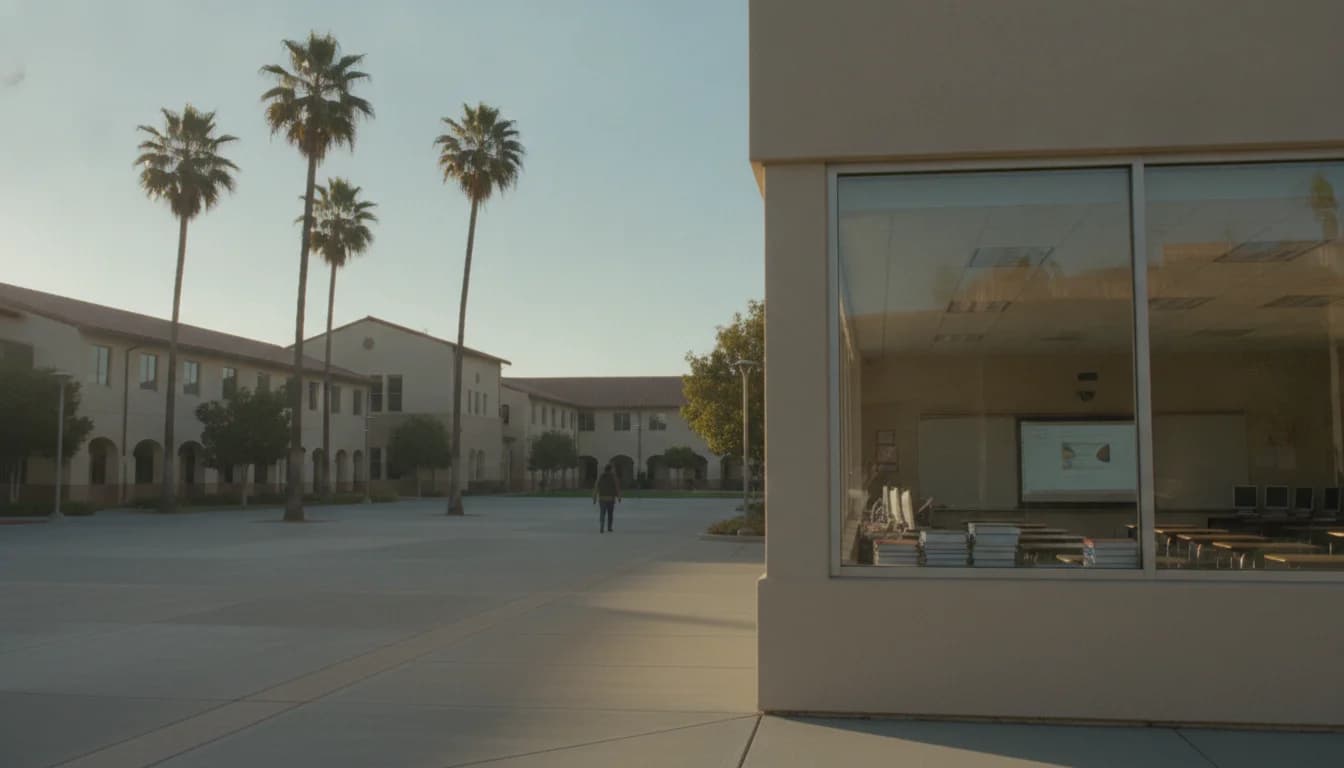
On April 18, 2024, Chapman University released a landmark report examining the rapid growth of Latinos in California and the policy landscape affecting their future. The study, titled El Futuro es Latino, situates California as a focal point for understanding how education systems, economic opportunities, and housing costs intersect with a Latino population that is central to the state’s present and future. In a moment when technology and markets are reshaping western economies, the report’s findings about educational access and outcomes for Latino students are particularly timely for policymakers, educators, and employers alike. For readers of EE.UU. Hoy, the event matters because it highlights not only demographic change but also the schools and systems that prepare the next generation of workers in a tech-driven economy.
Latinos California brechas educativas—the phrase that anchors the reportage—become a practical lens through which to view both the opportunities and the barriers facing California’s largest minority group. The Chapman report notes that Latinos now represent nearly 40% of the state's population, while in education, Latinos account for a majority share of the public school population. Specifically, the document indicates that 56% of California public school students are Latino. These two figures—demographic presence in the state and representation within schools—frame a central question: what policies, resources, and innovations will close the persistent achievement gaps that accompany this demographic shift? The juxtaposition also signals the scale of the challenge: as California grapples with workforce needs in a high-tech economy, the education system must translate enrollment shares into successful graduation and career outcomes. The release underscores this urgency and places Latinos at the center of a state strategy that seeks both equity and productivity gains. See the Chapman University release for background on the study’s scope and framing, and the California-focused data that situate Latinos within schools and the broader economy. (news.chapman.edu)
Latinos represent 56% of California public school students, while Latinos account for about 40% of the state's population, according to Chapman's El Futuro es Latino report published April 18, 2024. This single-sentence takeaway captures the core demographic angle of the report and sets the stage for understanding the educational realities that accompany this population. The finding emerges from two complementary data sources that the study synthesizes: the California public school student composition and the state’s population share. The result? A stark reminder that California’s classrooms are deeply Latino-dominated, even as Latino students still navigate a landscape of uneven achievement and opportunity. The report, and its release date, anchor the conversation around Latinos in California and the education system that serves them. (lao.ca.gov)
Section 1: What Happened
Announcement and scope
On April 18, 2024, Chapman University’s Center for Demographics and Policy published El Futuro es Latino, a comprehensive analysis of California’s Latino population and the policy environment shaping education, housing, the environment, and the economy. The Newsroom article accompanying the release framed the report as a data-informed look at the fastest-growing demographic in the United States and, in California, a group that is integral to the state’s growth trajectory. The release highlighted that Latinos in California face significant educational challenges even as their share of the population rises and their economic contributions expand. The full report is described as accessible through Chapman’s site, with the key takeaway that Latinos lag behind in certain academic outcomes, an observation consistent with the ongoing need for targeted policy and program responses. For readers seeking the primary document, the Chapman release points to the report’s online presence for deeper reading. (news.chapman.edu)
Key findings and timeline
The Chapman release provides a multi-faceted snapshot: demographic trends, economic participation, housing affordability, and education. The report notes that California’s Latino population has grown substantially and now constitutes a plurality of the state’s residents, while the schooling landscape features a Latino-majority student body in public schools. The emphasis on education—both access and outcomes—frames Latinos as central to California’s current and future workforce development. In addition to education, the report discusses environmental policy, the business climate, and civic engagement as interconnected factors that influence Latino success in California. A primary finding is that Latinos play a pivotal role in the state’s economy but still encounter structural barriers within the education system that impede college readiness and career trajectories. The Chapman release provides context for policymakers and educators to consider how to align resources and opportunities with demographic reality. (news.chapman.edu)
Primary-source anchors and related data
Two primary sources anchor the article and define the evidentiary basis for analysis. First, Chapman University’s release of El Futuro es Latino (April 18, 2024) serves as the event anchor, presenting the core demographic and educational observations that frame Latinos in California’s education system. Second, the California public school composition data and related demographic materials—used by the report to illustrate the Latino share among students—are reflected in state-level documents. For a direct view of the public-school composition data cited in the broader discourse, readers can consult the California Legislative Analyst’s Office brief that reports 56% of California public school students are Latino. This source provides a clearly labeled stat tied to the state’s schooling system. The juxtaposition of these sources helps explain both representation and outcomes within California’s K–12 environment. (lao.ca.gov)
How the data were interpreted
The report’s interpretation centers on the idea that Latinos, as a growing share of both the population and the school-age cohort, are essential to California’s educational and economic futures. The data point that 56% of California public school students are Latino is used to illustrate the scale of Latino participation in schooling, while the “nearly 40% of the population” figure (as reported by Chapman) anchors discussions about the proportionate significance of Latinos in the state’s social and political fabric. Taken together, these data points illuminate the potential for both opportunity and policy leverage, particularly in the context of educational equity and workforce development. The release also notes that, despite progress in some areas, Latinos continue to face notable educational gaps, which has implications for the state’s ability to sustain growth in technologically driven sectors. (lao.ca.gov)
The educational gap in focus
A central theme in El Futuro es Latino is the persistence of educational gaps despite demographic shifts. The report emphasizes that Latino students in California—while constituting a majority of the public-school pupil population—continue to experience disparities in academic achievement, college readiness, and access to advanced coursework. The data are presented as a call to action for district leaders, educators, and policymakers to design targeted interventions, advanced coursework access, and supports for English learners and disadvantaged students. The Chapman release frames education as a critical hinge for Latinos’ long-term economic outcomes in a state where technology and market forces are rapidly evolving. This framing aligns with ongoing discussions in California about how to sustain a highly skilled workforce in sectors such as software, hardware, cybersecurity, and digital services. (news.chapman.edu)
Linkable primary sources and how to read them
- Chapman University Newsroom release (April 18, 2024) provides the narrative framing and high-level findings about El Futuro es Latino, the demographic shifts, and the policy environment in California. Link: Chapman Newsroom release. (news.chapman.edu)
- California Legislative Analyst’s Office brief (2023-24 Budget: Equity Multiplier and Accountability Proposals) provides the public-school composition statistic (56% Latino students) and related context about equity and outcomes, which the report cites to place California’s Latino student presence in a statewide policy frame. Link: LAO 2023-24 Budget brief. (lao.ca.gov)
- California Department of Education SBAC results (October 2024) offer deeper, independent data on student achievement post-pandemic and the persistence of subgroup disparities, which helps explain the broader context around Latinos in California’s education system. Link: CDE SBAC results release. (cde.ca.gov)
Section 2: Why It Matters
Educational representation and opportunity
The relationship between student demographics and educational outcomes matters for both equity and economic security. The Chapman report foregrounds Latinos as a driving demographic in California’s future economy, but it also points to enduring gaps in academic achievement and readiness for college and career. The LAO’s demographic data—showing Latinos as 56% of public-school students—highlights the scale of the mandate to improve outcomes across a population that is both substantial in size and central to the state’s labor market. In practical terms, if the state can translate representation into higher achievement and postsecondary readiness, it can accelerate the pipeline of skilled workers for high-growth sectors, including technology, logistics, healthcare, and manufacturing. Conversely, persistent gaps threaten long-term competitiveness and income parity, which is particularly important considering the rising cost of living and the high-tech economy’s demand for skilled labor. The data point that a large share of public-school students are Latino thus becomes a lever for targeted policy design, such as expanded English learner support, equity-focused funding, and innovative school models that integrate technology-enabled learning pathways. (news.chapman.edu)
Economic implications for technology and markets
California’s tech economy increasingly relies on a workforce drawn from its own K–12 and postsecondary pipelines. The Chapman report’s framing of Latinos as a central, youthful segment of the population interfaces with market realities: tech firms require diverse, well-educated talent pipelines. When educational outcomes for Latino students lag in some areas, there is a direct impact on future STEM literacy, coding skills, and workforce readiness. The CA Department of Education data from 2023–24 SBAC results illustrate the broader challenge of achieving proficiency after pandemic disruptions, with persistent gaps among subgroups including Hispanic/Latino students. The conversation thus shifts from “representation in classrooms” to “equitable outcomes and opportunity to participate in high-demand technology sectors.” Policy discussions—such as targeted investments in equitable access, teacher professional development, and supports for English learners—can be seen as macroeconomic actions that shape California’s ability to sustain innovation-driven growth. (cde.ca.gov)
Policy and programmatic implications
The data points in El Futuro es Latino, coupled with state-level equity discussions, point toward a policy architecture focused on targeted supports rather than one-size-fits-all solutions. The LAO brief emphasizes the scale of Latino representation and the need for equity in outcomes, including addressing disparities in math and English language arts (ELA) performance, suspension rates, and access to rigorous course work. It also outlines the funding framework (LCFF) and the potential role of the equity multiplier—an instrument intended to concentrate resources where they are most needed. This is especially relevant for districts serving high-poverty, Latino-majority student bodies, where implementation fidelity and accountability matter for translating dollars into real gains in achievement. Policymakers and district leaders will be watching how such mechanisms perform in practice, particularly as ESSER funds wind down and districts confront fiscal pressures. The data imply that investment timing (and targeted use) will be crucial for sustaining gains inLatinos California brechas educativas. (lao.ca.gov)
Balance and multiple perspectives
A balanced view recognizes both the opportunities created by growing Latino representation in California’s schools and the persistent gaps that hinder maximum student achievement. Some observers might emphasize that higher Latino school enrollment could reflect improved access and opportunity, while others will point to the need for stronger instructional quality, more extensive college-ready coursework, and better supports beyond the classroom to translate enrollment into timely graduation and workforce entry. The SBAC-based analyses from 2024 illustrate that gaps persist even as some cohorts show modest improvement in certain subjects, underscoring the complexity of measuring progress in a post-pandemic environment. These multiple perspectives are essential to a data-driven, neutral analysis, and they inform a measured approach to policy proposals like expanded early college routes, workforce-aligned curricula, and data-informed school improvement strategies. (cde.ca.gov)
Linkable primary sources for deeper reading
- El Futuro es Latino – the Chapman University report and its framing of demographic and policy dynamics in California. See the Chapman Newsroom release (April 18, 2024). (news.chapman.edu)
- 56% Latino students in California public schools – a key data point from California’s 2023-24 Budget context (LAO). See the LAO brief’s Figure 1. (lao.ca.gov)
- California Department of Education SBAC results – the October 2024 data release detailing subgroup performance and post-pandemic recovery patterns. See the CDE SBAC release and the related analysis. (cde.ca.gov)
Section 3: What’s Next
Policy horizon and next steps
Looking ahead, several levers could shape Latinos California brechas educativas in the coming years. First, policy discussions are likely to intensify around targeted equity funding and accountability measures in LCFF-based school funding. The Equity Multiplier debate, as outlined in the LAO brief, centers on whether additional targeted funding translates into actual improvements at the school site level, and whether districts use these funds to close gaps for EL/LI students and other disadvantaged subgroups. The LAO’s analysis provides a framework for evaluating how such investments would get deployed and monitored, including transparency measures and focused goals. If enacted, the policy moves could influence the distribution of funds to high-poverty schools and subgroups, with the intent of producing measurable gains in student achievement and college readiness. The future policy path will likely hinge on political will, fiscal conditions, and the quality of district-level implementation. (lao.ca.gov)
Second, the post-pandemic education landscape will require durable strategies to maintain learning gains. The SBAC data released in October 2024 show that progress toward pre-pandemic levels has been slow in ELA, with more robust—but uneven—recovery in mathematics. This implies a continued emphasis on high-quality literacy and numeracy supports, data-driven instruction, and targeted interventions for Latino students and other subgroups that lag behind the mean. Education leaders may emphasize scalable, tech-enabled solutions such as targeted tutoring, digital access expansion, and alignment of classroom tech with rigorous standards to bolster outcomes. The policy and practice implications here are not simply about more money; they require thoughtful deployment of existing resources, teacher training, and rigorous evaluation. (edpolicyinca.org)
Third, market implications for the technology sector could focus on expanding pathways from high school to college and career, including dual enrollment, apprenticeship programs, and tech-centric curricula that leverage California’s robust innovation ecosystem. A workforce pipeline that better serves Latino students could yield stronger participation in STEM fields and related careers, contributing to higher wage growth and long-term economic mobility for Latino families. Businesses investing in talent pipelines, student internships, and pre-college tech programs may find a direct link between education policy, school performance, and future labor supply. The Chapman report frames Latinos as an engine for California’s growth; the market can respond with programs that bridge education and employment in high-demand tech sectors. (news.chapman.edu)
What to watch for in the near term
- Policy proposals and budget updates on LCFF and equity-focused funding, including any new accountability provisions or transparency requirements for districts serving large Latino populations.
- Updates to English learner supports and math- and literacy-enhancement programs that target Latino students and other disadvantaged groups.
- School district pilots and state-level programs that deploy technology-enabled learning pathways, with an emphasis on equity and student outcomes.
- Data releases from CDE and independent research organizations about post-pandemic progress, subgroup performance, and the effect of targeted supports on Latinos California brechas educativas.
Closing
California’s Latinos are a defining feature of both the state’s present and its future, and the educational outcomes of Latino students will continue to shape California’s competitiveness in a technology-driven economy. The El Futuro es Latino report, released on April 18, 2024, provides a crucial snapshot of demographic reality and the education system’s current status. The state’s ongoing data releases, including SBAC results, offer a window into whether policy changes and school-based interventions translate into tangible gains for Latino students and the broader population. For readers who rely on rigorous, verifiable reporting, the path forward includes continued attention to primary data sources, careful policy design, and a commitment to balancing representation with real improvements in achievement and opportunity.
As California continues to navigate the intersection of demographics, education, and technology-enabled growth, EE.UU. Hoy will monitor both policy developments and the market implications of these shifts. The conversation around Latinos California brechas educativas is not only about measuring gaps; it is about building a system in which every student has the opportunity to translate schooling into productive, fulfilling careers in a rapidly changing economy.
If you would like ongoing updates, we will keep following the Chapman report’s reception among policymakers, educators, and industry leaders, and we will track how state funding, school practice, and technology investments align with Latinos’ educational needs in the years ahead. For primary-source readers, the direct sources linked in this report include the Chapman University release and the LAO’s budget brief, which anchor today’s analysis in verifiable data and official statements. (news.chapman.edu)