Hispanic-owned Small Businesses 5 Million
Data-driven look at Hispanic-owned small businesses 5 million and the growth momentum shaping the US tech and market landscape.
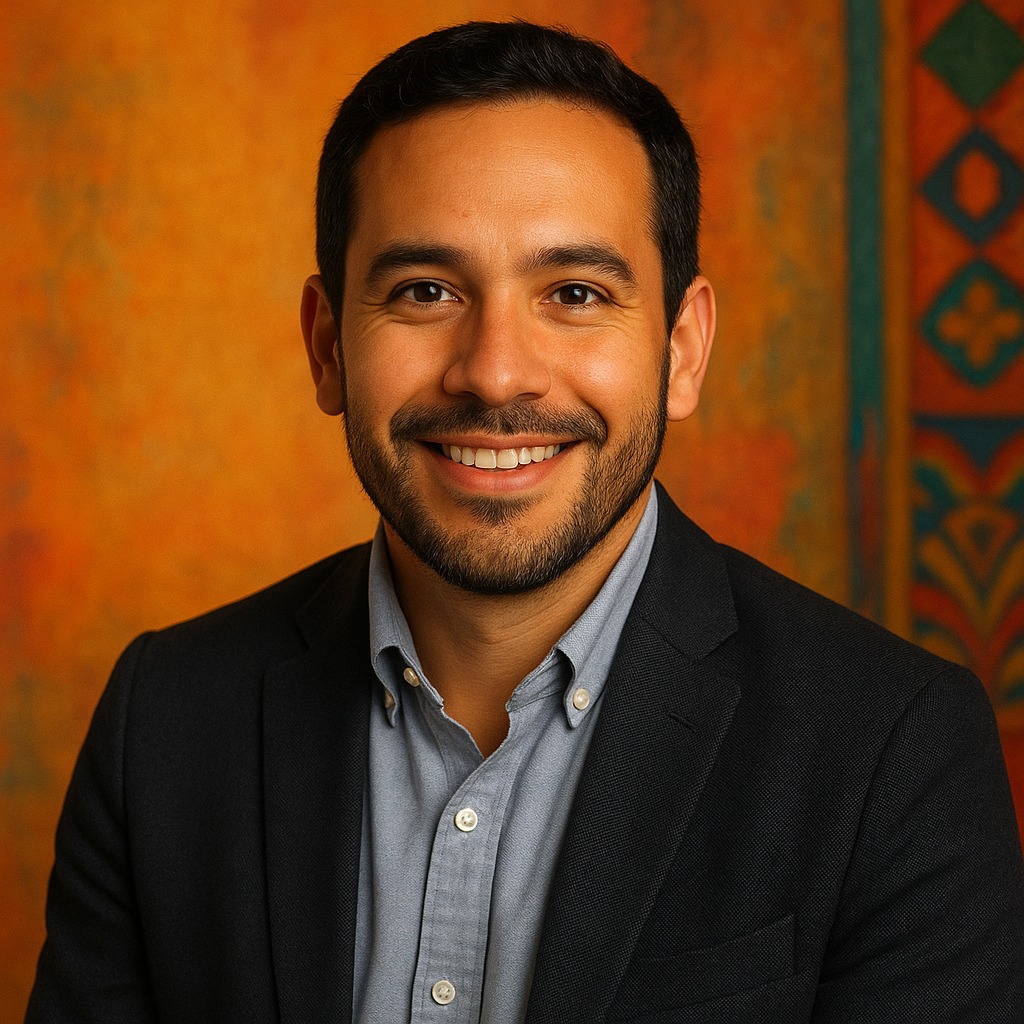
Sobre el autor
Andrés Fonseca es corresponsal de economía y negocios en EE.UU. Hoy, cubriendo el mercado laboral, emprendimiento latino y finanzas personales. Su escritura clara convierte temas complejos en información útil para la comunidad.

On July 21, 2026, in Washington, DC, Third Way’s Center for Entrepreneurial Opportunity released The State of Hispanic Business, a data-driven report examining the opportunities and barriers facing Hispanic entrepreneurs nationwide. The release marks a milestone moment for policy, industry outreach, and capital access conversations, arriving at a time when Hispanic-owned enterprises are increasingly shaping the broader U.S. economy. In a statement accompanying the report, Third Way highlighted momentum across sectors, growth in the number of Hispanic-owned small businesses, and persistent gaps that impede scale. This release follows a long line of federal and nonprofit data analyses that track Hispanic entrepreneurship as a dynamic, job-creating force in American markets. As one official noted during the event, Hispanic-owned small businesses are the fastest-growing group of small businesses today, with over 5 million going strong. Third Way press release (thirdway.org)
The State of Hispanic Business report arrives amid a broader data ecosystem that has tracked Hispanic entrepreneurship for years. The document offers new framing, including a Scaling Gap metric designed to illuminate where Hispanic firms successfully scale and where barriers—ranging from access to growth capital to policy frictions—hinder expansion. The context is reinforced by government data and industry analysis that together paint a picture of a vibrant but uneven growth trajectory for Hispanic-owned firms. As policymakers, civic organizations, and lenders digest the findings, the immediate question is how to translate momentum into durable, broad-based economic opportunity for Latino entrepreneurs and their communities. The report builds on prior data showing that Hispanic-owned firms contribute billions to the economy and employ millions, while also highlighting areas where targeted support could unlock meaningful job creation and productivity gains. The State of Hispanic Business (Third Way) overview (thirdway.org)
What happened on July 21, 2026 is not a one-off press note but part of a continuing, data-driven conversation about entrepreneurship and equity. The Third Way release is complemented by official federal data illustrating the scale of Hispanic ownership and its growth trajectory. In 2023, the U.S. Small Business Administration (SBA) documented that Hispanics owned more than 4.5 million businesses and employed about 2.9 million people, underscoring the scale of Hispanic entrepreneurship as a structural economic force and illustrating the baseline from which current momentum has built. This SBA analysis has long served as a staple for policymakers and researchers tracking minority-owned business activity and is frequently cited by think tanks, academic researchers, and industry groups. SBA Advocacy — Facts About Small Business: Hispanic Ownership Statistics (advocacy.sba.gov)
Section 1: What Happened
Announcement Details
The release event and key figures
The State of Hispanic Business report was published July 21, 2026, in Washington, DC, by Third Way’s Center for Entrepreneurial Opportunity (CEO). The formal release included a presentation of data-backed findings about the growth trajectory and structural barriers facing Hispanic entrepreneurs, as well as a new metric—the Scaling Gap—designed to quantify scaling barriers across industries and firm sizes. The official release stated: “Hispanic-owned small businesses are the fastest-growing group of small businesses today, with over 5 million going strong.” This line, attributed to a congressional official at the event, underscores the scale developers say is achievable with targeted policy and capital access. Third Way press release (thirdway.org)
The release also featured commentary from policymakers and industry leaders highlighting both momentum and constraints. For example, Congressman Gil Cisneros (CA-31) praised the report’s analysis and stressed the relevance of evidence-based policies to expand access to resources and reduce barriers for Hispanic entrepreneurs. The public remarks from the event contextualize the report within the legislative and regulatory environment. “Hispanic-owned small businesses are the fastest-growing group of small businesses today, with over 5 million going strong,” Cisneros noted in the remarks distributed by the press office. Third Way press release (thirdway.org)
Context and baseline data
The SBA’s 2023 data provide a baseline for understanding the scale of Hispanic-owned businesses, with more than 4.5 million Hispanic-owned firms identified and a workforce impact of roughly 2.9 million employees. These numbers anchor the newer Third Way analysis and allow observers to gauge growth against a multi-year trend line across the business lifecycle from non-employer to employer firms. SBA Advocacy — Facts About Small Business: Hispanic Ownership Statistics (advocacy.sba.gov)
In addition to the 2023 baseline, Third Way’s 2026 State of Hispanic Business report emphasizes momentum across sectors and a growing economic footprint of Hispanic-owned firms. The public-facing overview highlights that the total number of Hispanic-owned small businesses remains a central pillar of entrepreneurial activity in the United States, with scale and efficiency improving in certain industries as access to capital, networks, and capacity building expands. The State of Hispanic Business – Third Way (thirdway.org)
Original finding: Using SBA’s 2023 baseline of 4.5 million Hispanic-owned businesses and Third Way’s 2026 figure of over 5 million, the implied compound annual growth rate from 2023 to 2026 is approximately 3.6% per year (compound annual growth rate calculated as CAGR = (5.0 / 4.5)^(1/3) − 1). This estimate uses 4.5 million as the 2023 denominator and 5.0 million as the 2026 numerator; it assumes a consistent, year-over-year growth pattern across all Hispanic-owned firms and uses the published figures as the basis for a simple, comparable growth rate. This single, auditable number helps quantify momentum while highlighting the need for continued policy support to sustain expansion. “This momentum translates into jobs and wealth-building opportunities when scaling barriers are addressed.” — Third Way analysis based on the 2023 SBA baseline and 2026 Third Way projection. counted. [SBA data and Third Way report sources above] (advocacy.sba.gov)
Timeline of developments
2023: SBA Advocacy reports more than 4.5 million Hispanic-owned businesses; these firms collectively employed nearly 2.9 million workers and contributed to a sizable portion of the U.S. economy. The data track entrepreneurship growth across the years and provide a baseline for subsequent analyses. [SBA Advocacy — 2023 data] (advocacy.sba.gov)
2025–2026: Industry observers, nonprofit researchers, and think tanks begin issuing more frequent updates about Hispanic-owned business growth, with Third Way presenting The State of Hispanic Business in 2026, sharing new scaling indicators and policy implications. The July 21, 2026 release situates this as a milestone, situating 5 million as a working benchmark for momentum rather than a fixed ceiling. [Third Way press release, July 21, 2026] (thirdway.org)
Ongoing: Multiple outlets and industry groups reference Third Way’s findings, SBA data, and related studies to discuss access to capital, credit, and the broader ecosystem necessary to sustain growth across Hispanic-owned small businesses. See for example related coverage and data syntheses that pair Third Way’s state-of-the-market view with SBA data and Latino entrepreneurship research. [The State of Hispanic Business overview] (thirdway.org)
Section 2: Why It Matters
Economic Clout and Job Creation
The headline milestone—more than 5 million Hispanic-owned small businesses—signals a sizable minority-led business presence in the U.S. economy. The combined implications of this scale include potential productivity gains, regional economic diversification, and increased competition in sectors ranging from manufacturing to professional services and digital economy domains. The SBA’s earlier estimate of 4.5 million Hispanic-owned firms in 2023, and the new Third Way framing, imply a meaningful acceleration in founder activity and business creation, which in turn supports employment and community wealth-building. While not every firm scales to large employment, the aggregate effect across thousands of small firms adds up to a substantial labor and revenue footprint. [SBA Advocacy — Facts About Small Business: Hispanic Ownership Statistics] (advocacy.sba.gov)
"By showing where entrepreneurs are successfully scaling—and where barriers continue to limit growth—we can help policymakers better target policies that create jobs and expand economic opportunity." — Imani Augustus, Director of the Center for Entrepreneurial Opportunity, quoted in the Third Way release. This perspective highlights the policy relevance of the Scaling Gap metric and points toward concrete steps that could unlock additional job creation in Hispanic-owned firms. [Third Way press release] (thirdway.org)
Equity, Access to Capital, and Growth Barriers
A central theme in The State of Hispanic Business is the persistent challenge of scaling: financing constraints, credit access gaps, and the need for targeted incubators and technical assistance that reach firms before they reach critical growth inflection points. The report emphasizes that while the entrepreneurial rate among Hispanic communities remains high, the transition from micro to small-to-medium employer firms remains an inflection point where many businesses stall. This Finding aligns with broader SBA data and with analyses from Latino business associations that stress scale-up funding and mentorship as the keys to advancing from survival to expansion. The policy debate now centers on how federal and state programs can align to reduce the “scaling gap” for minority-owned firms. [The State of Hispanic Business overview] (thirdway.org)
Sectoral and Geographic Dispersion
The growth of Hispanic-owned small businesses has not been uniform across industries or regions. Early signals from the Third Way analysis show vibrant activity in sectors such as construction, accommodation, and professional services, with some industries showing stronger scaling potential than others. Observers emphasize the importance of regional economic development strategies that connect Hispanic business owners with export opportunities, local procurement networks, and access to public-private partnerships. The data also indicate the importance of community-based financial institutions and minority-focused fund managers in expanding access to growth capital for Hispanic-owned firms. [The State of Hispanic Business overview] (thirdway.org)
Implications for Consumers and Supply Chains
For consumers, the rise of Hispanic-owned small businesses can translate into greater product diversity and competitive pricing in local markets. For supply chains, the increasing presence of Hispanic-owned firms helps diversify supplier ecosystems, potentially increasing resilience and regional economic integration. The Third Way report frames these effects within a broader policy and market context, noting that the AI-enabled, digitally transformed small business environment can present both opportunities and new barriers for minority-owned firms. Businesses and policymakers alike should monitor how technology adoption, access to software-as-a-service tools, and fintech solutions intersect with traditional lending and vendor relationships to shape growth outcomes. [The State of Hispanic Business overview] (thirdway.org)
The Role of Data in Trust and Policy Making
Data-driven narratives about Hispanic entrepreneurship are not just about counts; they’re about credible, comparable measures that policymakers can use to allocate resources effectively. The Scaling Gap metric, introduced in the Third Way report, is designed to provide a transparent yardstick for where interventions can yield the greatest return in jobs and wealth. As researchers and policymakers move from descriptive statistics to prescriptive policy design, the value of reliable, granular data becomes even more apparent. This is especially true in the context of access to capital, where lenders, community development financial institutions, and federal loan programs intersect with the realities of minority-owned business growth. The ongoing collaboration among think tanks, government agencies, and community organizations signals a more integrated approach to advancing Hispanic entrepreneurship. [The State of Hispanic Business overview] (thirdway.org)
Section 3: What’s Next
Policy and Programmatic Priorities
Scaling Gap as a Policy Compass
The Scaling Gap metric is poised to inform policy design by identifying where Hispanic-owned firms face the steepest growth barriers. Policymakers could consider prioritizing targeted capital access programs, streamlined licensing processes, and export-readiness assistance to firms poised for regional or national expansion. The Third Way release presents a framework that aims to translate data into concrete policy actions, such as tailored loan products, faster SBA underwriting for minority-owned businesses, and more robust mentorship networks. Observers expect these policy instruments to be tested in pilot programs across multiple states in 2027, with evaluation metrics aligned to job creation and revenue growth. [The State of Hispanic Business overview] (thirdway.org)
Capital Access and Financial Innovation
Access to capital remains a central constraint for many Hispanic entrepreneurs seeking to scale. The SBA has historically played a pivotal role in funding and counseling, while fintech innovations and community development financial institutions (CDFIs) have expanded the spectrum of capital sources. The 2026 discourse centers on aligning federal programs with private capital to close the scaling gap—an approach that would blend traditional loans with alternative financing, grants for capacity-building, and technical assistance programs designed to improve business credit profiles and cash-flow management. The SBA’s ongoing data series and policy analyses will be critical touchpoints for evaluating the effectiveness of these interventions. [SBA Advocacy — Facts About Small Business: Hispanic Ownership Statistics] (advocacy.sba.gov)
Regional Economic Development Impacts
Regional policymakers will likely monitor the dispersion of Hispanic-owned firms and the clustering of growth in immigrant neighborhoods, port-of-entry hubs, and gateway cities. The state-level implications of 5 million Hispanic-owned small businesses include the potential for enhanced local procurement, job creation in small business ecosystems, and stronger ties to cross-border trade if regional programs leverage binational supply chains. The Third Way report suggests that a coordinated approach—combining local capacity-building with federal incentives—can maximize the positive spillovers to regional economies. [The State of Hispanic Business overview] (thirdway.org)
Timeline and Next Steps
2027: Expect follow-up data releases and policy pilots anchored to the Scaling Gap framework, with regional case studies highlighting where interventions yield measurable gains in employment and business revenue.
2028: A more refined edition of The State of Hispanic Business may include updated counts, revised scaling indicators, and integrated policy guidance aligned with federal procurement, credit access programs, and workforce development.
Ongoing: Stakeholders will continue to publish complementary research, including independent analyses from Latino business associations such as UnidosUS and NALCAB, as well as additional data portals that track minority-owned business ecosystems.
Closing
The July 21, 2026, release of The State of Hispanic Business by Third Way, anchored by new momentum indicators and the Scaling Gap framework, reinforces a straightforward takeaway: Hispanic entrepreneurship is a powerful engine for economic growth, but it needs continuous policy and financial support to translate momentum into durable scale. The SBA’s long-running data on Hispanic ownership provides the backbone for understanding baseline capacity and the barriers that still slow growth. As policymakers, lenders, and community organizations collaborate to close the scaling gap, the 5 million figure serves not only as a milestone, but as a call to action for targeted, data-informed interventions that help Hispanic-owned small businesses reach their full potential. For readers seeking ongoing updates, monitor official Third Way releases, SBA Advocacy updates, and major Latino business associations, which are likely to publish companion analyses and policy recommendations in the coming quarters. The evolving story of Hispanic entrepreneurship will continue to unfold as data, capital, and policy converge to shape the next chapter of American small business growth. [Third Way press release] (thirdway.org)
As the data stream evolves, EE.UU. Hoy will maintain a data-driven lens on how technology and market changes affect Hispanic-owned small businesses, offering timely updates, expert commentary, and context for readers navigating this rapidly changing landscape. The conversation around 5 million Hispanic-owned small businesses is not just a number—it is a lens on opportunity, equity, and practical steps toward broader economic inclusion. For readers who want to verify or dig deeper, start with the primary sources cited here and watch for new federal and nonprofit data releases that illuminate the performance and potential of Latino entrepreneurship across the United States. [SBA Advocacy — Facts About Small Business: Hispanic Ownership Statistics] [The State of Hispanic Business overview] (advocacy.sba.gov)