Emprendimiento latino in the US: A Data-Driven Story
Explore a comprehensive, data-driven portrait of Emprendimiento latino within the United States' tech and market landscape today.

Sobre el autor
Andrés Fonseca es corresponsal de economía y negocios en EE.UU. Hoy, cubriendo el mercado laboral, emprendimiento latino y finanzas personales. Su escritura clara convierte temas complejos en información útil para la comunidad.

The room hums with the soft chatter of laptops and concrete optimism. In a sunlit coworking space on the edge of a rising Latino entrepreneurial corridor, a young founder sketches a map of need and opportunity on a whiteboard. The room is crowded with developers, designers, and mentors who speak in a blend of English and Spanish, the cadence of street markets and boardrooms colliding into a single rhythm. This is not a single story but a chorus — a living tapestry of Emprendimiento latino that echoes across the United States. The scene is everyday enough to be overlooked, and yet it marks the frontier where data meets determination, where a new generation of Latino founders is rewriting the playbook for technology, markets, and jobs.
Across the U.S., data quietly confirms what many in the room already sense: Emprendimiento latino is accelerating, diversifying, and maturing into a force that matters for the economy. The latest decade of research shows Latino-owned businesses expanding at a rate well above the national average, signaling a broader shift in how American innovation is built, funded, and scaled. This is not merely a narrative of grit; it is a data-driven story about growth, risk, access to capital, and the strategic use of technology to widen the arc of opportunity for communities historically underrepresented in entrepreneurship. As the numbers accumulate, so does a clearer view of where the path is headed and where policy, investors, and ecosystems can lift the trajectory. Emprendimiento latino, in this frame, becomes a lens on the evolution of America’s entrepreneurial landscape. (news.stanford.edu)
The Beginning
The spark in the margins
In the margins of crowded marketplaces and quiet suburban incubators, a recurring scene unfolds: a founder who started with a side hustle or a family business decides that the next chapter demands digital scale. The pivot often begins with a small, stubborn realization — a service customers want, a process that runs slowly, or a gap in a local market that no one else is serving efficiently. In this narrative, the spark isn’t a single moment but a series of decisions built on family reciprocity, neighborhood networks, and a hunger to translate cultural insight into scalable value. Data from the Stanford State of Latino Entrepreneurship initiative underscores this momentum: Latino-owned businesses grew by 44% from 2018 to 2023, reaching 465,202 firms nationwide. This growth defies the narrative of entrepreneurship as a short-lived capstone and instead reads like a long arc of resilience and expansion across multiple sectors. The same body of work notes that Latino firms are increasingly pushing into professional services, construction, real estate, arts, entertainment, and transportation — signaling a broad-based movement beyond traditional immigrant-enterprise stereotypes. (news.stanford.edu)
From family to founder
Behind every startup is a personal story of translation: translating a skill or cultural asset into a market-ready product, service, or platform. The Stanford data highlight a crucial dimension of the Emprendimiento latino story: the shift from family-based businesses to scalable, asset-light ventures often employs technology as an accelerant. The transition isn’t purely tech for tech’s sake; it’s tech as a bridge to new customers, new geographies, and new forms of collaboration. The same research describes how Latino entrepreneurs are “job creators” who tend to reinvest in employees and benefits, contributing to community-level growth even as they expand into diverse industries. And while growth is strong, the data also remind us that profitability and scale still lag behind white-owned peers in some metrics; the takeaway is not a celebration of universal parity, but a clear map of where gaps exist and how ecosystems might respond. (news.stanford.edu)
The moment of incitement
In many narratives of Emprendimiento latino, the inciting incident is practical rather than dramatic: a founder sees a bottleneck in a local supply chain, an inefficiency in a service industry, or a customer pain that traditional incumbents overlook. The inciting moment often occurs during a conversation in a coffee shop, a hackathon, or a cross-border collaboration with peers in a nearby hub or in a sister city across the border. The broader data landscape aligns with these micro-stories: Latinos are starting businesses at a high rate, and the overall ecosystem benefits when capital, talent, and mentorship flow toward these ventures. The SBA’s broader picture reinforces this with numbers indicating hundreds of thousands of Hispanic-owned businesses generating hundreds of billions in economic impact, underscoring how individual sparks contribute to a national arc. (sba.gov)
The Journey
The first prototype
The early days of Emprendimiento latino frequently revolve around a lean prototype, built with limited capital and guided by intimate knowledge of local needs. A software tool, a marketplace concept, or a service platform begins as a clever improvement on an existing process, guided by real customers rather than abstract metrics. The Stanford study makes it clear that Latino entrepreneurs are experimenting with technology and sustainability, with roughly one-fifth of respondents reporting AI adoption — a signal that technology is no longer optional but a means to differentiate, automate, and scale. Founders learn to balance speed with quality, iterate rapidly, and often rely on community mentors who understand both the market and the cultural context in which their businesses operate. AI adoption, when used thoughtfully, has been shown to help raise skill levels and expand the workforce, rather than simply replacing workers. This is not a shift from people to machines; it is a shift toward augmenting capability while preserving a human-centric mission. (news.stanford.edu)
The funding barrier
Access to capital remains one of the most persistent and measurable challenges in Emprendimiento latino. The State of Latino Entrepreneurship findings reveal a sobering gap: only about 21% of Latino entrepreneurs reported receiving full funding for their ventures, compared with around 40% for white entrepreneurs. When Latino founders are denied funding, a disappointing half report receiving no feedback at all, a stark contrast to the broader market norms that emphasize feedback loops as a path to future success. These gaps are not just anecdotes; they are reflected in the funding dynamics documented by researchers and journalists who track capital allocation and representation across the venture ecosystem. The implication is not that Latino founders lack merit but that capital markets have structural blind spots that must be addressed through better outreach, mentorship, and transparent evaluation criteria. (news.stanford.edu)
The pivot to AI and technology
As the journey unfolds, many Emprendimiento latino stories hinge on purposeful technology adoption. The Stanford report notes that Latino-owned businesses are not only adopting AI at rates similar to white-owned peers but also often reporting positive impacts such as skill development and job expansion when AI is deployed with a thoughtful governance mindset. These findings challenge common stereotypes about automation and employment and underscore a nuanced view: when used strategically, AI can amplify capabilities without erasing the human element that often drives immigrant entrepreneurship. In practice, founders embed AI to enhance product quality, automate repetitive processes, and broaden their product or service offerings, enabling them to compete with larger incumbents while preserving lean operating models. The evidence suggests that early AI adoption, when paired with continuous learning and mentorship, can become a meaningful differentiator for Emprendimiento latino. (news.stanford.edu)
A community of support
The journey is rarely solitary. Across regions, Latinos in venture-backed startups, small businesses, and community organizations build a network of mentors, lenders, and peers who share risk, resources, and referrals. While representation at high levels of venture capital remains limited, signs of progress appear in multiple reports: Latino-led venture capital activity and the broader diversification of investment teams are shifting slowly but perceptibly. For instance, industry analyses show that Hispanic representation among investment partners in large U.S. firms has edged upward over the past decade, even as total numbers remain small. These micro-trends matter because networks and role models translate into more favorable funding outcomes and more robust business support ecosystems for newcomers. The collaboration between academic researchers, industry groups, and policy advocates helps translate data into action — a crucial dynamic for sustaining the momentum of Emprendimiento latino. (bloomberglinea.com)
The funding landscape’s counterintuitions
The funding landscape is not simply about dollars; it’s about pathways. The federal ecosystem plays a role through loan programs and capital access initiatives. SBA data show a historic mobilization of capital to minority-owned businesses, including Latino firms, under recent administrations. In fiscal year 2023, Latino-owned businesses received millions in SBA-backed loans, and the share of loans to Latino-owned firms rose meaningfully within the 7(a) and 504 programs. This is not a panacea, but it is an indicator that public finance can widen access to early-stage capital and working capital, enabling more Latino founders to move from prototyping to growing revenue and hiring. The numbers also reflect a broader trend of a small-business boom supported by public policy, with more than 7,300 SBA loans to Latino-owned businesses in FY2023 and a notable increase in loan dollars and share of total loans. (sba.gov)
A case study in resilience
One composite founder, drawing on typical experiences described in the literature, might weather initial rejections, pivot to a regional lender, and then scale thanks to a small but strategic early customer win and a mentorship network. Early friction with traditional lenders becomes a turning point when a local banker recognizes the founder’s narrative, the potential for community impact, and the feasibility of a debt or grant-based financing path. The Stanford narrative provides a concrete illustration: a founder like Anuar Garcia, who faced an equity loan denial and found a more supportive relationship with a community-focused bank, eventually growing an operation to tens of millions in revenue and dozens of jobs. These micro-dramas, while fictional in detail, are representative of the real-world dynamics that shape Emprendimiento latino journeys in many communities. The overarching arc is clear: a cautious but persistent push toward scale, guided by relationships, capital access, and an evolving toolkit of technology inputs. (news.stanford.edu)
The Resolution
Scaling beyond the first milestone
The growth arc for Emprendimiento latino is not linear, but it trends upward. The decade-long data set shows massive expansion in the number of Latino-owned businesses, with total revenue rising substantially over the same period. The narrative of resilience continues as firms reach new revenue thresholds, diversify product lines, and expand their geographic reach. The Stanford analysis emphasizes that Latino-owned businesses are expanding across many industries, not just in traditional sectors like food services but also in professional services, construction, and real estate — a sign of broader capability and market maturation. The potential economic impact remains enormous: if Latino-owned businesses achieved the same average revenue as white-owned firms, the U.S. economy could gain roughly $1.1 trillion in additional economic output. This is not merely a statistic; it is a capstone of the latent value that Emprendimiento latino holds for broader economic growth. (news.stanford.edu)
Building durable, inclusive ecosystems
The resolution of the narrative is not only about individual success but about ecosystem health. The data point that 20% of Latino-owned firms have integrated AI signals a broader shift: Latino entrepreneurship is increasingly leveraging technology to compete, differentiate, and scale. However, the persistent access gap to funding means that the most systemic work remains to be done — from targeted venture capital outreach to policy changes that lower the barriers to capital for minority-owned businesses. The SBA’s numbers regarding loans and contracting opportunities illuminate a path where public and private actors can align to sustain growth, especially for startups and small firms that blend cultural insight with technical capability. In this sense, many of the Emprendimiento latino stories are as much about the scale of opportunity as they are about the startup toolkits that enable growth. (news.stanford.edu)
Transformation and longer-term outcomes
The long arc of these narratives points toward a new normal: a U.S. entrepreneurial ecosystem where Emprendimiento latino is a recognized engine of innovation, job creation, and cross-border collaboration. The continuous intensification of tech adoption, the expansion into new sectors, and the gradual broadening of capital access all signal a transformation not only in the businesses themselves but in the communities that nourish them. As Latinos become more visible in leadership roles within the broader finance and technology landscapes, the structural barriers that once constrained growth begin to loosen — slowly, incrementally, but discernibly. The historical data from Stanford, the policy indicators from the SBA, and the financing trends tracked by industry observers together reinforce this transformation as data-backed and mission-oriented. (news.stanford.edu)
The Lessons
Takeaway 1 — Prioritize capital access with clarity
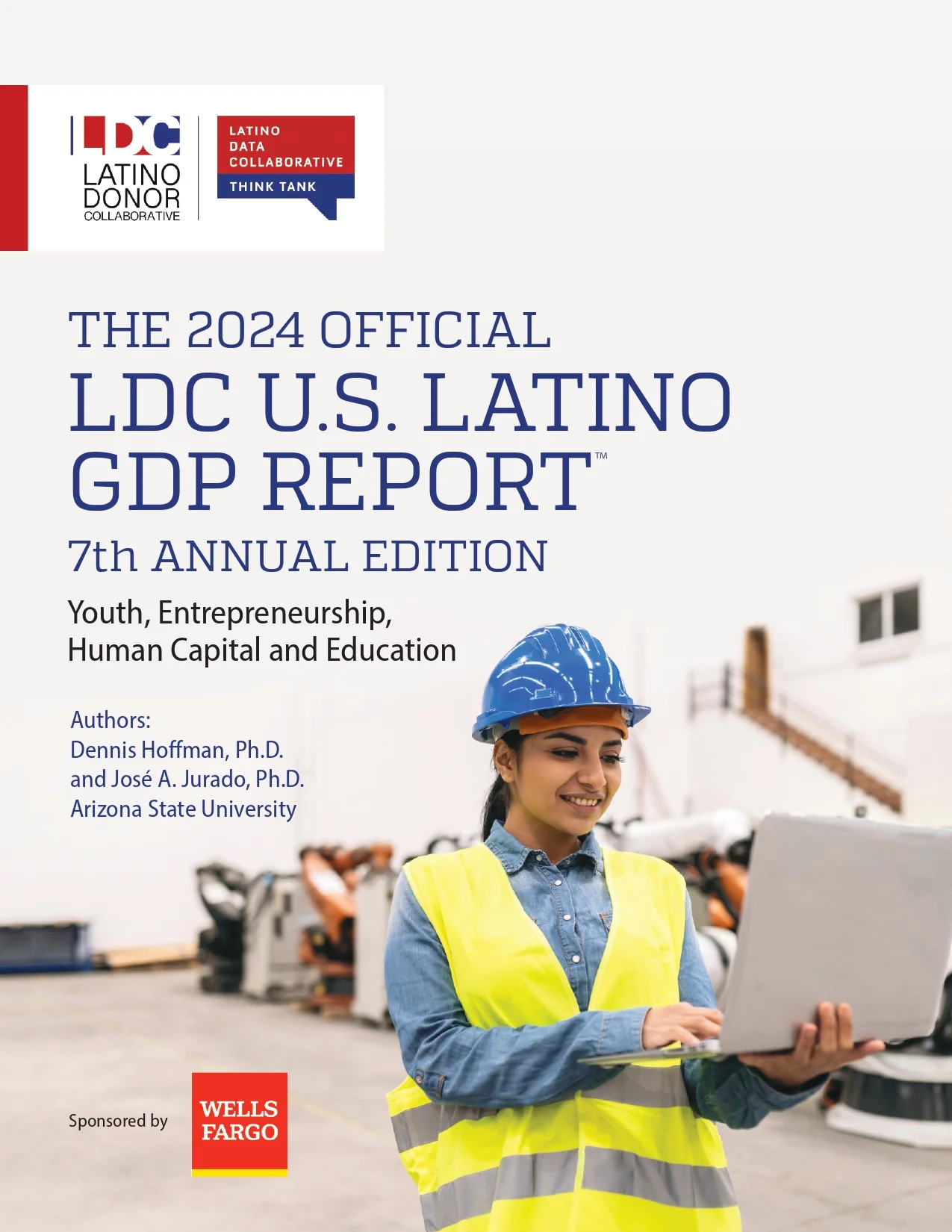
One of the most enduring threads in the Emprendimiento latino narrative is access to capital. Founders should plan for capital strategy early, building relationships with local lenders and community development financial institutions (CDFIs) while actively pursuing VC and angel networks that demonstrate a commitment to diverse founders. The data are unambiguous: a sizable share of Latino founders report funding gaps and limited feedback on funding decisions. Proactive outreach, transparent milestones, and feedback loops can help close those gaps and convert early traction into scalable growth. Policy and ecosystem players can reinforce this by expanding guaranteed loan programs and mentorship channels that demystify the fundraising process. (news.stanford.edu)
Takeaway 2 — Lean into technology with a human touch
Technology is not a substitute for human talent in Emprendimiento latino; it is a multiplier. The AI adoption trends—roughly one-fifth of Latino-owned firms using AI with tangible benefits—show that technology can lift output and skills when applied with an inclusive growth mindset. Founders should prioritize practical tech pilots that generate measurable customer value, while ensuring their teams receive the training, compensation, and career progression that come with growth. Ecosystem enablers, including mentors and community programs, can help translate technical adoption into workforce development and long-term resilience. (news.stanford.edu)
Takeaway 3 — Build community-specific, scalable models
The journey of Emprendimiento latino is most successful when it is embedded in supportive ecosystems—local lenders, mentors, peer networks, and policy advances that recognize the unique challenges and strengths of Latino founders. The data underscore that Latinos are not monolithic; they span a spectrum from serial entrepreneurs to first-time founders, across industries from services to advanced manufacturing. Programs that connect founders with consistent mentorship, provide feedback loops, and offer scalable financing react to these realities and help convert early wins into durable, multi-market growth. The Stanford study reinforces this view by highlighting resilience and the potential to close gaps in revenue and scale when ecosystems invest in people as much as they invest in ideas. (news.stanford.edu)
Takeaway 4 — Align policy, capital, and education for sustained impact
A meaningful transformation of Emprendimiento latino requires alignment among policymakers, investors, and educators. The SBA’s data on loans, contracting opportunities, and support resources illustrate how public policy can complement private capital to expand access, reduce friction, and accelerate growth. For founders, this means pursuing training in business planning, market research, and digital marketing, while communities push for more capital visibility, better lender education about Latino business models, and more targeted outreach to minority-owned firms. The research landscape, including the MDPI serial-entrepreneur work, indicates that a sizable portion of Latino entrepreneurs pursue multiple business ventures, a reminder that scaling approaches should be flexible and resilient across life cycles. (sba.gov)
Closing
Looking back from the present moment, the story of Emprendimiento latino in the United States is not a single triumph or a lone setback. It is a continuous evolution shaped by communities, capital markets, technology, and policy frameworks. The data tell a story of rapid growth, enduring challenges, and a persistent belief in the value of diverse voices in innovation. The people in our composite narrative — the founders, mentors, bankers, developers, and students who inhabit the global corridors of technology and commerce — are rewriting what is possible for Latino entrepreneurship in the United States. The lasting impact is not only measured in revenue or jobs but in the confidence of communities to build, iterate, and lead on their own terms. This is the essence of Emprendimiento latino: a living, data-informed journey toward a more inclusive, innovative economy.
The room in that sunlit coworking space will still be buzzing tomorrow, and the day after, as new ideas take shape, new mentors arrive, and new capital pathways open. The numbers from Stanford, the policy signals from SBA, and the broader industry dialogue all point to a future where Emprendimiento latino remains a cornerstone of U.S. tech and market dynamism — not merely a narrative of resilience, but a blueprint for scalable impact.