La mentoría comunitaria impulsa la educación STEAM entre jóvenes latinos
Cobertura sobre Educación STEAM para jóvenes latinos con mentoría comunitaria y su impacto en comunidades escolares de EE. UU.
Sobre el autor
Andrés Fonseca es corresponsal de economía y negocios en EE.UU. Hoy, cubriendo el mercado laboral, emprendimiento latino y finanzas personales. Su escritura clara convierte temas complejos en información útil para la comunidad.
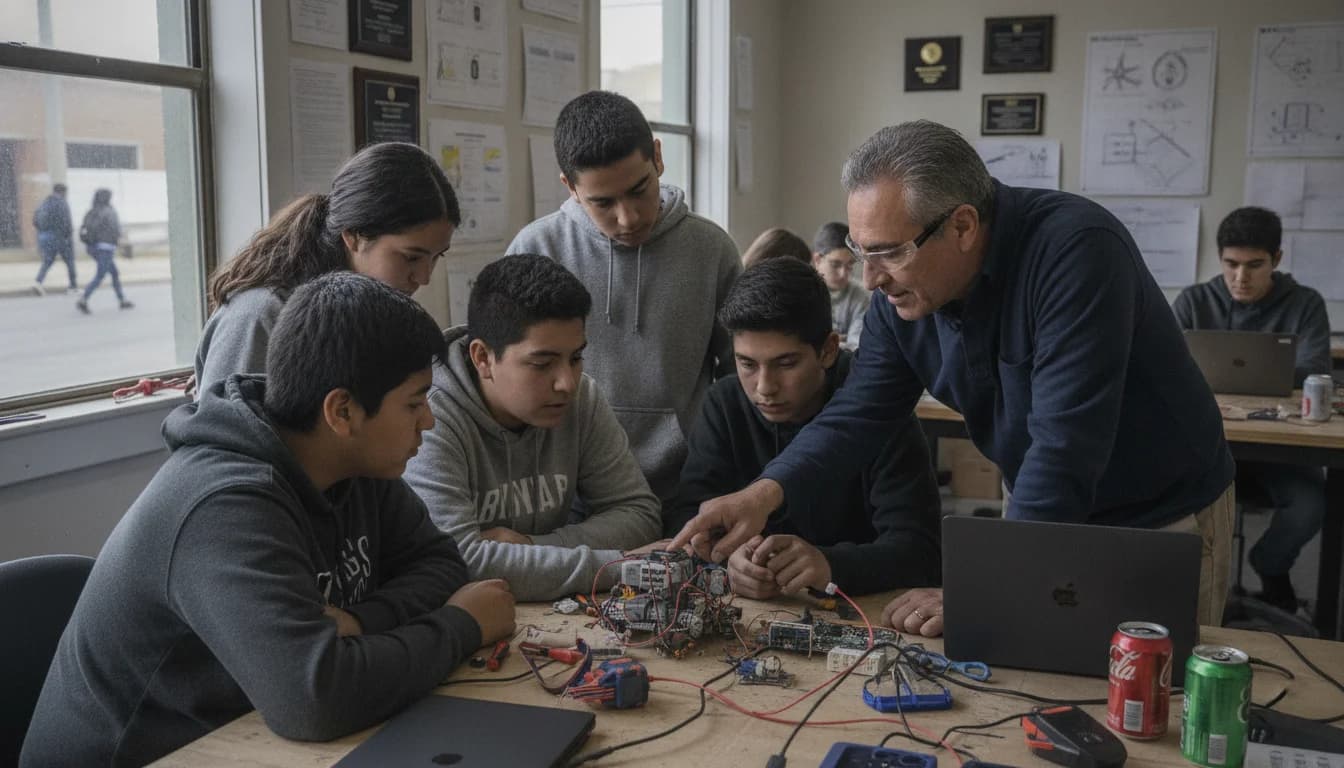
Today in EE.UU. Hoy we examine a growing phenomenon shaping classrooms and community centers across the United States: Educación STEAM para jóvenes latinos con mentoría comunitaria. As districts and nonprofit partners push for more bilingual, culturally responsive programs, mentors from local communities are becoming a central piece of the approach, linking hands-on science, technology, engineering, arts, and math with real-world opportunities. This coverage highlights what’s happening, why it matters for students and families, and what may come next as districts, funders, and community groups collaborate to expand access to STEAM in Latine communities. The focus is data-driven and grounded in frontline programs that researchers and practitioners are watching closely as indicators of broader educational and workforce trends.
Educación STEAM para jóvenes latinos con mentoría comunitaria, in its various real-world expressions, sits at the intersection of afterschool enrichment, workforce development, and culturally sustaining pedagogy. Programs like Sociedad Latina’s STEAM Team in Boston show how bilingual coaching and hands-on projects can connect students to STEM pathways. The National Urban League’s Project Ready: STEAM, launched in 2010, demonstrates a national template for blending mentoring and project-based learning to broaden access to STEAM fields for historically underrepresented youth. And independent studies and program evaluations are beginning to document how these efforts translate into awareness of STEM careers, persistence in school, and pathways to college. For readers seeking a precise snapshot of what these efforts look like on the ground, the evidence is clear in the numbers: thousands of students served, hundreds of college visits facilitated, and bilingual supports that help families navigate schooling in two languages. This report synthesizes those data points and lays out what’s most urgent for policymakers, educators, and community mentors as the sector scales up. The data points cited below come from program pages, nonprofit annual reports, and evaluation briefs published in recent years by recognized organizations serving Latine students across the United States. For transparency, sources are cited after the statements they support.
What happened
Announcement details
- The sector-wide push to expand Educación STEAM para jóvenes latinos con mentoría comunitaria is being advanced through established, community-rooted programs rather than a single, centralized rollout. In Boston, Sociedad Latina describes its STEAM Team as a year-round afterschool and summer middle-school program designed to boost academic achievement, increase STEAM engagement, and nurture social-emotional skills. The program explicitly notes that youth address community issues through service-learning projects and that many middle-school participants transition into a Youth Leader pathway in high school. This model emphasizes bilingual coaching and connections with families, a hallmark of culturally responsive education. (sociedadlatina.org)
- Nationally, the National Urban League’s Project Ready: STEAM program has operated as a distributed, affiliate-based effort since its inception in 2010. The program aligns with the Urban League network’s mission to expand educational opportunities, provide mentoring, and connect students with role models in STEAM fields. The network includes 21 affiliates that collaborate with local STEAM partners to deliver formal and informal supports, aiming to broaden participation in the STEAM workforce. (nul.org)
Timeline and key facts
- 2010: Project Ready: STEAM launched by the National Urban League to provide middle- and high-school students with academic and experiential supports for STEAM fields, including mentoring and college-facing exposure. The program was designed to reach communities historically underrepresented in STEM/STEAM. (nul.org)
- 2013–2019: Sociedad Latina’s STEAM Team and related pathways programs become embedded in Boston’s youth-serving ecosystem, expanding from afterschool activities into structured pathways that connect middle schoolers with high school and college opportunities. The organization’s own historical materials describe STEAM Team as a long-running element of its Education Pathways, with sustained emphasis on bilingual supports, culture, and community engagement. (sociedadlatina.org)
- 2019–2024: Annual reporting from Sociedad Latina documents the program’s impact, including recognition for its approach (e.g., as a designated 21st Century Community Learning Center) and ongoing work to connect youth with internships, leadership opportunities, and college access supports. This record also notes the broader ecosystem of Latine-led networks (e.g., Latine College & Career Access, LaCCA) and cross-organizational collaboration in Boston. (sociedadlatina.org)
- 2024: National Urban League reports program activity across affiliates, including 1,806 student participants served since 2020 and 641 youth engaged in 180 college tours in 2024, underscoring the reach and impact of STEAM-focused mentorship and exposure efforts. These numbers illustrate both the scale and the momentum of the field as it scales beyond individual cities. (nul.org)
- 2024–2025: A broader set of LATINO-focused STEAM initiatives continues to emerge in local contexts (for example, Latino youth mentorship and afterschool STEAM programs reported by various community organizations across the country). Evaluations and news reporting highlight ongoing mentoring relationships, bilingual programming, and the use of culturally relevant curricula to attract and retain Latine students in STEAM tracks. (uwsd.org)
Why it matters
- Equity and workforce development: Programs like Project Ready: STEAM and Sociedad Latina’s STEAM Team specifically aim to close participation gaps in STEAM, particularly for Latine learners who are multilingual and often underrepresented in STEM occupations. The evidence base points to the importance of early and sustained exposure to STEM fields, mentorship, and real-world projects to build interest and confidence among Latine youth. The National Urban League emphasizes mentorship and exposure to STEAM majors and careers as critical levers for broadening participation. (nul.org)
- Outcomes and awareness: Evaluations from program partners indicate meaningful shifts in youth awareness about STEM career opportunities. For example, in 2024, 88% of participants polled reported increased awareness of science and technology career opportunities through Project Ready: STEAM. These kinds of metrics are central to the inverted-pyramid reporting approach in education coverage: awareness and access are precursors to persistence in school and pursuit of STEM pathways. (nul.org)
- Community-anchored models: The Sociedad Latina Pathways to Success framework emphasizes multi-year, intensive supports rooted in bilingual and culturally responsive practices. The model connects families with educators, aligns with a cross-sector network, and leverages local trust to sustain engagement. This approach reflects a broader trend of “community mentorship” as a key driver of sustained participation in STEAM for Latine youth. (sociedadlatina.org)
- National recognition and local impact: White House recognition of Sociedad Latina’s Education Pathways as one of 230 Bright Spots in Hispanic Education highlights the national relevance of localized, community-based STEAM initiatives. The combination of local impact and national attention helps validate the approach and can help attract funding and replication in other communities. (sociedadlatina.org)
- Cross-city and cross-sector collaboration: The field shows a pattern of cross-city networks (e.g., LaCCA in Boston, a coalition of Latine-led organizations) working with universities, local school districts, and private funders to widen access to STEAM opportunities. This ecosystem of collaboration is essential to scale the approach while maintaining cultural relevance and community trust. (sociedadlatina.org)
Why it matters for readers of EE.UU. Hoy
- Readers in the United States rely on evidence-driven reporting of how technology-enabled education programs influence access to STEM for Latine youth. The programs highlighted here show a tangible, community-rooted pathway—from afterschool enrichment to college access and workforce readiness—that aligns with broader market trends toward workforce development in STEM fields and the role of mentorship in expanding opportunity. The data show real-world outcomes while underscoring that scalable, culturally resonant models are central to future progress in this space. For policymakers and educators, the takeaway is clear: investments in community mentorship, bilingual supports, and structured STEAM pathways can yield measurable gains in awareness and college-going rates among Latine students. (nul.org)
Section 1: What Happened
Announcement details
- The field’s defining announcements are not a single press release but a series of programmatic expansions and fidelity efforts across organizations serving Latine youth. In practice, the work is driven by community-based groups—such as Sociedad Latina in Boston—expanding STEAM education through programmatic pathways that combine academic support, mentoring, and family engagement. The organization’s STEAM Team explicitly integrates afterschool and summer programming with bilingual tutoring and service-learning projects, positioning STEAM as a vehicle for both academic growth and community impact. This approach reflects a broader trend toward integrated supports rather than isolated STEM activities. (sociedadlatina.org)
- At the national level, the National Urban League’s Project Ready: STEAM program provides a model for how a federation of urban affiliates can deliver STEAM education with mentoring across multiple contexts. The program’s design—mentoring, exposure to STEAM majors, college tours, and project-based learning—helps to standardize a research-informed approach while allowing local adaptation. The “launched in 2010” milestone anchors the program’s longevity and its continued evolution across affiliates. (nul.org)
Timeline and key facts
- 2010: Project Ready: STEAM launched by the National Urban League to expand access to STEAM education and mentorship for youth of color and multilingual learners. The model emphasizes collegial exposure, mentorship, and structured activities designed to foster long-term interest in STEM fields. (nul.org)
- 2010s–2020s: Sociedad Latina’s STEAM Team becomes a long-running element of Boston’s educational ecosystem, with the annual report noting its evolution and recognition within state and local frameworks (e.g., designation as a 21st Century Community Learning Center). The STEAM Team’s integration with Education Pathways demonstrates how a youth-serving organization can sustain and scale bilingual STEAM initiatives within a city’s public-school ecosystem. (sociedadlatina.org)
- 2024: The National Urban League reports the program’s national reach: 1,806 student participants served since 2020 and 641 youth engaged in 180 college tours in 2024, underscoring the program’s momentum and the demand for mentorship-supported STEAM exposure. (nul.org)
Section 2: Why It Matters
Impact analysis
- Academic engagement and college readiness: Programs that pair STEAM learning with mentorship are designed to boost both subject-matter engagement and postsecondary planning. The Sociedad Latina model emphasizes bilingual coaching, family involvement, and a multi-year pathway to college access, which research suggests can improve high-school completion and college enrollment for multilingual learners. In practice, the LaCCA network coordinates across organizations to expand Latine youth access to higher education opportunities and STEM-related careers. (sociedadlatina.org)
- Awareness of STEM pathways: The 2024 Project Ready: STEAM metrics indicate substantial increases in participants’ awareness of STEM career opportunities, a critical early signal in the pathway from exposure to persistence in STEM education. While awareness alone does not guarantee persistence, it is a necessary first step for students to envision themselves in STEM roles and pursue related coursework and college majors. (nul.org)
- Mentorship as a lever for equity: The James R. Jordan Foundation’s S.T.E.A.M. program highlights how mentorship and a community-based learning environment can level the playing field for youth from underrepresented backgrounds, including Latino students. The program’s design—year-long engagement, Saturday sessions, and summer activities—illustrates how structured mentorship and ongoing, culturally relevant experiences can help students see themselves as capable in S.T.E.A.M. fields. (jamesjordanfoundation.com)
Broader context
- The field sits at a crossroads of education policy and workforce development. Policymakers and funders increasingly frame STEAM education as a core strategy for closing achievement gaps and building diverse pipelines into STEM careers. The White House-acknowledged Bright Spots in Hispanic Education point to the value of culturally responsive, community-rooted approaches that combine academics, career exposure, and leadership development. This convergence of education and workforce priorities helps explain why Latine-led networks and national accelerators are intensifying investments in STEAM mentorship. (sociedadlatina.org)
- The importance of bilingual and culturally responsive practices is underscored by the Sociedad Latina model and by the broader literature on STEAM education for multilingual learners. Programs that meet students where they are—linguistically and culturally—tend to create more meaningful engagement, sustain participation, and build trust with families. This trust is essential in communities where parental involvement and language access have historically shaped educational trajectories. (sociedadlatina.org)
What’s next
Timeline and next steps
- Continued growth across Affiliates: The National Urban League’s multi-affiliate structure suggests that more communities could adopt Project Ready: STEAM-like curricula, mentor networks, and exposure activities. The network’s 21 affiliates are a built-in platform for scaling best practices, especially when supported by data-driven approaches to evaluation and continuous improvement. The program’s structure—project-based learning, mentoring, and college exposure—can be adapted to local needs while preserving core elements that have demonstrated value. (nul.org)
- Expansion of Latine college access networks: With LaCCA serving as a coalition of Latine-led organizations in Boston, there is potential for replication in other metro areas that share similar demographic profiles. Expanding Latine-focused pathways can help ensure that bilingual families have access to guidance on college affordability, financial aid, and STEM career options. The use of cross-organizational partnerships can help scale these benefits to more Latine students without sacrificing the cultural relevance that engages families and communities. (sociedadlatina.org)
- Integration with workforce-aligned programming: As STEAM remains central to future job markets, programs are likely to incorporate more explicit workforce development components—internships, job shadows, industry mentors, and exposure to STEM fields through partnerships with local universities and employers. The James R. Jordan Foundation and similar programs show that experiences bridging school learning with real-world applications are key to maintaining engagement and building career confidence. (jamesjordanfoundation.com)
What to watch for
- Data transparency and outcome measurements: As more programs scale, there will be increasing emphasis on rigorous evaluation—tracking not only awareness but actual persistence in STEM coursework, high school graduation rates, and postsecondary STEM enrollment. The 2024 data from Project Ready: STEAM demonstrates the kind of metrics that stakeholders will want to see replicated and expanded across jurisdictions. (nul.org)
- Policy signals and funding streams: The alignment of community STEAM mentoring with national education goals suggests that funding may increasingly flow to model programs that demonstrate scalability, community engagement, and measurable youth outcomes. Observers should monitor announcements from foundations, government agencies, and coalitions that support Latine STEAM education and mentorship as part of larger equity-focused initiatives. (sociedadlatina.org)
Closing
- In sum, Educación STEAM para jóvenes latinos con mentoría comunitaria is not a single program with one-off results; it is a growing ecosystem of bilingual, culturally affirming STEAM education anchored in community mentorship. The experience of Sociedad Latina in Boston, the scalable framework of Project Ready: STEAM across the National Urban League’s network, and the long-running STEAM Team in other Latine-serving communities illustrate a broader pattern: when mentors from the community are integrated into hands-on STEAM learning and career exploration, Latine students gain access to pathways that can expand educational and economic opportunity. As the sector evolves, the most compelling signals will come from sustained participation, meaningful college exposure, and a workforce pipeline that reflects the communities it serves.
Stay updated with EE.UU. Hoy for ongoing coverage, including program milestones, new affiliate collaborations, and data-driven outcomes from Latine STEAM mentorship efforts. Readers can expect periodic deep-dives into how bilingual, culturally responsive STEAM education is reshaping opportunities for Latine youth across the country, with data-driven analyses that connect classroom experiences to real-world careers in technology, engineering, and beyond.