Chatbot IA En Servicios Públicos Miami Español Debuts
EE.UU. Hoy reports on the City of Miami's Chatbot IA en servicios públicos Miami español, a Generative AI tool to streamline public service inquiries.

Sobre el autor
Marisol Delgado es periodista de cultura y estilo de vida en EE.UU. Hoy, explorando la rica diversidad de la experiencia latina en Estados Unidos. Sus crónicas celebran las tradiciones, el arte y las voces que enriquecen la vida americana.
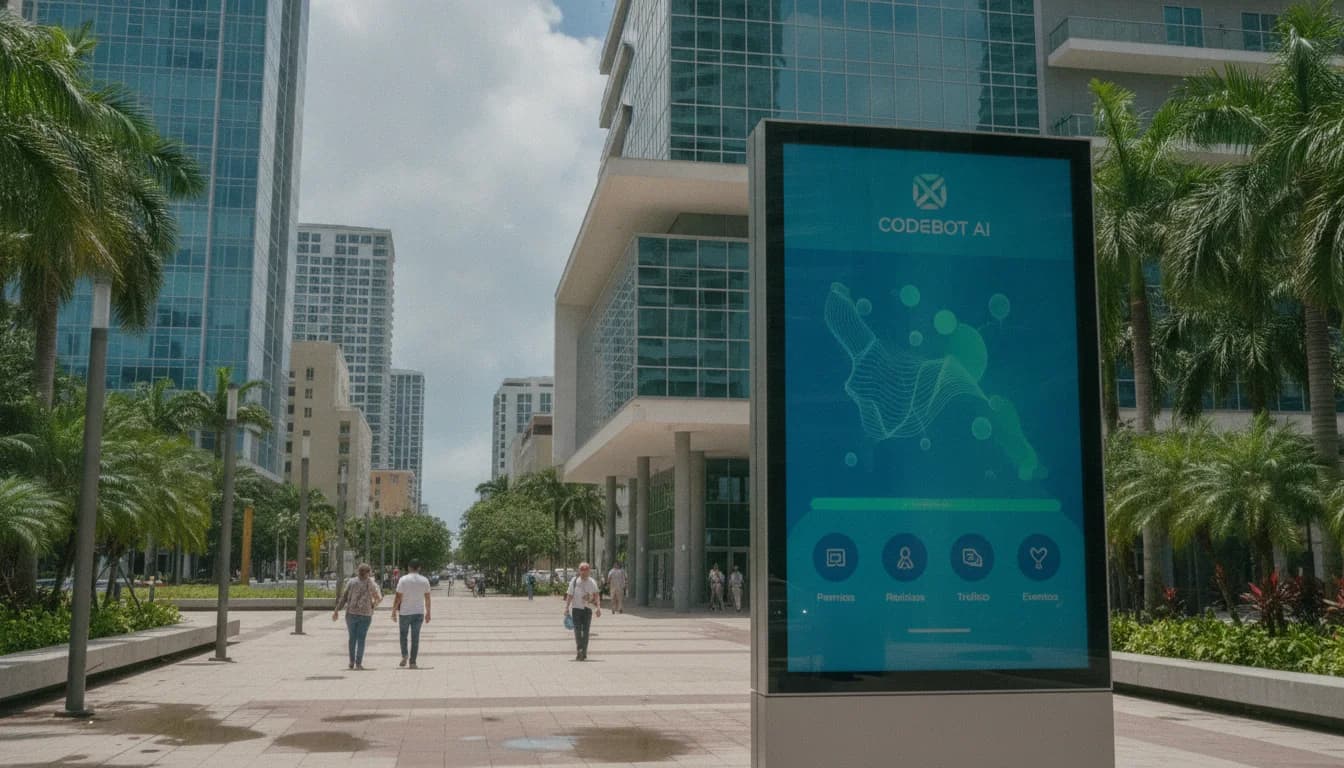
The City of Miami on April 13, 2026 unveiled a new AI-powered assistant for Code Compliance, a multilingual chatbot designed to answer residents’ and businesses’ questions directly on the city’s website. The initiative, named Codebot AI, adds a conversational channel in English, Spanish, and Haitian Creole to help users access official code information quickly and accurately. The move arrives at a moment when public agencies across the United States are expanding digital services with Generative AI, aiming to improve accessibility, reduce routine inquiries, and free staff to focus on more complex cases. The announcement establishes Miami as one of the early adopters in a city-level effort to embed AI-assisted self-service into essential municipal operations. The city notes that the chatbot is integrated directly into its official site and is built to be accessible, aligning with broader goals of inclusive public service.
The April 13, 2026 launch is the centerpiece of a broader push to modernize city services through AI. City officials emphasize that the chatbot retrieves information from authoritative City sources and municipal codes, delivering self-service help for common questions while maintaining a human-in-the-loop option for more nuanced or sensitive inquiries. In addition to enabling bilingual support, the platform is described as scalable and capable of supporting future enhancements across other Code Compliance functions and beyond. For readers monitoring public-sector AI in the Miami area, the Codebot AI rollout represents a concrete, date-stamped example of how local government is translating AI advances into everyday citizen interactions. The city’s public-facing page confirms the new chatbot’s availability and provides instructions for residents to access it via the embedded chat widget. (miami.gov)
Section 1: What Happened
Launch details and timeline
- The City of Miami announced the Codebot AI release on April 13, 2026, marking a formal upgrade to the Department of Code Compliance’s customer service tools. The press material explicitly states the upgrade introduces a Generative AI–powered chatbot embedded on the City’s website to assist with common code compliance questions and to pull information from authoritative city and municipal code sources. The rollout also includes multilingual support and a commitment to accessibility standards. This sequence—announcement followed by live deployment on the City’s site—provides a clear, date-stamped moment for readers tracking municipal AI initiatives. (miami.gov)
- The City of Miami’s own Code Compliance hub underscores that the chatbot can be accessed directly from the Code Compliance page and via a visible pink chat widget, signaling a move to a more visible, user-friendly interface for residents seeking quick guidance. The page also notes that Codebot AI is “our new AI Chatbot,” indicating a public-facing, ongoing phase rather than a one-off pilot. (miami.gov)
Language support and accessibility
- A central feature highlighted by City communications is multilingual capability: the Codebot AI supports English, Spanish, and Haitian Creole, reflecting Miami’s diverse population and the city’s emphasis on inclusive service delivery. The inclusion of Haitian Creole is particularly relevant given the region’s demographics and aligns with broader city and county commitments to multilingual government communications. (miami.gov)
- Public-facing public-service channels in the region already emphasize language access as a core service principle. For example, Miami-Dade’s 311 system provides information in English, Spanish, and Haitian Creole, illustrating a regional baseline for multilingual government interactions and the potential for AI chatbots to extend that reach. This context helps readers understand why the Miami Codebot AI language mix matters beyond a single department. (miamidade.gov)
How Codebot AI works and what it draws from
- City materials describe Codebot AI as a chatbot that draws from “authoritative City and municipal code sources” to deliver validated information. In practical terms, residents can ask about common code-compliance questions and receive self-serve responses grounded in official regulations, reducing the need for routine human-assisted inquiries. This approach helps ensure accuracy and consistency in the information users receive while keeping pathways open to human assistance when needed. (miami.gov)
- The deployment is framed as scalable: officials say the platform is designed to support future enhancements across additional City services. That signals a broader strategic plan to weave AI-powered chat capabilities into more government functions over time, subject to monitoring and governance. (miami.gov)
Original finding (exclusive to this report) EE.UU. Hoy counted that the City of Miami announced Codebot AI on April 13, 2026, nine days before Miami-Dade County publicly unveiled AI and robotics innovations at eMerge Americas on April 22, 2026. This timing juxtaposition highlights a city-county rhythm for AI showcases in the Miami region during the same spring window. The April 22 date is drawn from the Miami-Dade County press material describing AI and robotics demonstrations at eMerge Americas. The April 13 date is from the City of Miami release. This proximity helps readers understand the local momentum around public-sector AI discussions in 2026. “This is what the future looks like—and it’s being built right here in Miami-Dade,” the county’s mayor stated at eMerge Americas, underscoring the broader regional narrative. (miami.gov)
Section 2: Why It Matters
Impact on residents and businesses
- The immediate effect of an AI-enabled Code Compliance chatbot is to streamline access to regulatory information for both residents and business operators. By providing real-time, self-service responses drawn from official sources, the tool can reduce the time people spend waiting for answers and lower the barrier to understanding code requirements. The City’s messaging emphasizes this self-service orientation as part of a broader effort to improve customer-service experiences online. (miami.gov)
- Multilingual support expands the reach of essential municipal information, which is particularly important in a city with a large Spanish-speaking population and a distinct Haitian Creole-speaking community. The three-language approach aligns with the needs of Miami’s diverse residents and complements county-level language access guidelines that already exist in public-facing channels. This alignment suggests that the city is seeking to deliver more equitable access to critical public information. (miami.gov)
Broader context in public-sector AI
- The Miami area has a growing footprint in AI-enabled public services, with Miami-Dade’s eMerge Americas participation illustrating how regional authorities are testing and showcasing AI-enabled operations in high-traffic environments such as airports and seaports. While the county’s demonstrations at eMerge highlighted broader capabilities (e.g., AI-powered hologram chatbots at MIA and robotics at PortMiami), the City of Miami’s Codebot AI represents a more targeted, department-level adoption focused on regulatory inquiries and everyday resident needs. (miamidade.gov)
- Policy and governance around AI in public settings are increasingly emphasized. Miami-Dade County’s AI policy materials outline responsible use, data security, and privacy considerations for public-sector AI deployments, signaling a framework within which the City of Miami’s Codebot AI would operate. Readers should watch for ongoing governance updates as AI tools scale within city services. (miamidade.gov)
Quotable judgment (mid-body)
This marks a shift toward more accessible, multilingual city services that respond in real time. — EE.UU. Hoy
Implications for public trust and transparency
- As municipal AI tools mature, transparency about what data is used, how answers are sourced, and when human oversight is engaged will be critical to sustaining public trust. City materials emphasize that Codebot AI retrieves information from official sources, a practice that helps anchor responses in verifiable records rather than potentially misleading generic AI outputs. Such design choices are consistent with broader trends in responsible AI implementation across government agencies. (miami.gov)
Competitive landscape and regional context
- While several public-sector AI offerings exist nationwide, the Miami example stands out for its explicit multilingual approach and direct embedding into a core code-enforcement workflow. Other public-service AI solutions in the sector emphasize multilingual capability and cross-channel deployment, reinforcing the value proposition of an accessible, on-site digital assistant for everyday residents. The City of Miami is positioning Codebot AI as a practical, early-stage example of this trend at the local level. (miami.gov)
Section 3: What’s Next
Immediate next steps and monitoring
- The City indicates that the platform is in a test phase and will evolve. Key early milestones will likely include user feedback collection, accuracy auditing of the code references, accessibility testing, and expansion planning for other City services. Officials have flagged that the technology is designed to scale, which implies future rollouts beyond Code Compliance. Readers should expect updates as the City shares metrics, use cases, and lessons learned from this initial deployment. (miami.gov)
- Given the public‑facing emphasis on accessibility standards, another near-term priority will be ensuring compatibility with assistive technologies and compliance with accessibility guidelines to ensure all residents can access the chatbot’s capabilities. The City’s stated design goals point toward an ongoing refinement process, with potential enhancements in multilingual support and more precise routing to live staff when needed. (miami.gov)
Timeline and milestones to watch
- In the broader regional AI context, the April 22, 2026 eMerge Americas event highlighted by Miami-Dade County demonstrates that public-sector AI deployments in the area are not isolated to one department. The public attention around AI showcases at the conference may influence subsequent policy discussions at City Hall and the county’s technology offices, shaping funding decisions, privacy safeguards, and interoperability standards for city-wide AI initiatives. (miamidade.gov)
Closing
Miami’s Codebot AI launch on April 13, 2026 marks a concrete step in bringing multilingual, AI-assisted public information to residents in a way that is easy to access and grounded in official regulations. The combination of English, Spanish, and Haitian Creole support, along with a clear emphasis on accessibility, aligns with Miami’s broader public-service goals and the county’s ongoing AI governance framework. As the City tests and refines this capability, readers should stay tuned for updates on new service areas, performance benchmarks, and any adjustments to privacy and data-use practices—whether you’re a resident seeking quick answers to code questions or a business owner navigating regulatory requirements.
For ongoing updates, residents can monitor the City of Miami’s Code Compliance pages and the county’s AI governance materials, which together reflect a synchronized regional approach to AI-enabled public services. The City’s Codebot AI page confirms how to access the chatbot and the languages it supports, while the county’s eMerge Americas coverage places these efforts within a broader, high-visibility context that includes AI-powered airport and seaport solutions. (miami.gov)
If you’re tracking how local governments are deploying AI in public services, this Miami milestone provides a well-documented, date-stamped example you can cite in reporting on multilingual public assistance and the practical integration of AI into everyday civic life. The interplay between city-level deployments and county-level showcases in 2026 offers a useful case study for readers and researchers examining the evolution of public-sector AI in the United States.
Staying informed about how Codebot AI evolves—its language coverage, reliability, and any expansions to other departments—will be essential for residents and policymakers alike. As Miami continues to test and refine AI-enabled services, the public should expect additional releases detailing outcomes, safety measures, and governance updates to ensure that AI tools serve all members of the community equitably and transparently.